
Before Your Period: Making Sense of Mood Changes, Bloating, and PMS
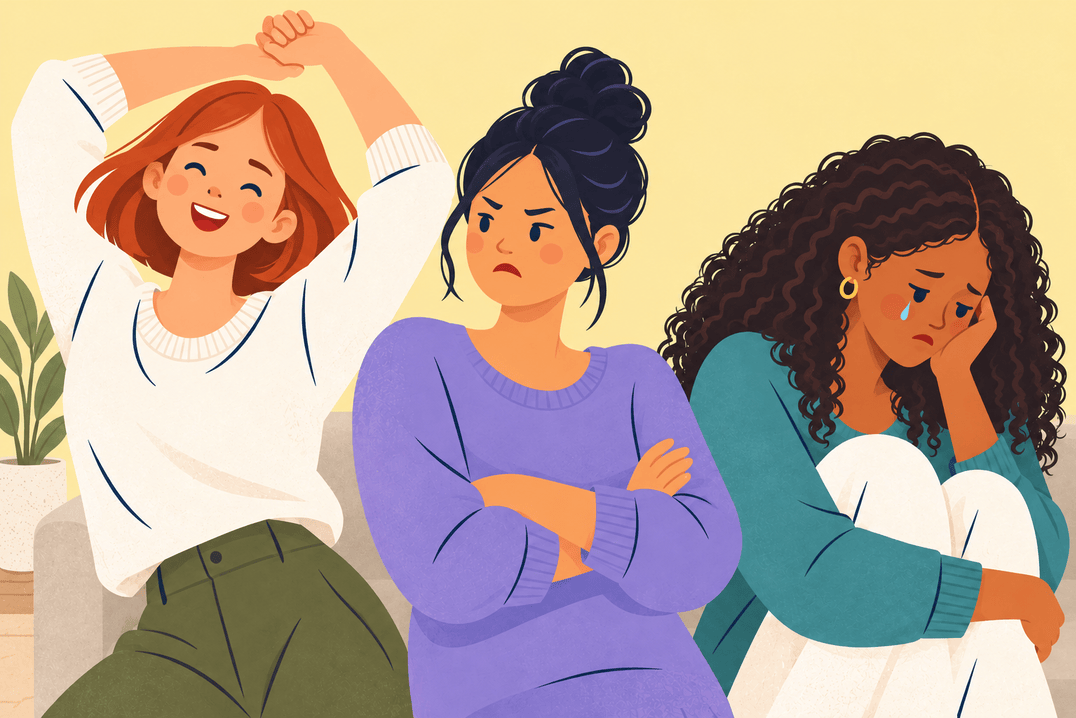
You may feel like yourself for much of the month, then notice a difficult stretch before your period. Mood changes, bloating, and tiredness are easier to describe when you look at their timing as well as their intensity.
Look for a repeating pattern
PMS can involve irritability, anxiety, low mood, changes in appetite or sleep, breast tenderness, and bloating in the weeks before a period. Symptoms vary between people and between cycles. They usually improve after menstruation begins. A stretch when symptoms ease is an important part of the pattern to discuss.
There is no single blood test that establishes PMS. Symptoms present throughout the month can worsen before a period and may need assessment for other conditions too.
Try not to assume that every difficult feeling is hormonal. Your diary can leave room for work stress, illness, relationship difficulties, and how you felt during the rest of the month.
Make tracking useful
For at least two cycles, note the symptom, its effect on daily life, and where you are in your cycle. Use a simple scale you understand rather than trying to write a detailed account every day. Our daily tracking guide explains how to include both difficult days and days when you feel well.
For example: “I cancelled plans because I felt overwhelmed” tells a clinician something different from “a little more emotional.”
Choose manageable support
Regular sleep, balanced meals, movement, and time to unwind may help. If symptoms remain disruptive, a clinician can discuss treatment, including psychological support or medicines. The PMS treatment guide offers questions about choosing and reviewing a plan.
Pick one practical adjustment you can repeat, such as keeping a bedtime routine or asking for help with a demanding task. You do not need to reorganize your entire life around a predicted bad week.
When to reach out
Book an appointment if symptoms affect work, relationships, or daily functioning. Severe premenstrual mood symptoms may require assessment for PMDD and other mental health conditions. You do not need to finish two cycles of notes before seeking help. If you have thoughts of harming yourself, seek immediate crisis support. If you may act on those thoughts or cannot stay safe, contact emergency services now.
You deserve help for the impact you are experiencing, even when you cannot yet explain why it happens.
References

Lifeing Editorial
Stories for a little more understanding, a little more reassurance, and the everyday moments in between.
Related posts


Caffeine Before and During Pregnancy: Reviewing Your Daily Intake