
Contraceptive pills for painful periods: Discussing More Than Birth Control
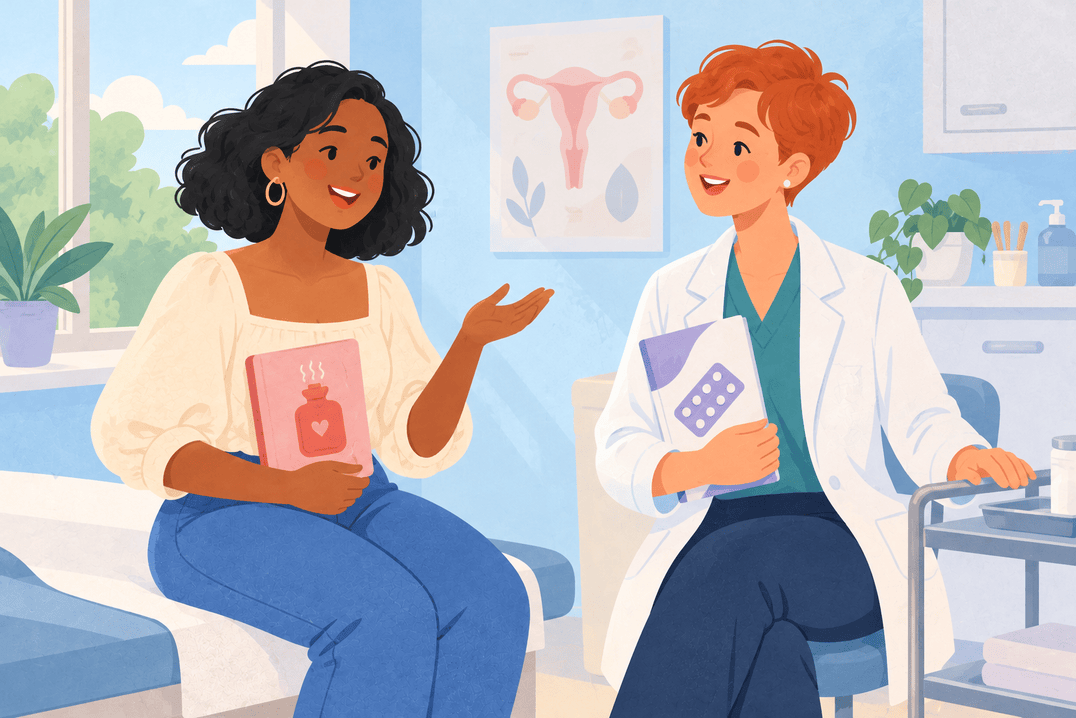
Contraceptive pills can be prescribed to help painful periods even when pregnancy prevention is not the main goal. Reducing ovulation and changing the uterine lining or bleeding pattern can lessen symptoms for some people. The choice should consider the pain pattern, medical suitability, and what you want from treatment.
A response to the pill does not by itself identify the cause of pain.
Describe the problem before choosing the method
Explain when pain occurs, how long it lasts, and what it stops you doing. Mention pain outside periods, pain during sex, bowel or urinary symptoms, heavy bleeding, and any possibility of pregnancy. These details help determine whether further assessment is needed alongside treatment.
The period pain treatment guide explains why symptom relief and investigation can be considered together. You should not have to wait for an exact diagnosis before discussing pain relief.
Compare symptom goals and suitability
Combined pills may make scheduled bleeding lighter and less painful. An appropriate extended or continuous regimen can reduce the number of withdrawal bleeds. Some other hormonal methods may also help, so estrogen is not the only approach to discuss.
A history of migraine with aura, blood clots, high blood pressure, certain other conditions, or interacting medicines may affect which method is suitable. If the pill is being used for pain rather than contraception, these safety considerations still apply.
The continuous pill use guide explains why the regimen must match the product.
Give the trial a clear purpose
Agree on what improvement would look like: fewer days in bed, less missed work, better sleep, or less need for additional pain medicine. Ask when to review benefit and side effects, and what to do if bleeding becomes troublesome.
Do not change doses or add unscheduled breaks to manage pain without checking the plan. If you also need contraception, missed tablets and sickness still matter.
Reassess pain that persists or changes
Persistent pain despite treatment, increasing pain, or pain affecting daily life needs review. Possible causes include endometriosis, adenomyosis, fibroids, or other conditions; the symptom pattern guides assessment rather than proving any one diagnosis.
Seek urgent advice for severe or worse than usual period or pelvic pain when usual pain relief is not helping. Sudden severe pain, fainting, or pain with possible pregnancy should not be managed simply by adjusting a pill schedule.
References

Lifeing Editorial
Stories for a little more understanding, a little more reassurance, and the everyday moments in between.
Related posts

Copper coils and heavy periods: What to Expect and Discuss