
Exercise While Trying to Conceive and During the Two Week Wait

Trying to conceive and waiting for a pregnancy result can raise questions about walking, workouts, lifting, and rest. The most useful advice depends on your usual activity, health, and whether you have had fertility treatment. A universal rule to stop all movement does not account for those differences.
Build a routine before conception
Choose activity that fits your usual week, with room for meals and recovery. General adult guidance includes at least 150 minutes of moderate activity each week, or an equivalent amount of vigorous activity, plus strength work on at least two days. These are general health goals, not a dose proven to produce pregnancy. Adapt them to your health and current fitness with advice when needed.
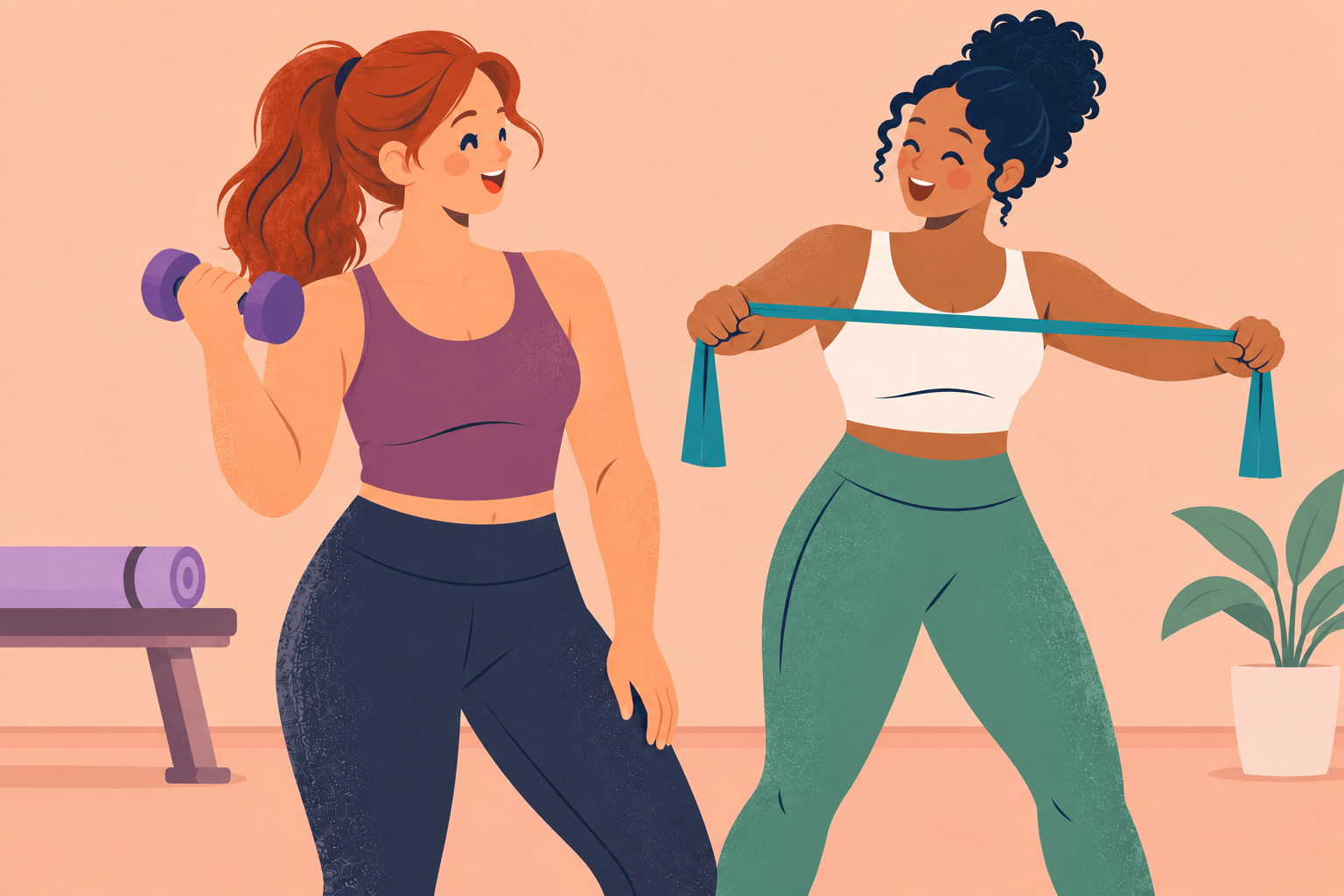
Short sessions can make a routine easier to maintain. You might walk during a break or choose an activity you enjoy with a friend. If you have been inactive, start gradually instead of taking up an intense programme because a conception deadline feels close.
More training is not always better. When food intake does not meet the body’s needs alongside exercise, reproductive function and bone health can be affected. If periods disappear or become irregular, seek assessment and read the exercise and absent periods guide. Do not rely on a watch’s calorie estimate to decide whether you are adequately fuelled.
Start with your usual activity and health
General pregnancy guidance supports remaining active when there is no medical reason to restrict activity. Continue comfortable familiar exercise, adjust to how you feel, and ask your healthcare professional about any existing condition or specific concern. If you are starting something new, begin gently rather than suddenly taking up strenuous training.
Choose a pace that allows conversation, avoid overheating, and drink fluids. Stop if you feel unwell or the activity becomes uncomfortable. There is no requirement to perform a particular workout to improve implantation.
Fertility treatment can change the advice
Ovarian stimulation can enlarge the ovaries. If ovarian hyperstimulation syndrome develops, strenuous exercise and sex may risk injury to the ovaries. Your clinic may therefore give restrictions that differ from general advice for an uncomplicated pregnancy.
Ask what activities are suitable now, whether lifting or vigorous movement needs changing, and when to review the restriction. Do not borrow another person’s treatment plan simply because you had transfers on the same day.
Rest after transfer is not a universal treatment
Evidence does not support routine bed rest after embryo transfer to improve pregnancy outcomes. That does not mean every exercise is appropriate during every treatment cycle. Follow the clinic’s individualized advice, especially if you have pain or enlarged ovaries.
The testing after treatment guide explains why activity, medicines, and test timing should form one clear clinic plan. Rest for comfort can be a choice without becoming a test of whether you are protecting the pregnancy sufficiently.
Know when to call
After fertility treatment, contact your clinic promptly about increasing abdominal pain or swelling, vomiting, or feeling faint. Difficulty breathing, chest pain, severe pain, or markedly reduced urine needs urgent emergency assessment. Do not explain these away as ordinary effects of a workout or signs of implantation.
For everyday uncertainty, the waiting plan offers practical ways to reduce repeated checking. Movement can be part of ordinary life while you wait, with medical advice tailored to what is actually happening in your body.
References
- NHS: Exercise in pregnancy (opens in a new tab)
- ASRM: Performing embryo transfer (opens in a new tab)
- RCOG: Ovarian hyperstimulation syndrome (opens in a new tab)
- NHS: IVF treatment and follow up (opens in a new tab)
- NHS: Physical activity guidance for adults (opens in a new tab)
- IOC consensus: Relative energy deficiency in sport (opens in a new tab)

Lifeing Editorial
Stories for a little more understanding, a little more reassurance, and the everyday moments in between.
Related posts
Exercise for PMS: Building a Routine You Can Maintain