
Fibroid symptoms: Bleeding, Pressure, and Other Changes to Notice
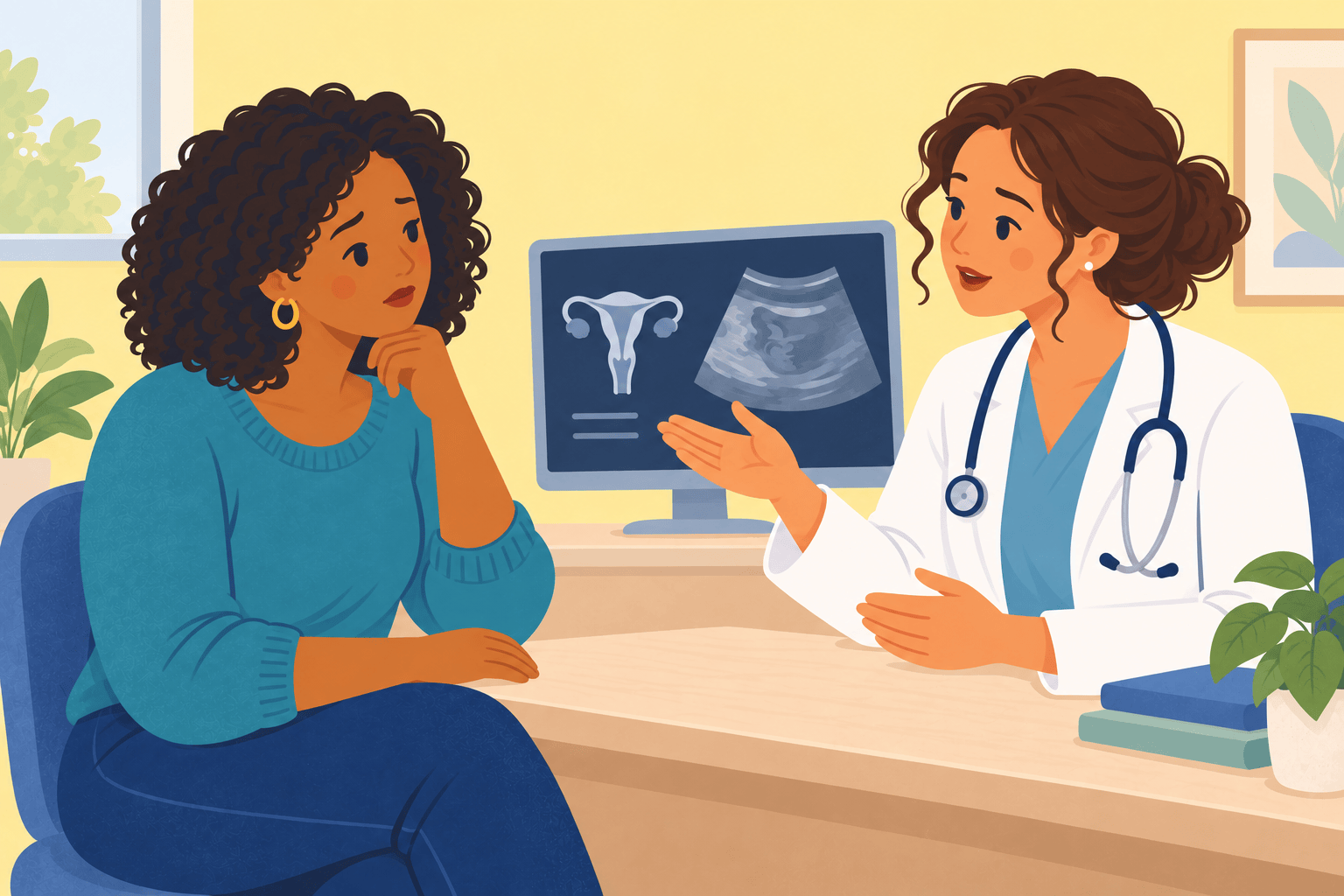
Fibroids are growths of muscle and other tissue in or around the uterus. They are benign, meaning they are not cancer. Many cause no symptoms and are found during an examination or scan for another reason. Others affect bleeding, comfort, or daily activities.
Symptoms alone cannot confirm fibroids, and finding one does not automatically explain every concern.
Look at bleeding and pressure separately
Heavy or painful periods can occur with fibroids. Describe flooding, how often you change protection, bleeding through clothing, or periods that last longer than usual. The heavy bleeding guide explains why checking for anemia may be part of the assessment.
Pressure symptoms can be different from cramps. You might notice lower abdominal fullness, back discomfort, frequent urination, constipation, or discomfort during sex. Mention these even if your periods have not changed.
Describe what has changed for you
A useful record includes when symptoms began, whether they occur only during periods, and which activities they interrupt. Bring a list of medicines and contraception, and tell the clinician whether pregnancy is possible or a future goal.
You do not need to estimate blood loss precisely or identify the size of a growth yourself. Practical examples such as waking repeatedly to use the toilet or avoiding journeys because of bleeding help explain why the symptoms matter.
Let assessment connect the findings
A clinician may examine your abdomen and pelvis with your consent and arrange ultrasound. The diagnosis guide explains how location, number, and size help inform care.
If you have heavy bleeding, a blood count can check for anemia while treatment is being considered. Fatigue or breathlessness should be mentioned rather than assumed to be an unavoidable part of having periods.
Some people need monitoring only. Others benefit from medicines or a procedure. A benign result does not mean disruptive symptoms should be ignored.
Seek help sooner for a different pattern
Pelvic pain with fever, vomiting, difficulty passing urine or stool, or possible pregnancy needs urgent medical advice. Severe or worsening pelvic pain, fainting, breathing difficulty, or heavy vaginal bleeding with pelvic pain needs emergency assessment.
An existing fibroid diagnosis should not delay care for these symptoms. Ask for reassessment if the pattern changes or treatment no longer helps, rather than waiting for the next routine scan.
References

Lifeing Editorial
Stories for a little more understanding, a little more reassurance, and the everyday moments in between.
Related posts


Fibroid treatment choices: Matching Care to Your Goals