
Heavy periods and anemia: Why Fatigue May Need a Blood Test
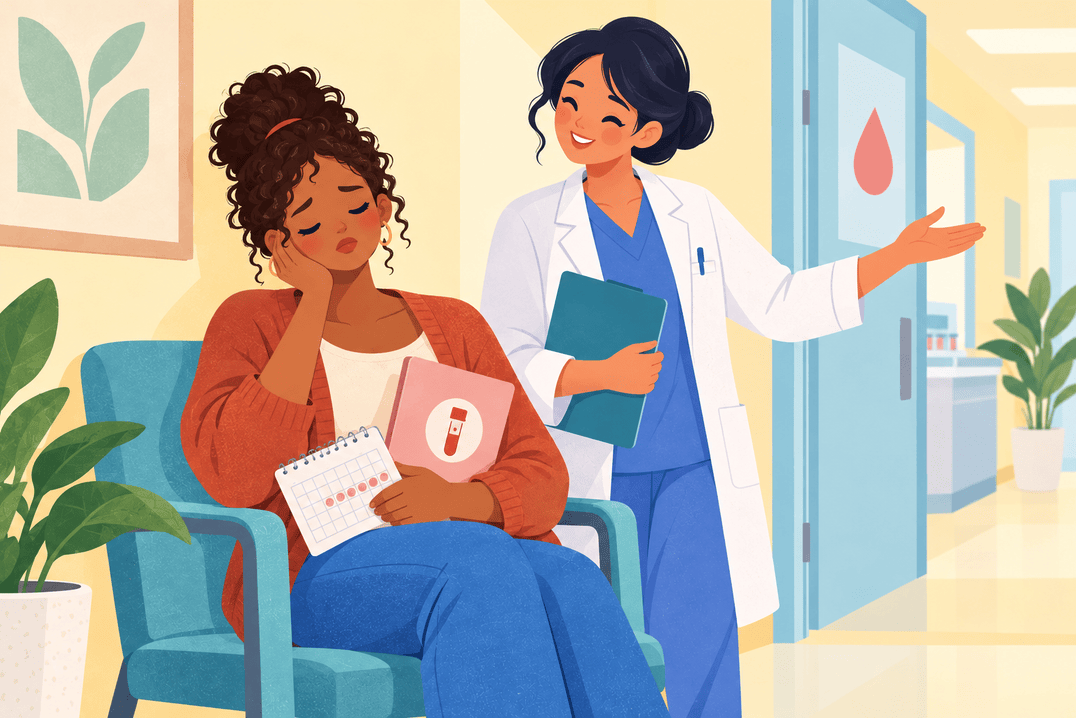
If heavy periods are followed by persistent exhaustion, a blood test may help explain what is happening. Repeated blood loss can reduce iron stores and eventually lead to anemia. Fatigue has other possible causes too, so it is better to seek assessment than diagnose iron deficiency from tiredness alone.
Explain what has become harder
Tell a clinician if stairs, exercise, concentration, or everyday tasks feel different. Mention breathlessness, palpitations, headaches, or unusual weakness. Give the timeline alongside your bleeding history, including prolonged periods and flooding.
You do not need to prove that the symptoms occur only during menstruation. Effects of repeated blood loss can persist between periods. The guide to describing heavy flow helps make the bleeding history more concrete.
Understand the blood count
A full blood count checks hemoglobin and other blood cell measurements and is a standard part of evaluating heavy menstrual bleeding. It helps identify anemia, but it does not by itself establish why anemia developed.
Iron stores can become low before anemia appears. A clinician may consider further iron testing according to the results, symptoms, and circumstances. Our article on blood tests for heavy periods explains why every person does not need the same collection of tests.
Address both iron and bleeding
If iron deficiency is confirmed, treatment may include an iron medicine and changes to food intake where useful. Ask how to take the prescribed treatment, how side effects will be managed, and when testing should be repeated.
Replacing iron without a plan for continuing heavy blood loss may leave the problem unresolved. Discuss options to reduce bleeding and whether other sources of blood loss or problems absorbing iron need investigation.
Get urgent help for severe symptoms
Heavy bleeding with fainting, chest pain, significant breathing difficulty, or marked dizziness needs emergency assessment. Do not wait for a routine blood test in that situation. For ongoing but less severe fatigue, arrange a clinical appointment and bring your period and medicine history so the investigation can address the full picture.
References
- NHS: Iron deficiency anaemia (opens in a new tab)
- NIH Office of Dietary Supplements: Iron health professional fact sheet (opens in a new tab)
- CDC: About heavy menstrual bleeding (opens in a new tab)
- NICE: Heavy menstrual bleeding recommendations (opens in a new tab)
- ACOG: Abnormal uterine bleeding (opens in a new tab)

Lifeing Editorial
Stories for a little more understanding, a little more reassurance, and the everyday moments in between.
Related posts

Heavy periods and fibroids: Understanding a Common Connection