
Hormonal contraception for PMDD: How to Discuss Benefits and Risks
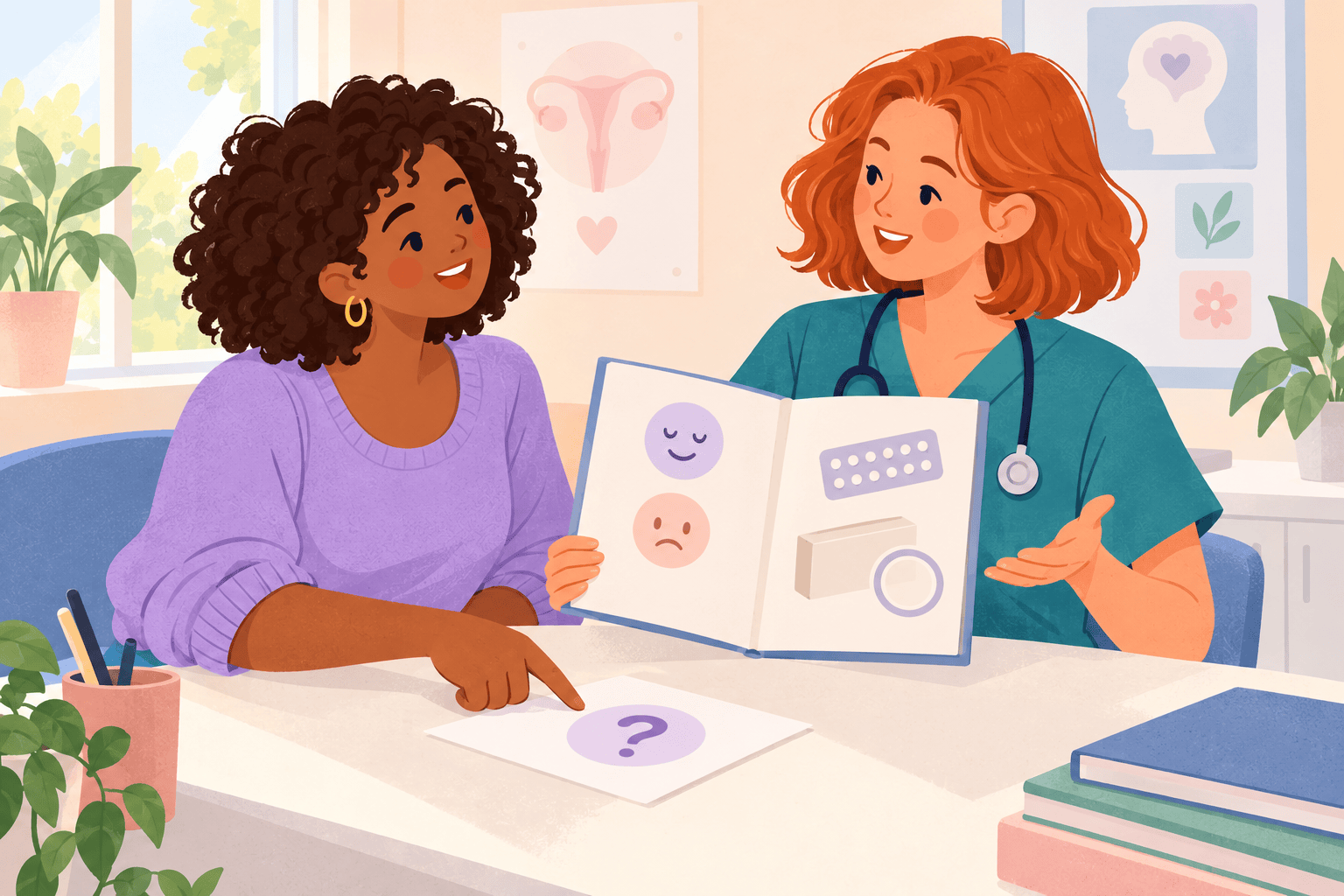
Hormonal contraception can be part of a PMDD treatment discussion, particularly if you also want to prevent pregnancy. It is not one uniform treatment. Different methods and formulations can have different effects, and the evidence for one pill cannot be applied automatically to every hormonal method.
Ask which formulation is being considered
Combined pills containing drospirenone and estrogen have been studied for premenstrual symptoms, mostly in people with PMDD. A review found possible improvement in symptoms and daily functioning, alongside more adverse effects. Evidence did not establish superiority over other combined pills or lasting benefit beyond the studied periods.
Ask why a particular formulation is being proposed for your symptoms. The PMDD treatment guide describes other options if contraception is not wanted or the pill is unsuitable.
Review your individual risks
A combined pill is not suitable for everyone. Important history includes migraine with aura, previous blood clots, blood pressure or cardiovascular problems, smoking, and some cancers or liver conditions. Bring an accurate medicine list and mention relevant family history.
Your clinician should consider these factors before prescribing. A friend’s good experience cannot establish that the same pill is safe for you. Tell the clinician if you are considering pregnancy so the plan matches that goal too.
Agree on use and monitoring
Ask for clear instructions about the regimen, missed pills, and when contraceptive protection begins. Do not change breaks or schedules on your own because another person uses a different approach for PMDD.
Keep notes about mood, bleeding, breast discomfort, and other new symptoms. Breakthrough bleeding can occur, especially when starting a combined pill, but persistent troublesome changes deserve discussion. Severe mood deterioration needs prompt help rather than simply waiting for the next cycle.
Review benefit alongside adverse effects
A useful result is better daily functioning with acceptable unwanted effects. Bring your notes to a treatment review and ask whether to continue, adjust, or consider another option.
Combined hormonal contraception carries a small risk of serious problems such as blood clots. Seek urgent assessment for new pain and swelling in one leg. Chest pain or breathlessness with those symptoms needs emergency care. Read the product information for other warning signs. Suicidal thoughts require immediate crisis support, and inability to stay safe requires emergency help.
References
- Office on Women’s Health: Premenstrual dysphoric disorder (opens in a new tab)
- Cochrane: Contraceptive pills containing drospirenone for premenstrual symptoms (opens in a new tab)
- NHS: Who can take the combined pill (opens in a new tab)
- NHS: Combined pill side effects and risks (opens in a new tab)
- ACOG: Management of premenstrual disorders guideline abstract (opens in a new tab)
- NHS: Deep vein thrombosis (opens in a new tab)

Lifeing Editorial
Stories for a little more understanding, a little more reassurance, and the everyday moments in between.
Related posts


Hormonal treatment for heavy bleeding: Comparing the Main Approaches