
Hot flushes and changing cycles: Recognizing a Broader Pattern
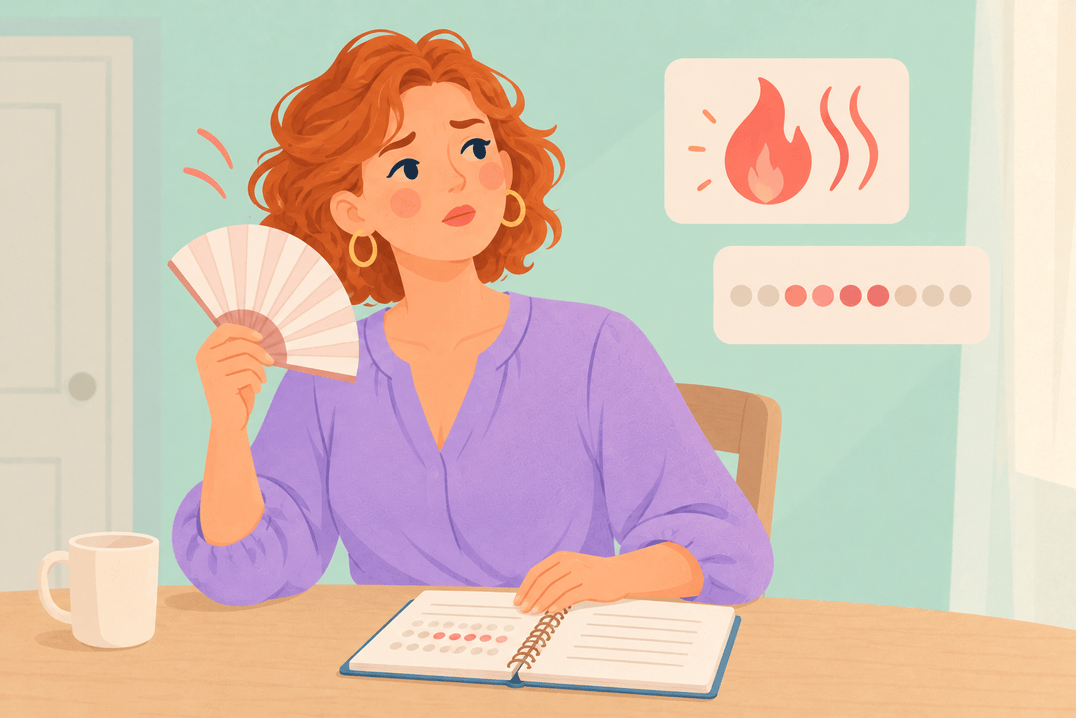
A sudden wave of heat during a meeting or a sweat that wakes you at night can be hard to describe afterward. If periods are changing too, perimenopause is one possibility to discuss. You do not need to wait until periods stop before asking for help.
Describe an episode in ordinary words
Hot flushes may involve sudden warmth around the face, neck, or chest, sometimes with sweating, a racing heartbeat, or a cold feeling afterward. Record approximately when an episode happens and what it interrupts. A brief note is more useful than repeatedly checking whether you feel warm.
Include your bleeding pattern using the perimenopause period guide. Note new medicines and other symptoms too. A clinician can assess whether the combination fits menopause or whether another explanation needs investigation.
Try practical comfort measures
Layers that are easy to remove, access to a fan, and a cooler sleeping space may make episodes easier to manage. If you notice a consistent trigger, such as a particular drink, try changing that one thing and see whether it helps.
You do not need to avoid a long list of foods because someone else found them triggering. At work, an example such as “I need a short break after an episode” can explain the practical adjustment you want without sharing your entire health history.
Discuss options when symptoms interfere
HRT is one treatment option for bothersome menopause symptoms. Suitability depends on your medical history and preferences. There are also other medicines and talking therapy approaches, including cognitive behavioral therapy, to discuss. Herbal products can interact with medicines and are not automatically safer.
If nights are the main problem, sleep during perimenopause can help you prepare a more focused review. Ask what improvement to look for and when to return if the first approach is not enough.
Keep new symptoms in view
Do not label every episode of sweating or palpitations as a flush. Tell your clinician about symptoms that persist, change, or concern you. Chest pain with breathlessness, faintness, or sweating needs emergency care, rather than a routine menopause appointment.
References
- NHS: Menopause and perimenopause symptoms (opens in a new tab)
- NHS: Menopause and perimenopause treatment (opens in a new tab)
- NHS: Help with menopause symptoms (opens in a new tab)
- British Menopause Society: Hormone blood tests in the menopause transition (opens in a new tab)
- NHS: Chest pain (opens in a new tab)

Lifeing Editorial
Stories for a little more understanding, a little more reassurance, and the everyday moments in between.
Related posts

Hysterectomy for period problems: Questions About Benefits and Recovery