
One day periods: Understanding a Suddenly Shorter Bleed

If your usual period lasts several days, a bleed that ends after one day can leave you wondering what happened. Duration alone cannot show whether it was menstruation, spotting, or bleeding for another reason. Start with the change from your own pattern rather than assigning a cause from one observation.
Describe both duration and flow
Was there a full day of your usual flow, or a small amount only when wiping? Did it happen when you expected a period, between periods, or after sex? Those details make a short bleed easier to discuss.
Keep the date even if you are unsure whether to count it as day one. Our article on periods that start and stop explains how to record uncertainty without losing the sequence.
Do not use bleeding to rule out pregnancy
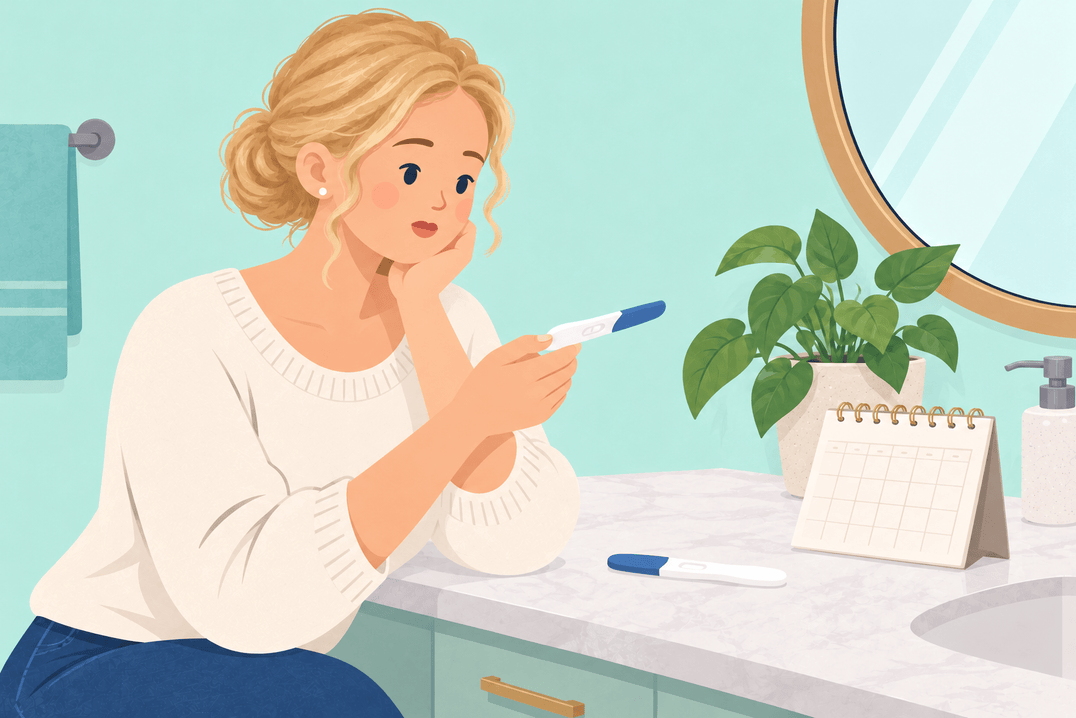
If pregnancy is possible, choose a test date based on your expected period or the timing of unprotected sex. A brief bleed cannot confirm or exclude pregnancy, and you cannot reliably label its cause from the colour or amount.
An early negative test may need repeating. See a negative pregnancy test and no period for a practical testing plan. Unusual bleeding with abdominal pain after a missed period needs urgent advice.
Look for relevant changes
Hormonal contraception, changes in ovulation, exercise or nutrition, and endocrine conditions can affect bleeding. A single shorter episode does not establish any of these explanations or diagnose reduced fertility.
Write down new medicines, contraception changes, and symptoms that appeared around the same time. You do not need to purchase a hormone test package before seeking advice.
Decide what to do next
Arrange an assessment if the change repeats, if periods become absent, or if you have bleeding between periods or after sex. Ask whether the pattern needs investigation in your circumstances. A clinician can decide what checks are useful without treating one day of bleeding as a diagnosis by itself.
References

Lifeing Editorial
Stories for a little more understanding, a little more reassurance, and the everyday moments in between.
Related posts

Ovarian cyst rupture: Symptoms That Need Prompt Assessment