
PCOS and acne: Understanding the Hormonal Connection
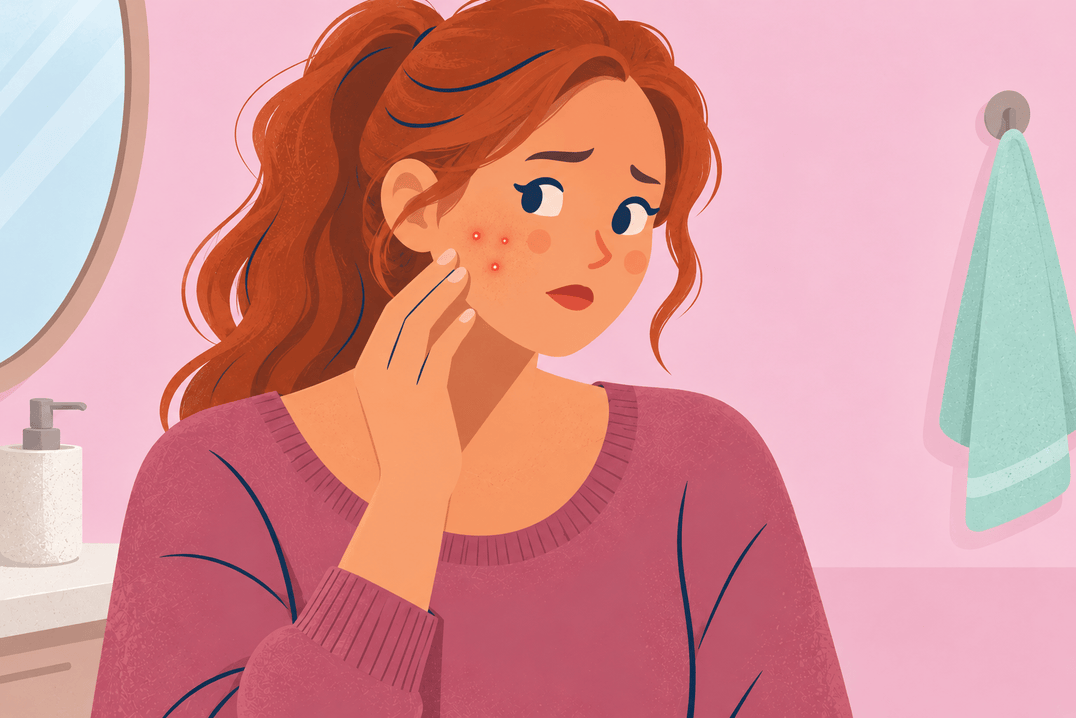
Acne can be part of PCOS, but many people with acne do not have PCOS. A breakout’s location or timing cannot diagnose a hormonal condition. Treatment can address the skin problem while a clinician considers whether a wider assessment is needed.
Why hormones can affect the skin
Androgens can increase oil production. Oil, skin cells, and inflammation contribute to blocked follicles and acne lesions. Genetics, medicines, and other influences also matter, so the explanation is rarely as simple as one hormone being too high.
Persistent acne alongside new coarse facial hair or a history of irregular periods provides different information from acne alone. Mention the combination rather than trying to label your breakouts yourself.
Ask for a treatment plan you can follow
A clinician may recommend a topical medicine, an oral treatment, or hormonal treatment depending on severity and your health history. The aims include reducing new lesions and preventing scars. Painful deep lesions, scarring, or substantial distress are reasons to seek advice.
Bring the names of products you already use, including spot treatments and supplements. Ask which product goes where, how often to apply it, what irritation is expected, and when to review progress. Starting several active products together can make it difficult to identify what is helping or irritating your skin.
Gentle cleansing, avoiding picking, and choosing products described as noncomedogenic can support care. Scrubbing harder does not remove the underlying causes of acne and may worsen irritation.
Pregnancy plans change medicine choices
Some acne treatments are unsuitable during pregnancy. Isotretinoin and spironolactone must not be used in pregnancy, and topical retinoids also require pregnancy related precautions. Tell the prescriber if you are pregnant, might be pregnant, or plan to conceive before using treatment.
If you discover you are pregnant while taking isotretinoin or spironolactone, stop taking it and contact the prescriber promptly. Ask for an immediate review of any other acne medicines too. Do not assume infrequent periods prevent pregnancy. The PCOS treatment guide explains why contraception and symptom treatment need to be discussed together.
Make room for the emotional effect
Acne can affect how comfortable you feel at work, in photographs, or with other people. That impact belongs in the appointment even when a clinician describes the acne as mild.
Choose one or two practical goals, such as fewer painful lesions or a simpler routine. Ask how success will be assessed and who to contact if side effects make the plan difficult to continue.
References
- International guideline: PCOS and PMOS assessment and management (opens in a new tab)
- NIAMS: Acne causes and symptoms (opens in a new tab)
- NIAMS: Acne diagnosis and treatment (opens in a new tab)
- American Academy of Dermatology: Acne treatment during pregnancy (opens in a new tab)
- Office on Women’s Health: Polycystic ovary syndrome (opens in a new tab)

Lifeing Editorial
Stories for a little more understanding, a little more reassurance, and the everyday moments in between.
Related posts


PCOS and facial hair: Treatment Questions to Bring to Your Appointment