
PCOS and hair thinning: Exploring Possible Support
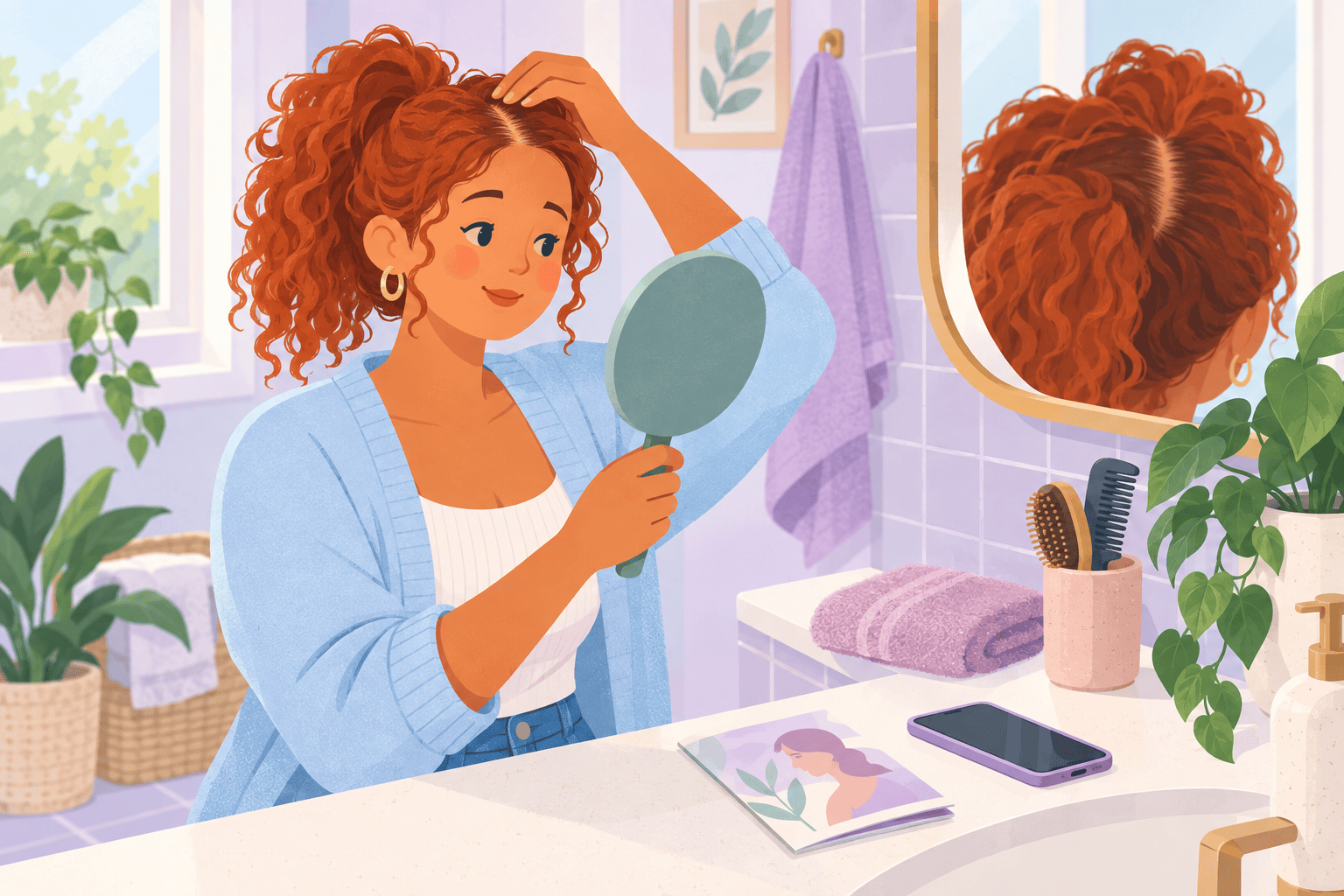
Noticing a wider part or a thinner ponytail can be upsetting. PCOS can be associated with scalp hair thinning, but an existing diagnosis does not explain every change in hair. Assessment helps distinguish the pattern and choose suitable treatment.
Start with the change you have noticed
Bring a rough timeline and describe whether thinning is gradual, shedding increased suddenly, or there are distinct patches. Mention scalp discomfort, recent illness, major dietary or weight changes, and medicines. A few photographs taken under similar lighting can help you explain a gradual change if you want to use them.
Other causes can include inherited hair loss, illness related shedding, or iron deficiency. A clinician may examine the scalp and order tests when the history suggests a need. Do not start iron simply because your hair is thinning.
Hair thinning on its own is a relatively weak predictor of high androgen levels. The PCOS blood test guide explains why testing is targeted rather than a universal panel.
Discuss the diagnosis before buying treatment
For female pattern hair loss, topical minoxidil may help, but it does not work for everyone. Benefits usually need continued use, and judging the response takes months. Temporary increased shedding and scalp irritation can occur.
Avoid minoxidil during pregnancy, while planning pregnancy, or when breastfeeding. Discuss these circumstances before treatment. Some prescription treatments also need effective contraception and careful assessment of other medicines and health conditions.
Antiandrogen treatment may be considered for some people with PCOS, but evidence specifically for PCOS related scalp hair loss is limited. Ask what benefit is realistic for your diagnosis and what monitoring is needed.
Evaluate products by what they can actually do
A shampoo may make hair look fuller or reduce breakage without treating the underlying cause of thinning. Supplement advertisements can make promises that are stronger than the evidence. Take the ingredient list to a pharmacist or clinician before adding a product to existing treatment.
The nutrition claims guide offers questions for separating a measured benefit from a general promise to balance hormones.
Make the plan manageable
Ask how to apply a treatment, what to do if the scalp becomes irritated, and when to review it. Include the ongoing cost and time needed. Styling choices, a hairpiece, or a wig can be practical options if you want them, with or without medical treatment.
If thinning is affecting your confidence or social life, include that in the discussion. Emotional support does not require waiting to see whether the hair treatment succeeds.
References

Lifeing Editorial
Stories for a little more understanding, a little more reassurance, and the everyday moments in between.
Related posts


PCOS and insulin resistance: What the Connection Means