
Perimenopause and conception: Discussing Possibilities and Limits
Perimenopause can bring changing periods, hot flushes and uncertainty about pregnancy. Conception can still happen during this transition, but the chance generally falls as reproductive ageing progresses. A change in your cycle is a reason to discuss your goals and health, rather than a reliable prediction of whether pregnancy is possible.
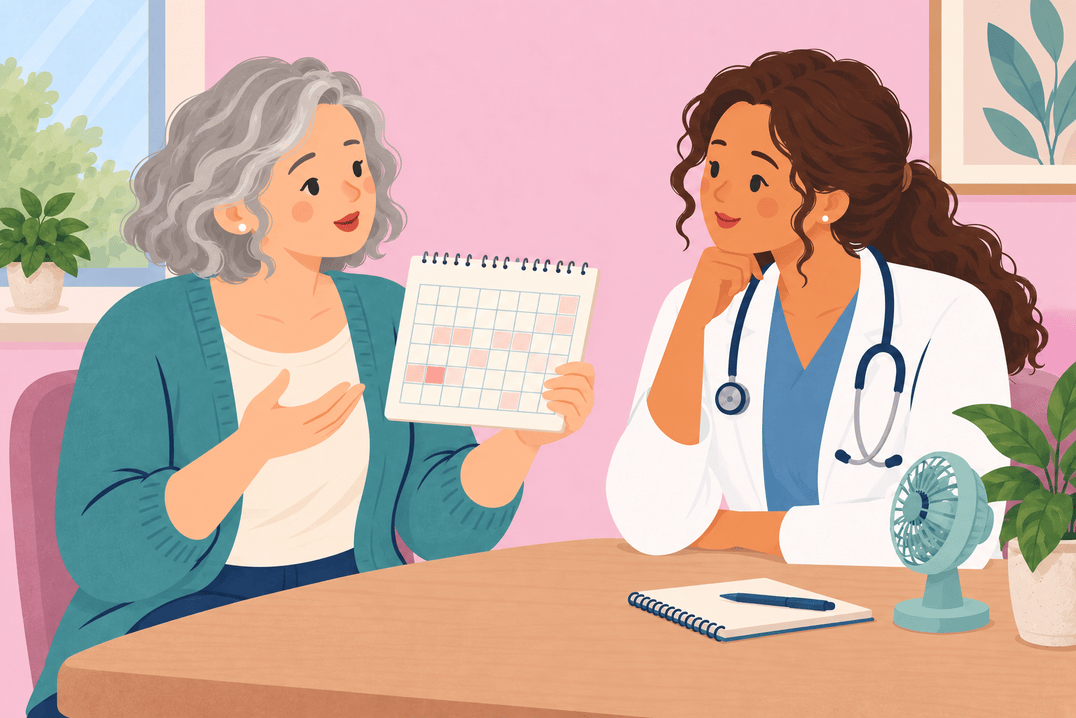
Bring changing periods into the conversation
Record recent period dates, changes in flow and symptoms such as night sweats. Tell the clinician about hormonal contraception or HRT, because treatment can alter bleeding patterns. The perimenopause period guide explains why a pattern alone does not establish the cause.
If pregnancy is possible and a period is late, take a pregnancy test rather than assuming the delay is menopause. Irregular or absent periods can also have other explanations. A clinician should consider these in the context of your age, symptoms and medical history.
Seek advice without waiting for a perfect cycle
When you want to conceive and periods are irregular or have stopped, arrange an assessment without waiting through a standard year of trying. Earlier assessment is also appropriate when age or a known medical condition makes delay important. The guide to trying after forty can help you prepare.
An assessment may consider ovulation, ovarian function and other relevant fertility factors, including sperm when applicable. If ovarian insufficiency is suspected before age forty, that needs a specific clinical assessment. Do not diagnose it from symptoms or a home AMH result alone.
Review symptom treatment alongside pregnancy plans
HRT can help menopausal symptoms, but it is not contraception or a fertility treatment. Tell the prescriber before trying to become pregnant so you have a plan for managing symptoms and medicines.
If you use sequential combined HRT and think you may be pregnant, stop that HRT and contact your doctor for advice. This instruction concerns that treatment, not an instruction to stop all prescribed medicines. If you are unsure which preparation you use, ask a pharmacist or the prescribing service promptly.
Ask what each option would involve
A specialist can discuss whether treatment using your own eggs is realistic, whether donor treatment is relevant and what assessment is needed before carrying a pregnancy. Using donor eggs does not remove the health risks associated with pregnancy at an older age.
Ask for an explanation of likely outcomes, uncertainties, practical demands and alternatives. You can request counselling if the options feel difficult to process. The aim is a plan that respects your pregnancy wishes while being clear about what the available evidence and your individual assessment can support.
References
- NHS: Menopause and perimenopause symptoms (opens in a new tab)
- NHS: Sequential combined HRT, pregnancy and fertility (opens in a new tab)
- ASRM: Fertility evaluation of infertile women (opens in a new tab)
- ASRM: Reproduction with advancing paternal and maternal age (opens in a new tab)
- International guideline: Diagnosis of premature ovarian insufficiency (opens in a new tab)

Lifeing Editorial
Stories for a little more understanding, a little more reassurance, and the everyday moments in between.
Related posts
Perineal tears: Understanding Repair and Recovery Discussions