
Perimenopause mood changes: Finding Support During the Transition

Mood changes around perimenopause deserve attention even when they are less visible than a hot flush. Feeling anxious, unusually irritable, or unlike yourself can affect work and relationships. The aim of a health review is to understand the pattern and find support that fits it.
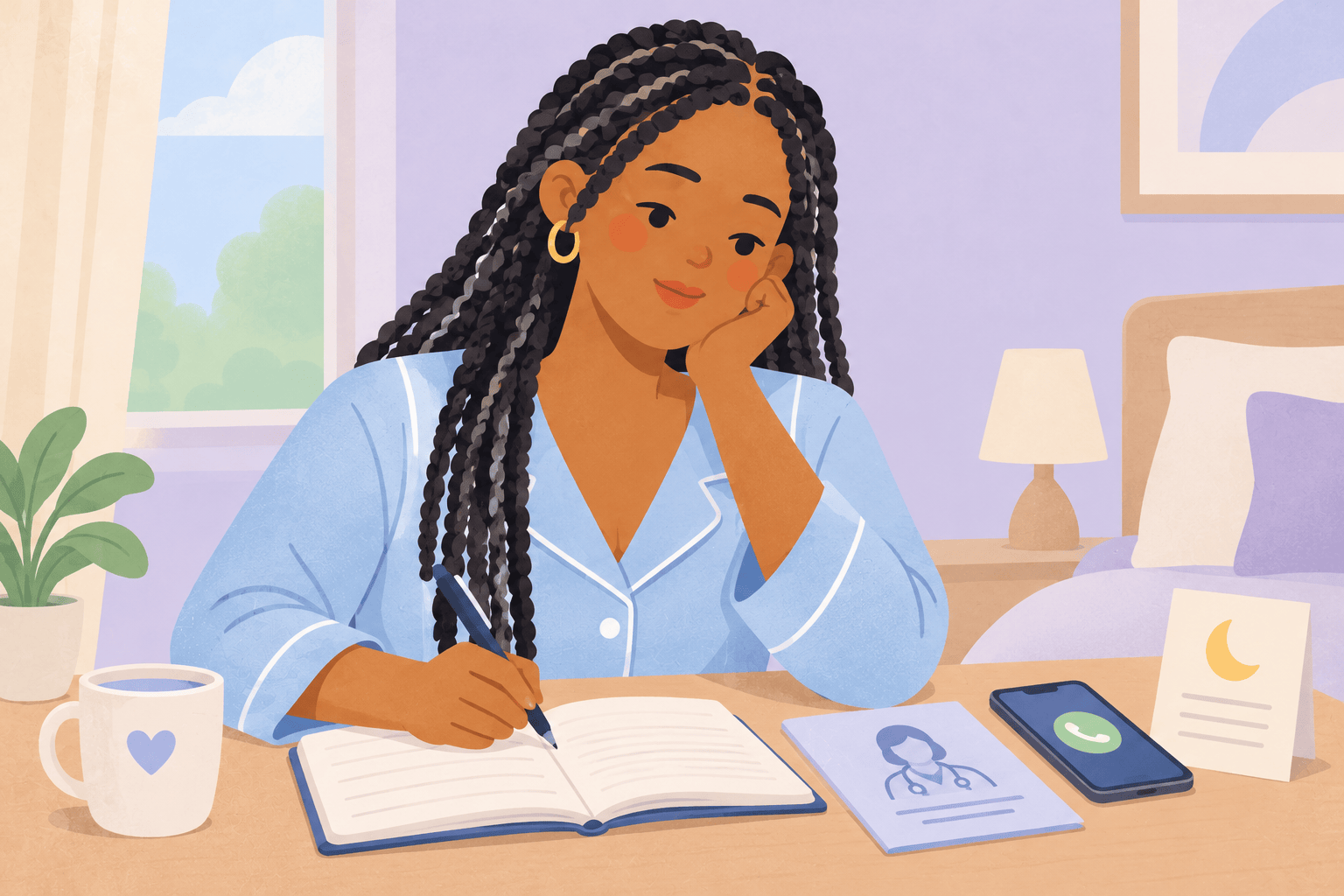
Explain what has changed for you
A concrete example can be easier to discuss than a label. You might describe avoiding social plans, struggling to concentrate, or feeling overwhelmed by tasks that used to be manageable. Note when this began and whether it comes and goes or is present most days.
Include sleep and physical symptoms. The perimenopause sleep guide can help describe nights that leave you depleted. Mention previous mental health treatment and current medicines so that care takes the whole picture into account.
Do not dismiss persistent depression
Hormone changes can accompany emotional symptoms, but persistent depression needs assessment in its own right. Low mood or loss of interest that is present most of the day, every day, for more than two weeks is a reason to seek medical help. Seek support sooner if symptoms are severe or daily life is becoming difficult.
You do not have to prove that hormones caused the symptoms to deserve care. Likewise, recognizing a menopause pattern does not make an existing mental health condition less important.
Discuss more than one route to support
Depending on the assessment, options may include talking therapy, treatment for menopause symptoms, or treatment specifically for depression or anxiety. HRT may help some symptoms associated with menopause, but it is not a substitute for appropriate depression care.
Ask which problem each proposed treatment is intended to address and how progress will be reviewed. The appointment preparation guide includes questions you can take in writing if talking feels difficult.
Make support practical
Consider telling one trusted person what would help this week. That might be company at an appointment, taking over a task, or checking in after a difficult day. It is reasonable to ask for specific help rather than trying to explain everything at once.
If you think you might harm yourself or cannot stay safe, seek emergency help immediately and tell someone who can stay with you. Other distressing thoughts of self harm also need prompt professional support.
References
- British Menopause Society: Emotional wellness in menopause (opens in a new tab)
- NHS: Symptoms of depression in adults (opens in a new tab)
- NICE: Menopause identification and management (opens in a new tab)
- NHS: Menopause and perimenopause treatment (opens in a new tab)
- NHS: Urgent help for mental health (opens in a new tab)

Lifeing Editorial
Stories for a little more understanding, a little more reassurance, and the everyday moments in between.
Related posts
Perimenopause periods: Why Timing and Flow May Change