
Period pain without bleeding: Why Timing Is Only One Clue
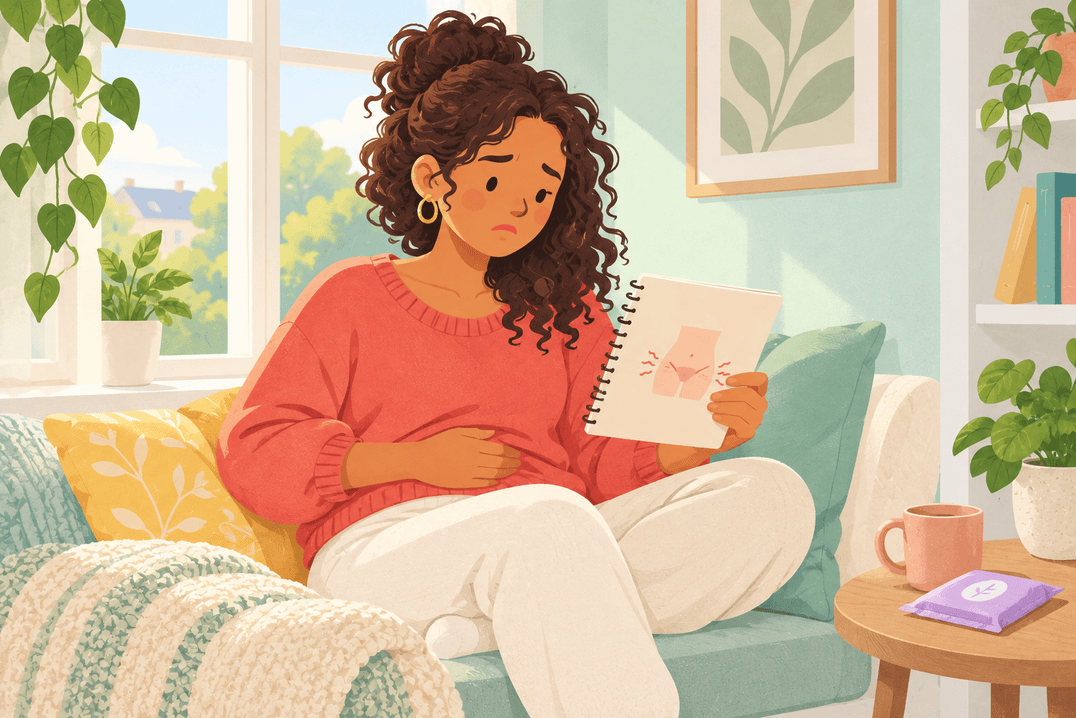
Cramps can start before menstrual bleeding, but pain without a period is not automatically menstrual pain. The same general area contains reproductive organs, the bowel, and the bladder. Timing is useful information, not a reliable way to identify the cause on its own.
Establish what is different
Note when the pain began, where it is, and whether it resembles previous cramps. Include whether your period is due, late, or difficult to predict. Mention contraception, medicines, and whether pain appears with urination, bowel movements, or sex.
You might say, “The discomfort feels similar to my usual cramps, but there has been no bleeding and it has lasted longer.” That explains the concern without committing to a diagnosis. The guide to tracking unpredictable periods can help organize the dates.
Consider pregnancy when relevant
If pregnancy is possible and your period is late, use a pregnancy test at the appropriate time. If you cannot predict the period, test at least 21 days after the most recent unprotected sex.
Pelvic pain with possible pregnancy needs urgent medical advice. Do not wait for a positive home test before seeking help for concerning symptoms. The article on a negative pregnancy test with no period explains why an early negative result may need follow up.
Let the symptoms guide urgency
Seek emergency care for sudden severe or worsening pelvic pain, fainting, marked dizziness, shoulder tip pain, or difficulty breathing. These symptoms matter even without vaginal bleeding.
Pain with fever, vomiting, difficulty passing urine or stool, or blood in urine or stool needs urgent advice. A bowel or urinary cause is possible, but you should not diagnose it from location alone.
Arrange review for a recurring pattern
If pain keeps returning or does not go away, make an appointment even if it remains manageable. Bring the sequence of symptoms and the effects on sleep, work, or ordinary activities.
Ask whether an examination or tests are appropriate and what should trigger faster care while waiting. You do not need to wait for bleeding to begin before the pain becomes a legitimate reason to seek help.
References

Lifeing Editorial
Stories for a little more understanding, a little more reassurance, and the everyday moments in between.
Related posts

Period product disposal: Keeping Your Routine Hygienic and Practical