
PMS and anxiety: Recognizing Changes Across Your Cycle
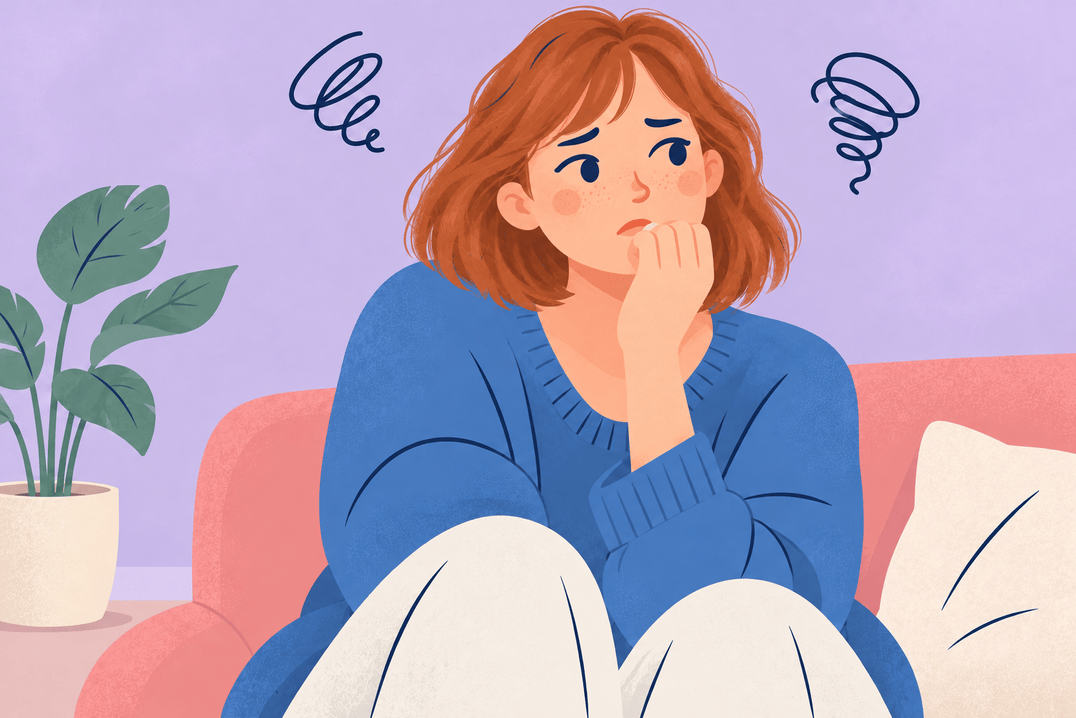
Anxiety may become more noticeable before a period, but that does not make it trivial. Worry that interferes with work, relationships, sleep, or ordinary activities deserves support whether it follows a menstrual pattern or occurs throughout the month.
Compare onset with worsening
Try to distinguish anxiety that appears during a particular part of the cycle from anxiety that is always present but intensifies before menstruation. Record when it eases as well as when it becomes difficult. Existing anxiety conditions can worsen before a period.
A daily symptom record can support that conversation. It does not establish PMS, PMDD, or an anxiety disorder on its own. A clinician may also consider physical health, medicines, and other mental health symptoms.
Describe the effect rather than judging it
Useful examples include avoiding a usual journey, repeatedly seeking reassurance, struggling to concentrate, or lying awake worrying. Note what you were able to do as well as what became difficult.
You do not need to decide whether the worry was reasonable enough to count. The amount of distress and interference matters. If symptoms continue outside the premenstrual days, include that information instead of leaving it out because it does not fit the pattern you expected.
Choose support that fits the difficulty
Regular sleep, less caffeine when it worsens symptoms, and manageable activity can support anxiety care. They are not substitutes for treatment when symptoms are persistent or disruptive. Psychological therapies and medicines are possible options following an individual assessment.
Ask how treatment would address both everyday anxiety and any menstrual worsening. Our PMS treatment guide explains why there may be more than one part to a plan. Do not start, stop, or change a prescribed medicine according to cycle dates without instructions from your prescriber.
Have a route to help
Book an appointment when anxiety is affecting your life, even if you have not completed two cycles of notes. Bring the record you have and the main issue you want help with first.
Seek immediate crisis support for thoughts of suicide or harming yourself. If you cannot remain safe or may act on those thoughts, contact emergency services. A suspected hormonal pattern is not a reason to wait for those feelings to pass without help.
References

Lifeing Editorial
Stories for a little more understanding, a little more reassurance, and the everyday moments in between.
Related posts


PMS supplements: Questions About Evidence and Safety