
Week 3 of pregnancy: From Fertilization to Early Development
Around week 3 in the usual menstrual dating system, fertilization and the earliest stages of development may be taking place. The sequence depends on when ovulation happened. A weekly guide describes the general process; it cannot establish that conception has occurred in your individual cycle.
From one cell to a developing cluster
Fertilization usually happens in a fallopian tube when an egg and a sperm join. The resulting cell divides as it travels towards the uterus. The developing cluster then attaches within the uterine lining, a process called implantation.
These events unfold over several days. Pregnancy weeks and time since fertilization are different measures, which is why a guide may describe very early development while calling this the third week. The week 2 guide explains the ovulation part of that timeline.
You cannot follow these microscopic changes by checking the shape of your abdomen or comparing sensations with another person. The diagrams used in pregnancy guides are illustrations of development, not images of what your own pregnancy must look like today.
Choose one sensible testing plan
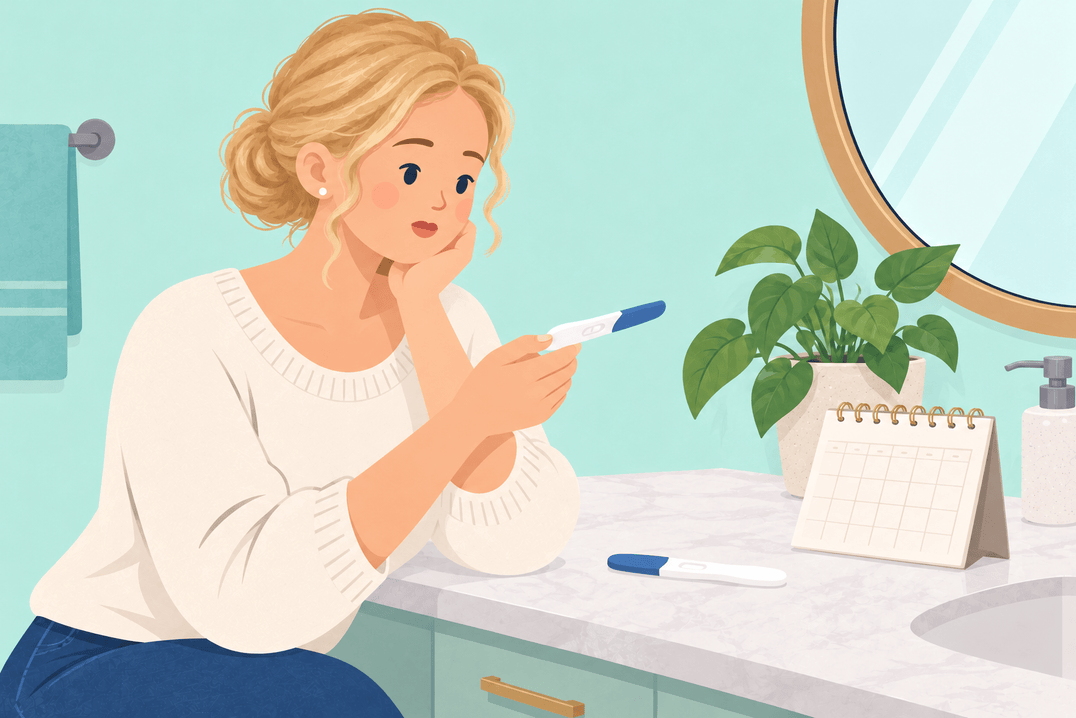
Testing this early may give a negative result even when a pregnancy will later be detected. Follow the instructions for the product you use. If your period does not arrive after a negative result, repeat the test after a few days; contact your GP after a second negative result with no period.
Our guide to a negative test and no period explains that decision in more detail. Keeping the result and test date together is more useful than trying to reconstruct them later from memory.
Review the things you can act on
If you have not started folic acid, the usual UK recommendation is 400 micrograms daily while trying and through the first 12 weeks. A clinician can advise if you need a higher prescribed dose. Starting now is a practical step even if conception has not been confirmed.
If you have questions about a medicine you already took, record its name, dose and dates and ask a pharmacist or prescriber. Do not assume that an exposure means harm, or stop ongoing prescribed treatment without advice. The medicines during the waiting period guide helps organize that conversation.
It is reasonable to leave announcements and purchases for another day. At this stage, a testing plan and a clear route for medication questions are enough to move forward.
References

Lifeing Editorial
Stories for a little more understanding, a little more reassurance, and the everyday moments in between.
Related posts
Week 30 of pregnancy: Tracking Questions as Birth Gets Closer