
Spotting Between Periods: Possible Reasons and When to Get Checked
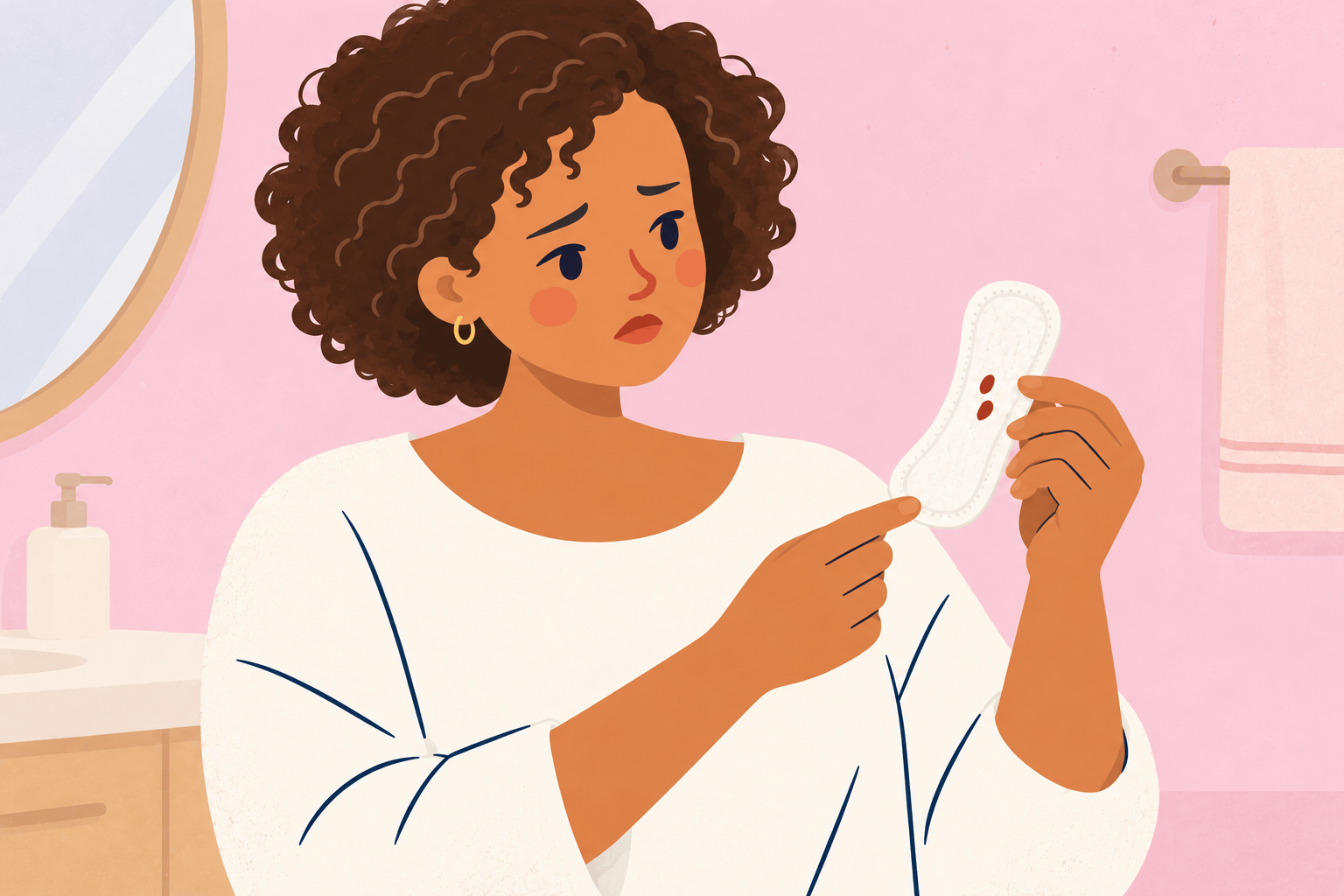
Spotting is usually a small amount of vaginal bleeding outside your usual period. It might be a mark when wiping or a stain on underwear. Even when it is light, a new pattern deserves a conversation rather than a guess.
Possible explanations
Bleeding between periods can occur with hormonal contraception, infection, or changes such as polyps or fibroids. A clinician can investigate the cause; the timing or colour alone does not establish it.
If you recently changed contraception, bring the name and the date you started it. Do not assume that a possible explanation means you should ignore persistent bleeding.
Keep the description concrete
Record when the spotting appeared, how long it lasted, and whether it followed sex. Note pain, discharge changes, and whether your expected period is late.
You might describe it as “two days of light spotting between otherwise regular periods.” You do not need to calculate an exact volume or know the medical term before asking for help. A bleeding diary can help you keep the dates together.
What an appointment may involve
Depending on your circumstances, assessment can include a pregnancy test, tests for sexually transmitted infections, blood tests, or examination of the vagina and cervix. Further investigations may be recommended according to the findings and your history. The guide to bleeding after sex covers that particular pattern.
Ask what to expect before an examination and tell the clinician if you feel uncomfortable. You can also ask how and when results will be shared.
When not to wait
Arrange assessment for unusual bleeding between periods or after sex. After menopause, even one small bleed needs checking. A missed period together with unusual bleeding and abdominal pain needs urgent advice because it can be a sign of ectopic pregnancy. Sudden severe pain, fainting, or marked dizziness needs emergency care.
If you have already confirmed a pregnancy, follow the guidance on bleeding during pregnancy. Do not label the bleeding as implantation simply because it is light.
References

Lifeing Editorial
Stories for a little more understanding, a little more reassurance, and the everyday moments in between.
Related posts


Spotting or Bleeding While Pregnant: What to Do and When to Get Help