
Sudden one sided pelvic pain: When to Seek Urgent Help

Sudden pain on one side of the lower abdomen or pelvis should not automatically be labeled ovulation pain. Get urgent medical advice, especially if the pain is new, returns repeatedly, or comes with vomiting, fever, bleeding, or possible pregnancy.
Severe or worsening pain, fainting, marked dizziness, shoulder tip pain, breathing difficulty, or heavy vaginal bleeding with pelvic pain needs emergency care. If you feel faint or very unwell, do not drive yourself.
Why a familiar explanation may not be enough
Ovarian cyst rupture can cause acute pain. Ovarian torsion, where an ovary twists and its blood supply is affected, is another time sensitive possibility. Pain from torsion can sometimes come and go before becoming sustained. Improvement between episodes does not establish that the problem is harmless.
Pregnancy outside the uterus can also cause pain on one side, sometimes with bleeding that differs from a usual period. Seek assessment when pregnancy is possible even if you have not had a positive test. Bowel, urinary, and other abdominal conditions can produce similar pain.
Share the details that change assessment
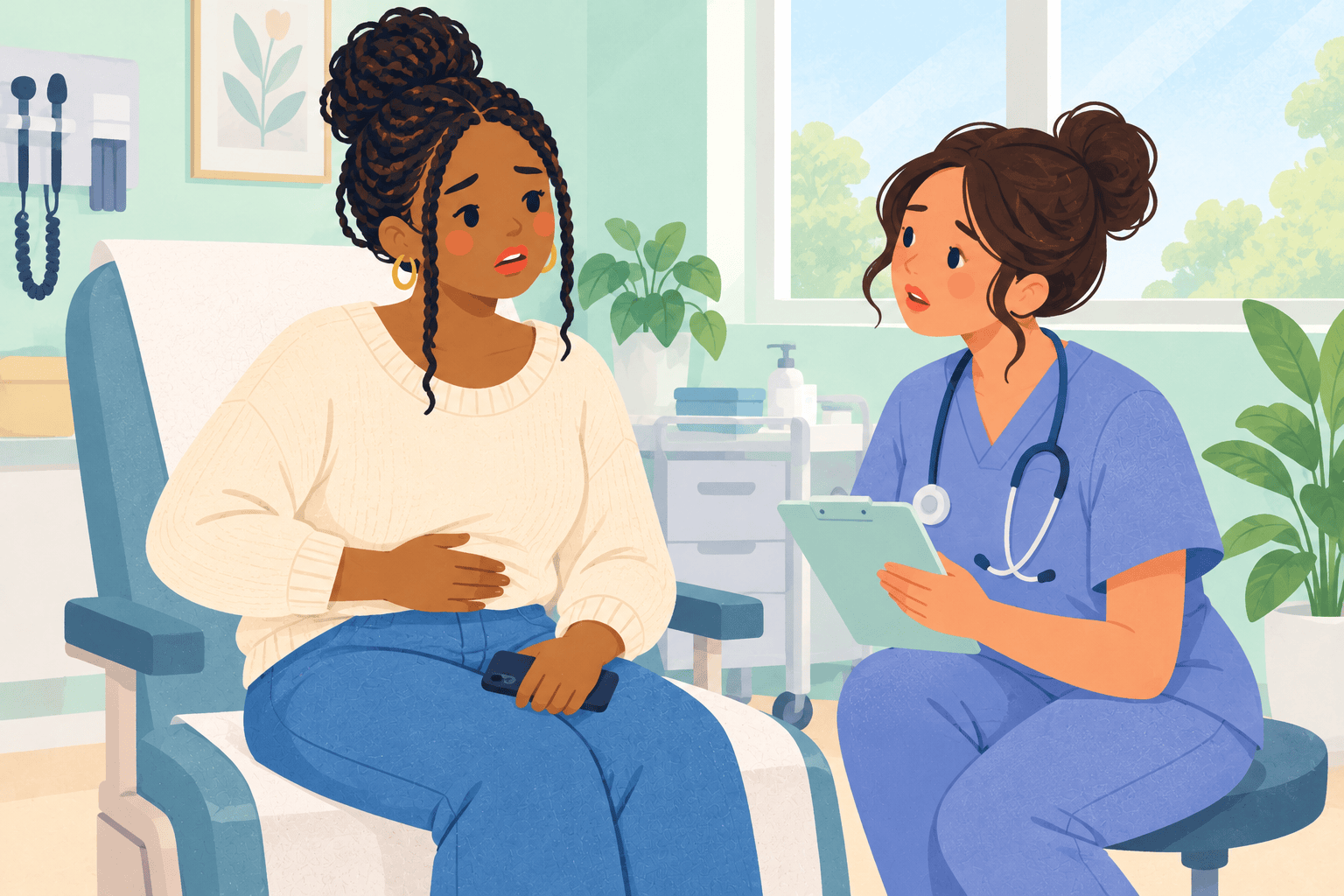
Describe the exact onset, where the pain started, and whether it has spread. Mention vomiting, fever, faintness, bleeding, unusual discharge, and urinary or bowel symptoms. Tell the team about the last period, contraception, pregnancy possibility, fertility treatment, previous ectopic pregnancy, and known cysts.
You do not need to decide which organ hurts before asking for care. The ovarian cyst rupture guide explains one possible cause without replacing assessment of the alternatives.
Tests follow the clinical concern
Clinicians may check vital signs, examine the abdomen and pelvis with consent, and arrange pregnancy testing, blood or urine tests, or ultrasound. Suspected torsion may require urgent surgery to assess and protect the ovary. There is no home method that can safely rule it out or correct it.
Leave with a clear return plan
If you go home after assessment, ask what diagnosis is suspected, whether results remain outstanding, and which changes mean you should return immediately. New or worsening symptoms deserve reassessment even after an earlier reassuring visit.
For discomfort that continues after urgent causes have been assessed, the persistent pelvic pain guide can help organize the next appointment.
References

Lifeing Editorial
Stories for a little more understanding, a little more reassurance, and the everyday moments in between.
Related posts

Suddenly stopped periods: Preparing for a Medical Review