
Thigh pain during menstruation: When Cramps Spread Beyond Your Abdomen
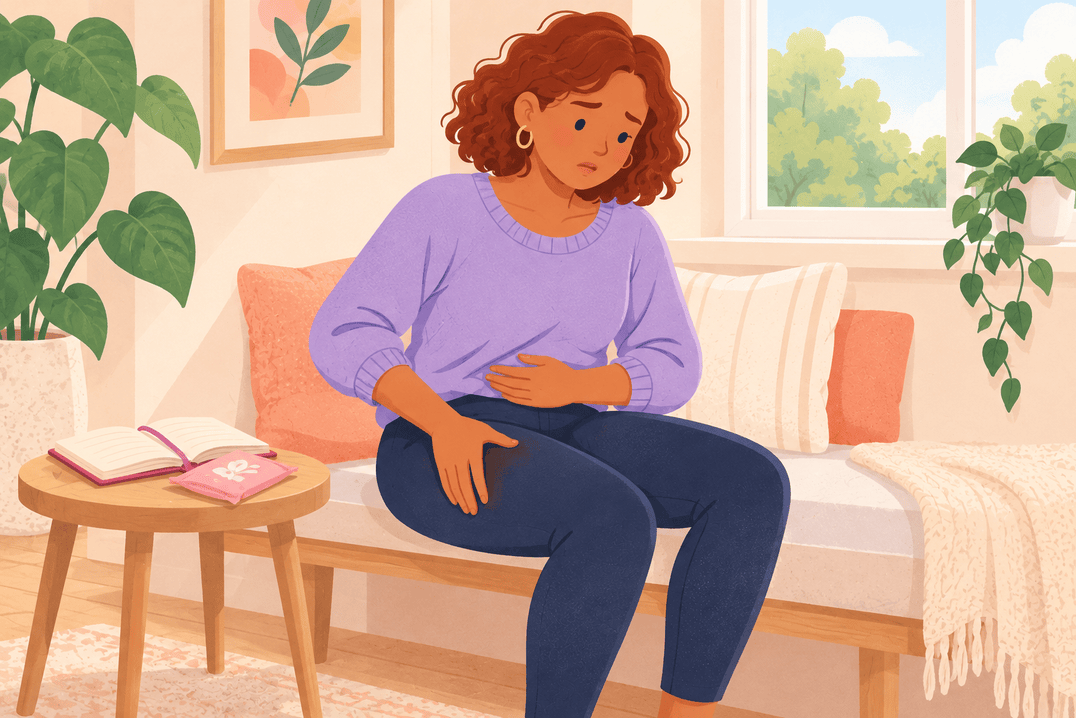
Menstrual cramps can spread from the lower abdomen into the thighs. That can make sitting, walking, or resting uncomfortable even when the abdomen is not the most painful area. Still, the timing of a period should not be used to explain every new leg symptom.
Describe where and when it hurts
Note whether the discomfort affects one thigh or both, begins alongside abdominal cramps, and eases when your period settles. Mention whether it is an ache, cramp, or shooting sensation and whether there is tingling or weakness.
A short record can help distinguish a familiar menstrual pattern from a new problem. Our guide to lower back pain during periods is useful when symptoms involve both the back and legs.
Choose comfort that does not aggravate symptoms
For familiar mild cramping, try a comfortable position or gentle movement if it helps. You do not need to stretch forcefully through pain. A warm bath may feel soothing, and suitable period pain medicine can be discussed with a pharmacist.
Record whether the discomfort stops you walking normally or wakes you at night. These are useful treatment goals to bring to an appointment, rather than reasons to blame yourself for not staying active.
Treat swelling or breathing symptoms differently
New pain with swelling in one leg needs urgent medical assessment, especially with skin color changes or a warm painful area. A blood clot is one possible cause and cannot be ruled out because you are menstruating.
Leg pain or swelling together with chest pain or breathlessness needs emergency care. Do not wait for the period to finish to see whether those symptoms settle.
Ask for help with a changing pattern
If thigh pain is persistent, repeatedly severe, or different from your usual cramps, arrange a clinical review. New weakness or numbness should also be assessed. Back pain with symptoms in both legs, loss of feeling around the genitals, or new bladder or bowel control problems needs emergency care.
The period pain treatment plan guide can help you describe the effect on daily life. A plan should address the symptom you actually have, not assume that all pain during menstruation needs the same treatment.
References

Lifeing Editorial
Stories for a little more understanding, a little more reassurance, and the everyday moments in between.
Related posts

Three missed periods: When to Arrange an Assessment