
Vomiting or diarrhea on the pill: Checking Whether Protection Is Affected
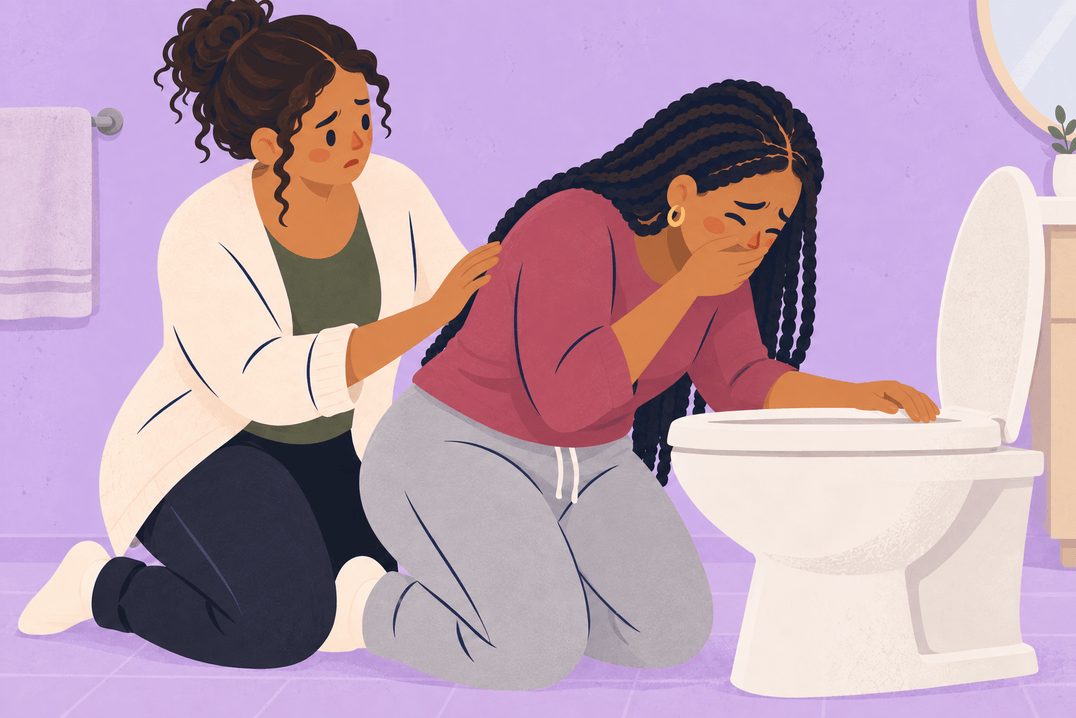
Vomiting soon after a contraceptive pill or significant diarrhea can affect how much medicine is absorbed. The advice depends on the exact pill, when symptoms occurred, and how long they continue. One loose stool does not automatically mean that contraception has failed.
Check the patient leaflet or contact a pharmacist promptly if you are unsure. Have the packet and a record of the dose and symptom times available.
Match the timing to the product
For many combined pills, vomiting within three hours is treated as a potentially unabsorbed dose; some products use a four hour window. Traditional progestogen only pills use a shorter window, while desogestrel and drospirenone instructions commonly refer to three to four hours.
These are examples of why the product matters, not a complete replacement dose algorithm. Your instructions may require a replacement tablet and additional precautions, especially if vomiting continues. The missed pill guide explains the details needed to check protection.
Continuing illness can change the plan
With combined pills, diarrhea lasting more than 24 hours can require extra contraception. Severe watery diarrhea can also affect progestogen only pills. Follow the advice for your product about continuing tablets, extra protection, and how long protection takes to recover after symptoms stop.
If illness occurs near the end of active combined tablets, the planned hormone interval may need to be omitted. Do not decide to extend a break or stop tablets until bleeding begins. Obtain instructions specific to the packet and illness timeline.
Consider recent sex separately
If protection may have been reduced and sex occurred, ask promptly whether emergency contraception is needed. The choice depends on timing and medicines, including your regular pill. Some emergency pills also affect when hormonal contraception can restart.
Use condoms or avoid sex that could cause pregnancy while protection is uncertain, and ask when a pregnancy test would be informative. Do not wait for a missed bleed before seeking time sensitive advice.
Make future advice easier to find
Save your product leaflet and the pharmacy or clinic contact details. If illness repeatedly interferes with tablet absorption, a method that does not rely on taking an oral tablet may be worth discussing.
The changing pill guide can help prepare that conversation. Choosing another method should include a transition plan rather than an unsupported gap in contraception.
References
- NHS: Sickness or diarrhea while taking the combined pill (opens in a new tab)
- NHS: Sickness or diarrhea while taking the progestogen only pill (opens in a new tab)
- NHS: Missed combined pills (opens in a new tab)
- NHS: Missed progestogen only pills (opens in a new tab)
- NHS: Emergency contraception (opens in a new tab)

Lifeing Editorial
Stories for a little more understanding, a little more reassurance, and the everyday moments in between.
Related posts


Watery discharge: Everyday Variation and Reasons to Seek Advice