
Why Your Period Is Late: Possible Causes and What to Do Next

A period that does not arrive when expected can leave you checking the calendar again and again. Start with what you know: when your last period began, whether pregnancy is possible, and whether this delay is a single delay or part of a new pattern.
What can make a period late?
Pregnancy, stress, changes in weight or exercise, hormonal contraception, breastfeeding, and the approach to menopause can affect timing. Conditions affecting hormones can also be involved. A late period alone cannot identify the cause.
Consider the context without blaming yourself. A change in routine is useful information to share; it is not proof that you caused a problem. Avoid trying several supplements simply to make bleeding start.
If pregnancy is possible
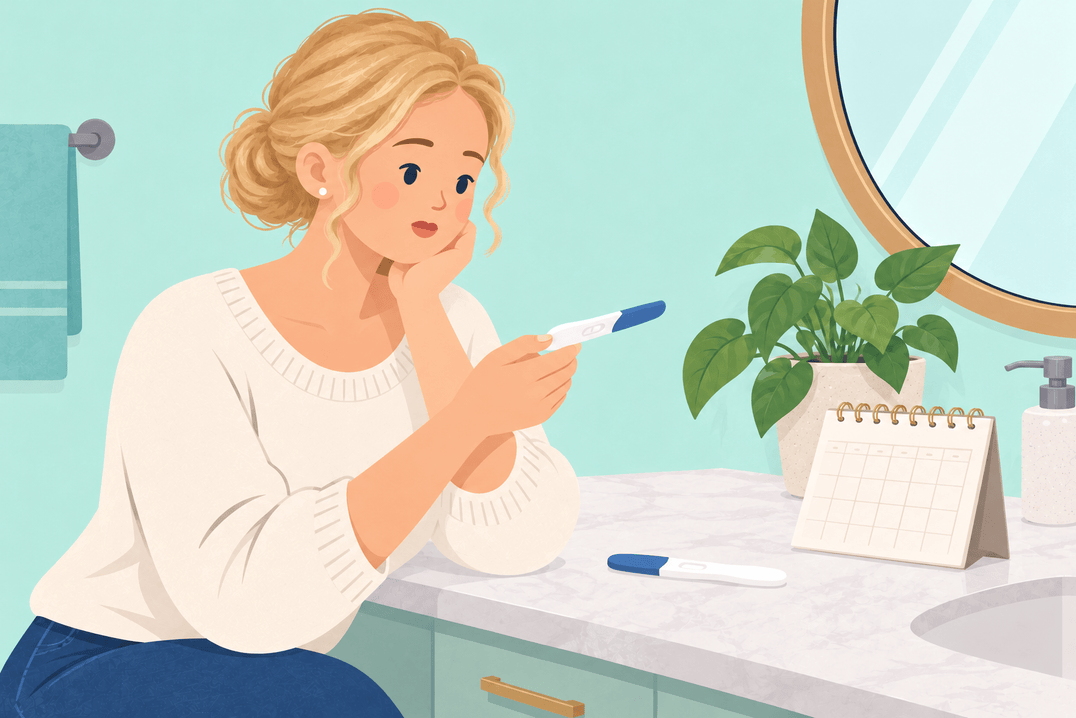
Use a home test from the first day of a missed period. If you cannot predict your next period, test at least 21 days after the last unprotected sex. A negative result taken early may need repeating.
Write the test date beside your cycle dates. This gives you a clear starting point instead of relying on memory or comparing your symptoms with someone else’s.
Prepare a useful record
Note your last few period start dates, contraception changes, recent illnesses, and any pain or unusual bleeding. You do not need a perfect diary before booking an appointment. A short description such as “usually monthly, now three missed periods” is useful.
When to get help
Arrange an appointment if you miss three periods in succession or have other unexplained symptoms. A clinician can decide which checks fit your circumstances. Our guide to three missed periods explains what information can help.
If pregnancy is possible, pain low on one side or at the tip of the shoulder needs urgent medical advice, even without a positive test. Sudden severe abdominal pain with fainting or marked dizziness needs emergency care.
For the next step in testing, read when to take a pregnancy test.
References

Lifeing Editorial
Stories for a little more understanding, a little more reassurance, and the everyday moments in between.
Related posts

Your Baby’s Development: Key Changes Across the Weeks of Pregnancy