
Abdominal Pain During Pregnancy: Common Causes and Urgent Warning Signs
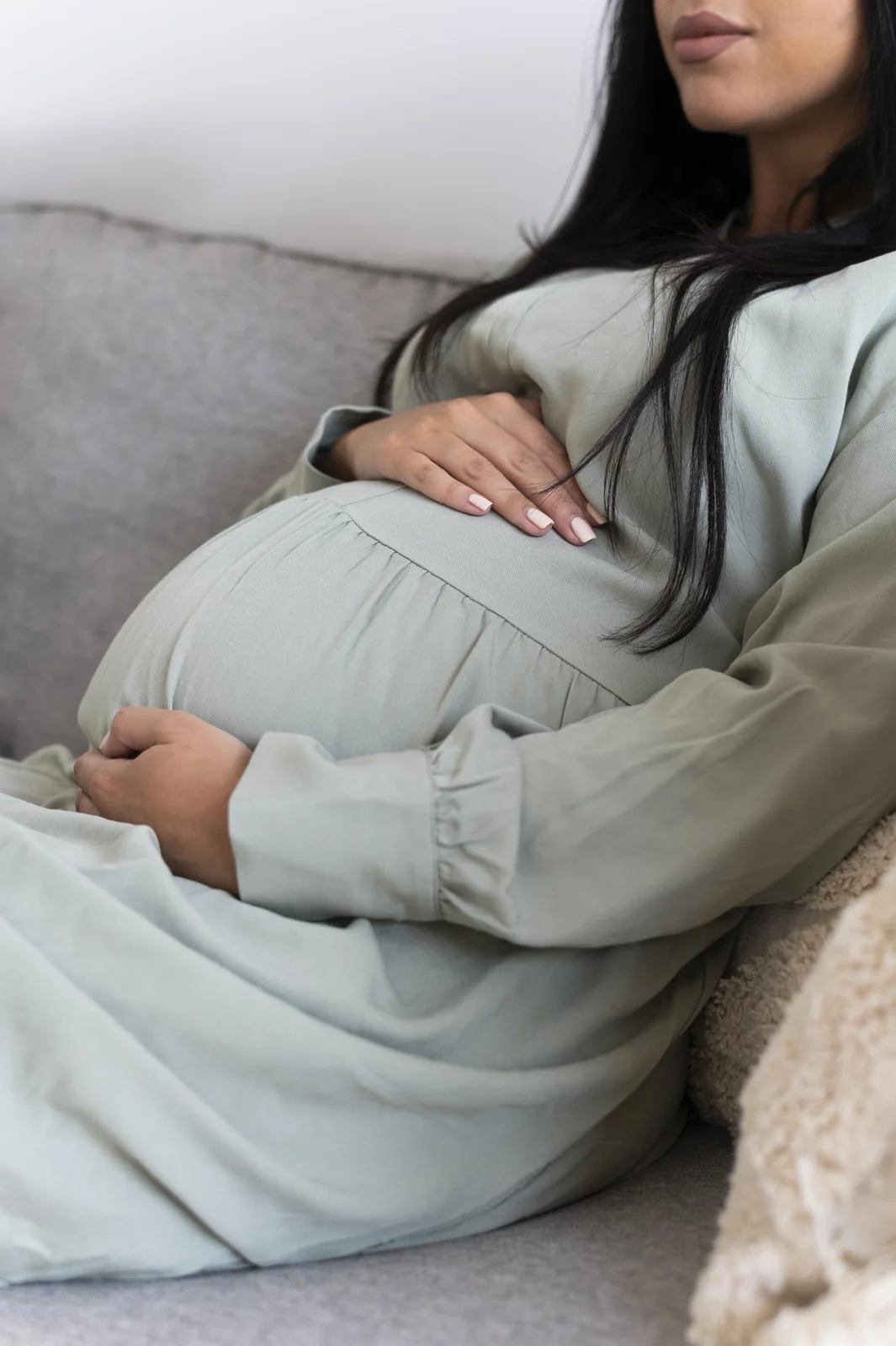
Abdominal discomfort in pregnancy can have several explanations. It helps to know which patterns deserve immediate attention and how to describe what you are feeling without having to diagnose it yourself.
Some discomfort has a simple explanation
Mild pain that settles with a change of position, rest, a bowel movement, or passing wind may relate to ligament stretching, constipation, or trapped gas. If you are worried, contact your maternity team.
Do not use a common explanation to dismiss a new or different symptom. The useful question is what is happening now.
When to call immediately
Contact your maternity service promptly for pain with bleeding, regular tightenings, fluid leaking, unusual discharge, urinary symptoms, or severe pain that does not settle. Regular cramps before 37 weeks also need urgent assessment. Severe pain, collapse, or heavy bleeding requires emergency care.
Do not wait out a period of rest if the pain is severe or other warning signs are present.
Give the team a clear description
Say how many weeks pregnant you are, where the pain is, and when it started. Is it constant, or does it come and go? Can you carry on with ordinary activities? What other symptoms are present?
Use your own words. “A sharp pain low on the right” or “tightenings that keep returning” is more useful than choosing a diagnosis from an online list.
Serious causes need assessment
Conditions associated with pregnancy, including ectopic pregnancy, miscarriage, pre eclampsia, premature labour, and placental problems, can cause abdominal pain. Urinary infections can also be involved.
That list is a reason for appropriate checks, not a prediction of what your pain means.
After assessment, ask what changes should prompt another call and who to contact out of hours. For pain with bleeding, read spotting or bleeding while pregnant.
Cramping while trying to conceive
Before a positive test, abdominal cramps cannot distinguish an approaching period from pregnancy or identify implantation. If pregnancy is possible and you have abdominal pain, get medical advice, particularly if pain persists, affects one side, or comes with bleeding. Ectopic pregnancy needs consideration even without a positive home test.
Tell the clinician when your last period began, whether the timing is uncertain, and what any pregnancy tests showed. Do not delay urgent care for shoulder tip pain, severe pain, faintness, or heavy bleeding while waiting for a testing date.
For the separate pregnancy question, the testing guide explains missed period and twenty one day timing. If you have already been assessed and asked to repeat a test or attend a scan, follow that plan and seek help again for new or worsening symptoms.
Avoid matching cramps to an implantation checklist
The location, duration, or description of a cramp cannot confirm implantation. A symptom diary can help you describe pain to a clinician, but it cannot show an embryo attaching or distinguish all possible causes. No cramps is not evidence that implantation failed either.
The implantation timing guide explains why a precise day is usually unknown. Use the waiting plan for testing decisions while keeping the urgent symptom advice above as a separate reason to seek care.
References
- NHS: stomach pain in pregnancy (opens in a new tab)
- NHS: Ectopic pregnancy symptoms (opens in a new tab)
- NHS: Doing a pregnancy test (opens in a new tab)
- NHS: Vaginal bleeding in pregnancy (opens in a new tab)
- NHS: Urinary tract infections (opens in a new tab)
- Wilcox and colleagues: Timing of implantation and pregnancy loss (opens in a new tab)

Lifeing Editorial
Stories for a little more understanding, a little more reassurance, and the everyday moments in between.
Related posts
Before Your Period: Making Sense of Mood Changes, Bloating, and PMS