
Rolling milestones: Encouraging Safe Floor Play
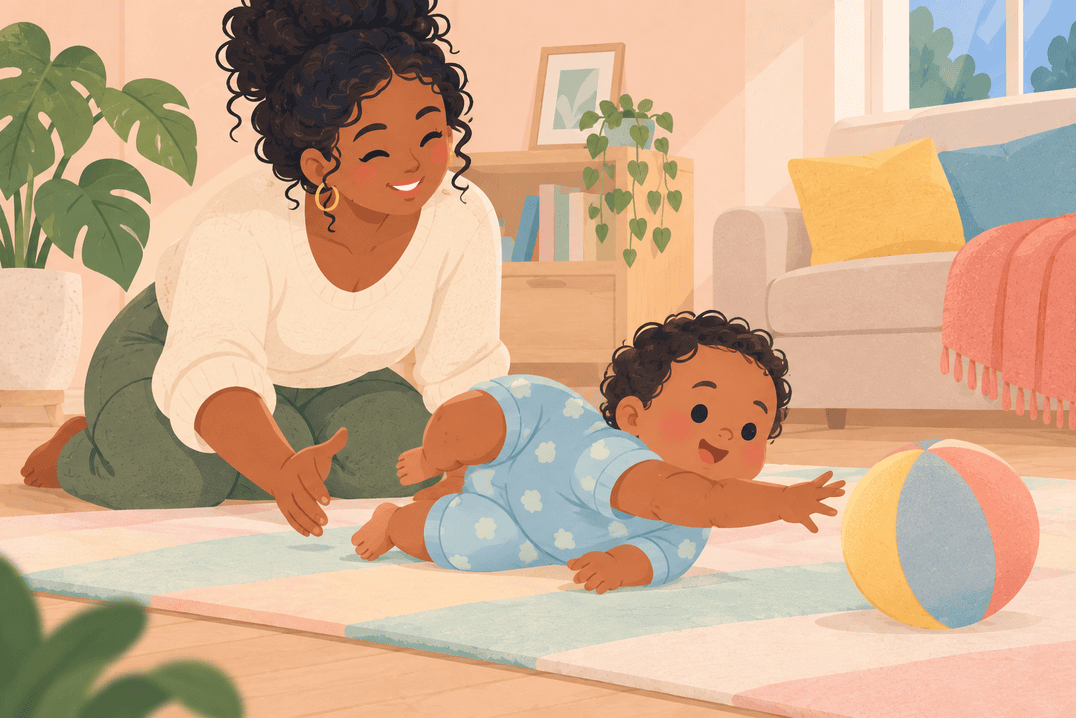
Rolling changes how far a baby can move in a moment. Early attempts may look uneven or surprising, and rolling in one direction can appear before the other. Give your baby room to explore while preparing the environment before you expect the first successful roll.
Look for movement building over time
During awake play, you may notice your baby turning their head, reaching across their body, lifting their legs or shifting weight through an arm. These movements can be part of learning to change position. A single accidental roll does not show that the skill is reliable.
By six months, most babies can roll from tummy to back. This milestone does not mean every baby must already roll confidently in both directions. If the expected skill is absent, movement seems persistently unequal or you are worried, discuss it with your health visitor or clinician. Ask about corrected age if your baby was premature.
Make the floor the practice space
Choose a clear area on the floor with a firm surface and room on both sides. Stay nearby and use your face or an age appropriate toy to invite looking and reaching. Offer the toy to either side without putting it so far away that the whole session becomes frustrating.
Our tummy time guide explains brief practice on the front. Alternate this with back play and cuddles. Let your baby initiate movements rather than pulling an arm or leg to complete a roll. If a professional has given you individual handling advice, follow that plan.
Prepare for movement before it becomes predictable
Never leave a baby unattended on a bed, sofa or changing surface. Use a changing mat on the floor when possible, with supplies ready before you begin. Reaching for a diaper should not create an opportunity to roll off an edge.
Check the surrounding floor for small objects, cords and anything a baby could pull down. Keep pets and older children’s small toys away from the practice area. Staying on the floor reduces fall risk but does not remove the need to supervise.
Change sleep arrangements when attempts begin
Stop swaddling when your baby starts trying to roll. Do not wait for a complete roll or continue by loosening only part of the swaddle. Continue placing your baby on their back at the start of every sleep, in a clear cot or bassinet with a firm, flat mattress.
Our rolling during sleep guide explains what to do after a baby changes position themselves. Do not use wedges, straps or rolled towels to prevent movement, and do not use front sleeping as practice.
Seek advice without forcing more exercise
Tell your clinician about a strong preference for moving only one side, apparent pain, unusual stiffness or floppiness, or loss of a skill. These observations need assessment rather than a more demanding exercise routine. Our head control guide can help you describe related changes.
Milestone checklists support conversations but do not replace developmental assessment. Keep offering comfortable opportunities to play while arranging help, rather than waiting several months to see whether extra practice resolves a concern.
References
- CDC: Developmental milestones at six months (opens in a new tab)
- CDC: Developmental milestones at four months (opens in a new tab)
- CDC: Milestone monitoring and acting on concerns (opens in a new tab)
- NHS: Helping babies and toddlers stay active (opens in a new tab)
- NHS: Baby and toddler safety (opens in a new tab)
- American Academy of Pediatrics: Safe sleep recommendations (opens in a new tab)
- American Academy of Pediatrics: Corrected age for premature babies (opens in a new tab)
- CDC: Movement concerns and early signs of cerebral palsy (opens in a new tab)

Lifeing Editorial
Stories for a little more understanding, a little more reassurance, and the everyday moments in between.
Related posts


Sitting development: Supporting Practice Without Rushing