
Sitting development: Supporting Practice Without Rushing
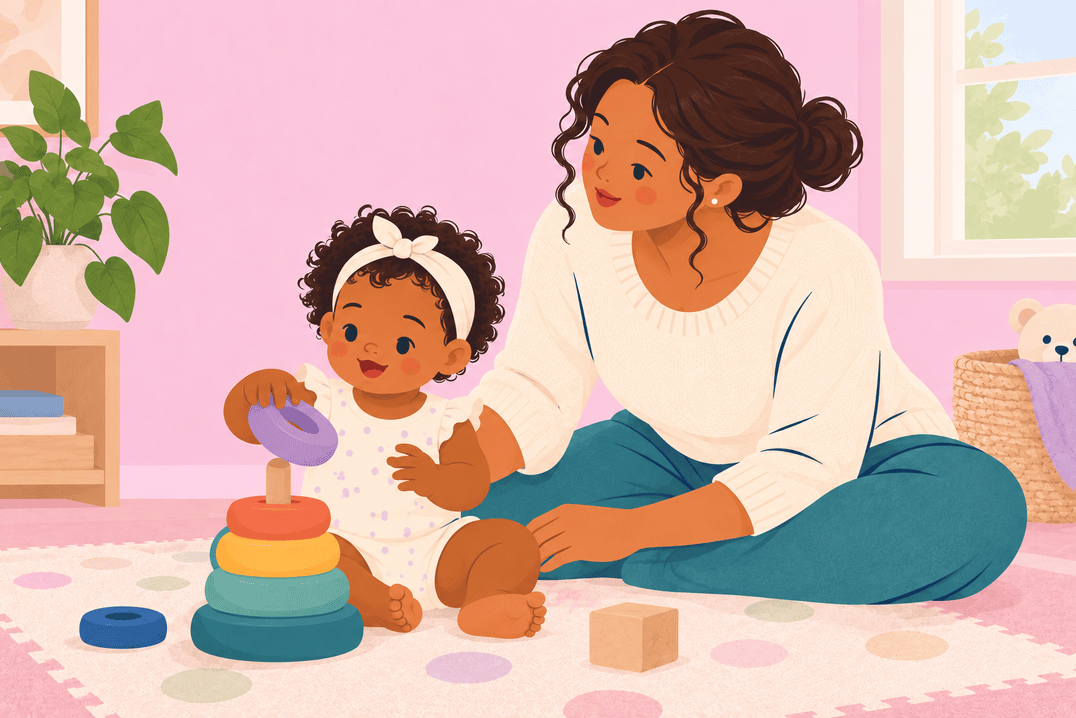
Sitting changes a baby’s view of the room, but it develops through several smaller skills. Being held upright, balancing with hands on the floor and getting into sitting independently are different abilities. A baby who looks steady for a moment may still tip suddenly and need you close by.
Separate supported sitting from independent sitting
At around six months, many babies lean on their hands to help support themselves while sitting. By nine months, most can sit without support and get into a sitting position themselves. These are observation points for discussing development, not reasons to hold a younger baby in a position they cannot manage.
If your baby is not showing an expected skill, speak with your health visitor or clinician. Use corrected age as advised for a baby born prematurely. You can ask sooner if you are concerned about head control, strength or how they move.
Offer support close to the floor
Begin with your baby securely supported on your lap or with you seated on the floor. Keep enough support around their trunk for their current ability, and be ready to prevent a fall. Our head control guide explains why a steady head is part of this progression.
Place an age appropriate toy within easy reach and let them explore briefly. Keep the experience comfortable rather than repeatedly moving the toy beyond their balance. End the attempt when they slump, become tired or seem unhappy. Do not pull them into sitting by their hands.
Keep free movement in the day
Sitting practice should not replace movement on the back and front. Our tummy time guide offers ways to include short, supported play. Reaching, shifting weight and changing positions give a baby opportunities that a moulded seat cannot provide in the same way.
Limit prolonged time in equipment that holds the body in one position. A seat that props your baby upright does not prove they can sit independently. Follow product age, size and development limits, and never place a baby seat on a table or counter.
Supervision still matters after the first steady sit
Stay close enough to prevent a fall because early balance can disappear quickly. Do not leave your baby propped on a sofa, bed or cushion while you attend to another task. Sitting in a bath also does not make a baby safe without continuous hands on supervision.
If your baby falls asleep in a seat during play, move them onto their back in their safe sleep space. Supported sitting is an awake activity, not a new sleeping position.
Ask for help with progress or movement differences
Bring up persistent asymmetry, pain, unusual stiffness or floppiness, or difficulty keeping the head steady. Losing an ability needs prompt assessment. You do not need to buy a device or complete a home exercise programme before asking for help.
Describe what your baby can do comfortably and what support they need. A professional may suggest developmental assessment or physiotherapy. Our crawling variations guide looks at later ways of moving around the floor without assuming every baby follows an identical sequence.
References
- CDC: Developmental milestones at six months (opens in a new tab)
- CDC: Developmental milestones at nine months (opens in a new tab)
- CDC: Milestone monitoring and acting on concerns (opens in a new tab)
- Oxford Health NHS Foundation Trust: Early movement and supported sitting (opens in a new tab)
- NHS: Helping babies and toddlers stay active (opens in a new tab)
- NHS: Baby and toddler safety (opens in a new tab)
- American Academy of Pediatrics: Safe sleep recommendations (opens in a new tab)
- American Academy of Pediatrics: Corrected age for premature babies (opens in a new tab)
- CDC: Movement concerns and early signs of cerebral palsy (opens in a new tab)
- Gloucestershire Hospitals NHS Foundation Trust: Avoiding arm traction injuries (opens in a new tab)

Lifeing Editorial
Stories for a little more understanding, a little more reassurance, and the everyday moments in between.
Related posts

Baby Skin Folds: Cleaning and Drying Without Scrubbing