
Baby Skin Product Claims: Checking Fragrance and Irritation Risks

A baby skincare label can promise gentleness in several different ways. Words such as natural, hypoallergenic and sensitive may sound reassuring, but they do not tell you whether a particular product will suit your baby’s skin. Start with what the product is for, its ingredients and any advice already given by your baby’s clinician.
A small routine is easier to understand than a shelf of products introduced together. A healthy baby does not need a separate cosmetic product for every ordinary skin change.
Look beyond the front label
Check whether the product is intended for babies, where it can be used and any age restrictions or warnings. Read the ingredients as well as the advertising. Keep the packaging available if you later need to discuss a reaction.
In the United States, cosmetic claims such as hypoallergenic do not have a federal definition that guarantees a lower allergy risk. Rules differ between countries, but no reassuring label can promise that an individual baby will never react. A previous reaction to a known ingredient matters more than a broad marketing phrase.
If the ingredient list is unclear, ask a pharmacist or contact the manufacturer. Do not rely only on an online review from someone whose child has different skin needs.
Prefer products without added fragrance
For sensitive skin or eczema, dermatologists commonly recommend products without added fragrance. Unscented is not always the same thing: a product may contain ingredients that mask a smell. A lotion does not need a noticeable perfume to contain a fragrance ingredient.
Check laundry products, wipes and cleansers as well as creams. They also touch the skin. Strong scent is not a sign of better cleanliness, and repeated wiping can irritate regardless of what is on the cloth.
The dry skin guide explains gentle washing and moisturising. If your baby already has eczema, ask the clinician for product choices that fit the treatment plan rather than replacing prescribed care with a cosmetic claim.
Natural does not mean suitable for every baby
Plant extracts and essential oils can cause irritation or allergic reactions. Natural and organic claims do not establish that a product is appropriate for an infant, broken skin or the area around the mouth. Do not add essential oils to a baby’s bath or skin treatment on the strength of an advertising claim.
Avoid treating a long ingredient name as proof of harm, or a familiar kitchen ingredient as proof of safety. The formulation, concentration, intended use and your baby’s own history matter. A professional can help interpret those details without requiring you to become a cosmetic chemist.
Make changes easy to evaluate
If you need a new product, introduce one change at a time and follow the directions. Do not apply several unfamiliar preparations to a new rash while trying to discover its cause. For irritation from saliva, the drool rash guide explains why reducing wetness and rubbing may matter more than buying another cream.
Stop a newly introduced product if it appears to cause irritation and ask for advice. Record the name, when it was applied, where it touched the skin and what happened afterward. Do not deliberately reapply something that caused a significant reaction to confirm your suspicion. Breathing difficulty, sudden mouth or tongue swelling, or collapse requires emergency help.
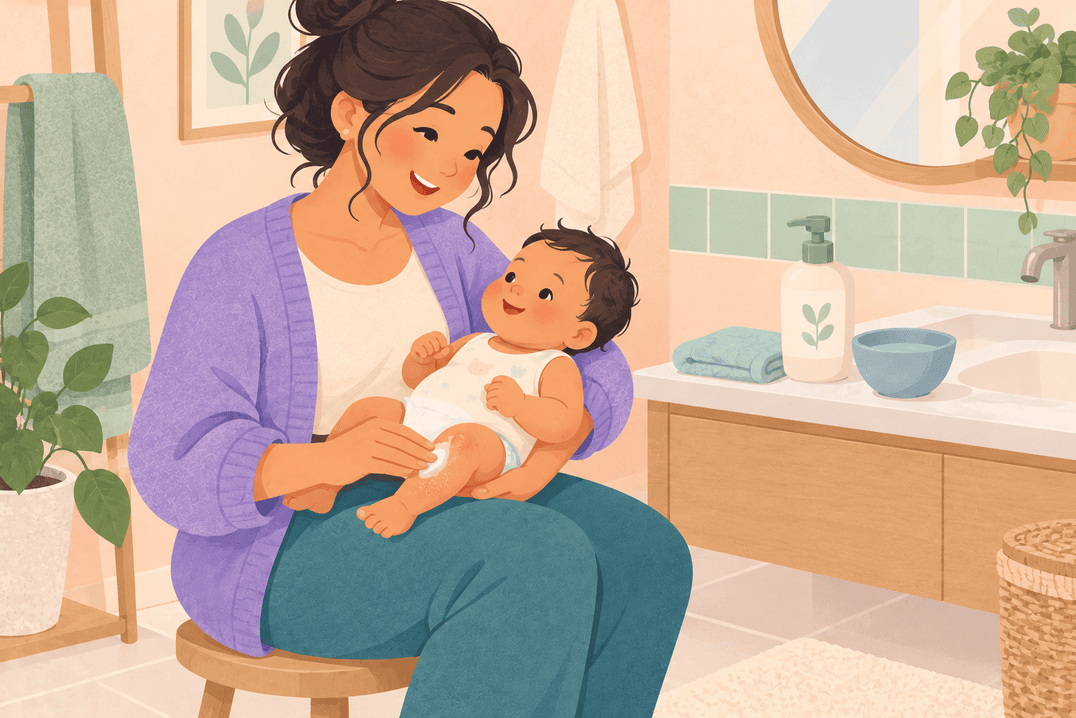
For an emollient, use clean hands and a clean utensil for a pot, or a pump dispenser. Keep products out of reach. Take care with slippery skin and bath surfaces, and remember that emollient residue on fabrics increases fire risk around flames or cigarettes.
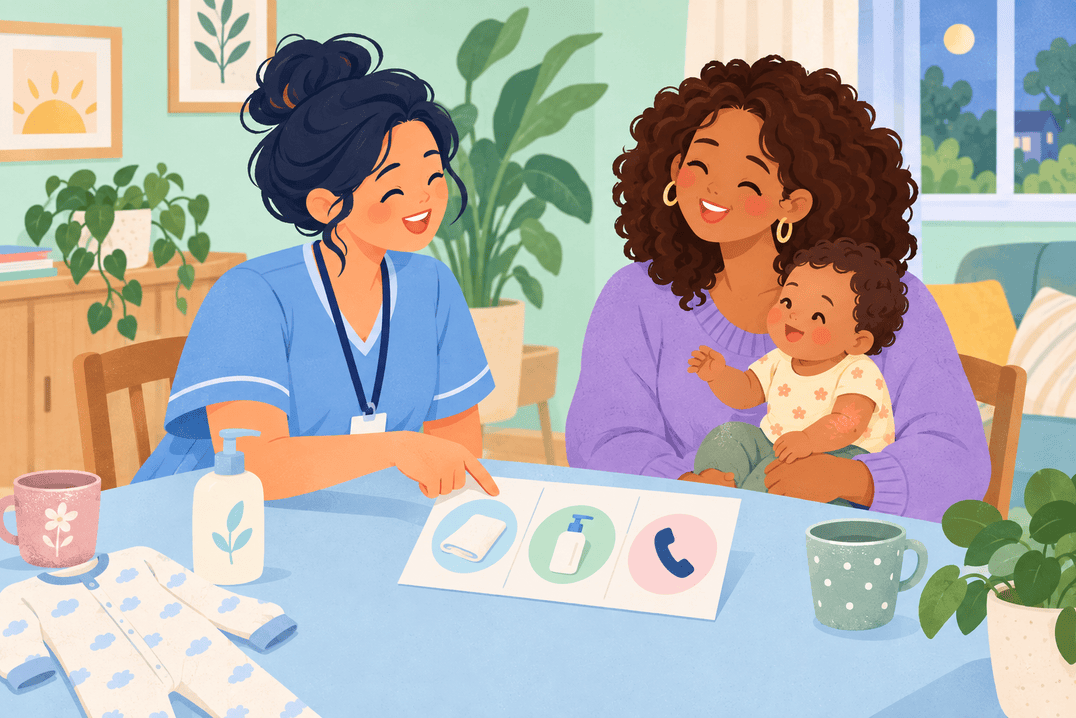
Persistent soreness needs assessment rather than repeated shopping. A useful outcome is a clear routine your baby tolerates, plus instructions for what to do if the skin changes.
References
- American Academy of Dermatology: Choosing products for childhood eczema (opens in a new tab)
- FDA: Allergens in cosmetics (opens in a new tab)
- FDA: The meaning of hypoallergenic cosmetic claims (opens in a new tab)
- FDA: Aromatherapy and natural cosmetic claims (opens in a new tab)
- American Academy of Dermatology: Caring for baby skin, hair and nails (opens in a new tab)
- NHS: Emollients (opens in a new tab)

Lifeing Editorial
Stories for a little more understanding, a little more reassurance, and the everyday moments in between.
Related posts
Baby walkers: Questions About Safety and Development