
Baby walkers: Questions About Safety and Development

A seated baby walker places a baby inside a frame on wheels so they can move by pushing against the floor. It may look like a way to practise walking, but it does not teach that skill and creates serious injury risks. Choose floor play and appropriate support instead.
Understand what the wheels change
A baby in a walker can move quickly towards stairs, hot objects or water. The raised position also brings items within reach that they could not otherwise access. An adult watching nearby may not be able to respond before an injury happens.
Stairs are only one risk. A baby may pull down a hot drink, reach a cooker, access medicines or enter an unsafe area. A closed stair gate does not remove every hazard created by the walker. Our pulling to stand guide explains how new reach changes home safety even without equipment.
Do not use a walker to address a delay
Seated wheeled walkers do not help children learn to walk and may delay the development of walking. They are not a treatment for weak legs, late standing or a child who seems less confident than a sibling.
If you are concerned about progress, arrange an assessment. The late walking guide explains what to describe to a clinician. More time in a device is not a substitute for understanding why a skill is difficult.
Distinguish a push toy from a seated walker
A push toy is held from behind by a child who is already standing and able to manage the activity. It does not suspend the baby in a seat. This difference matters, but it does not make every push toy suitable for every child.
If you use one, follow its instructions and your child’s abilities. Choose a stable product that will not tip or run away from them, and supervise on a clear level surface away from stairs. If they cannot control it or become upset, put it away. A push toy is optional, not something you must buy to produce first steps.
Make safer play easy to arrange
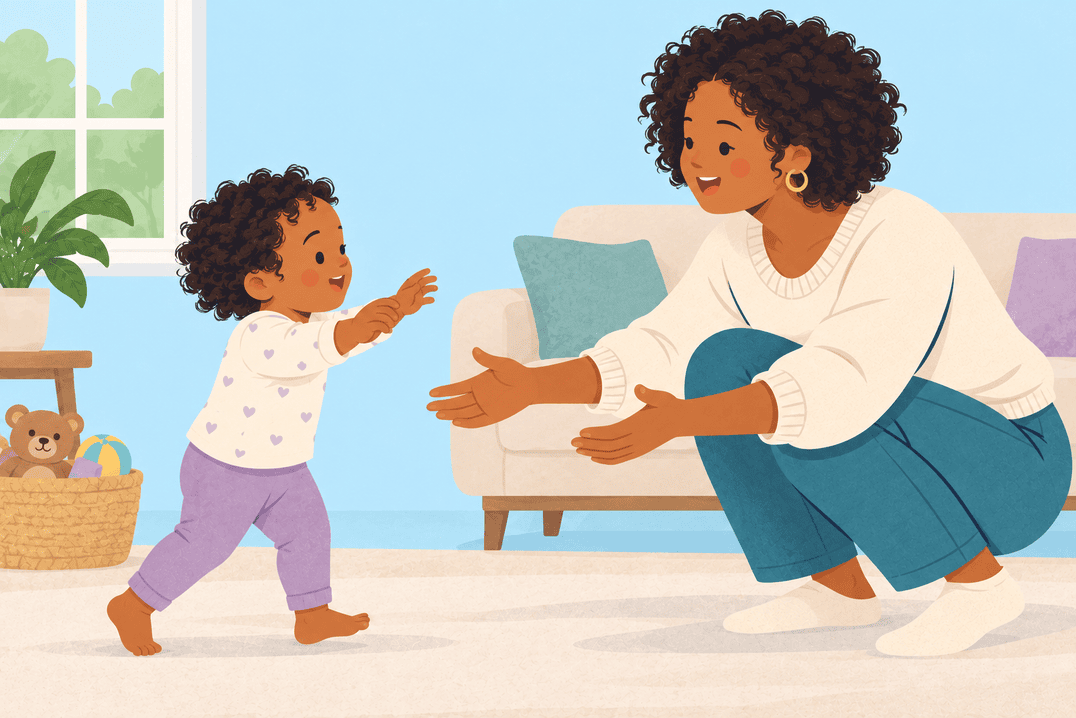
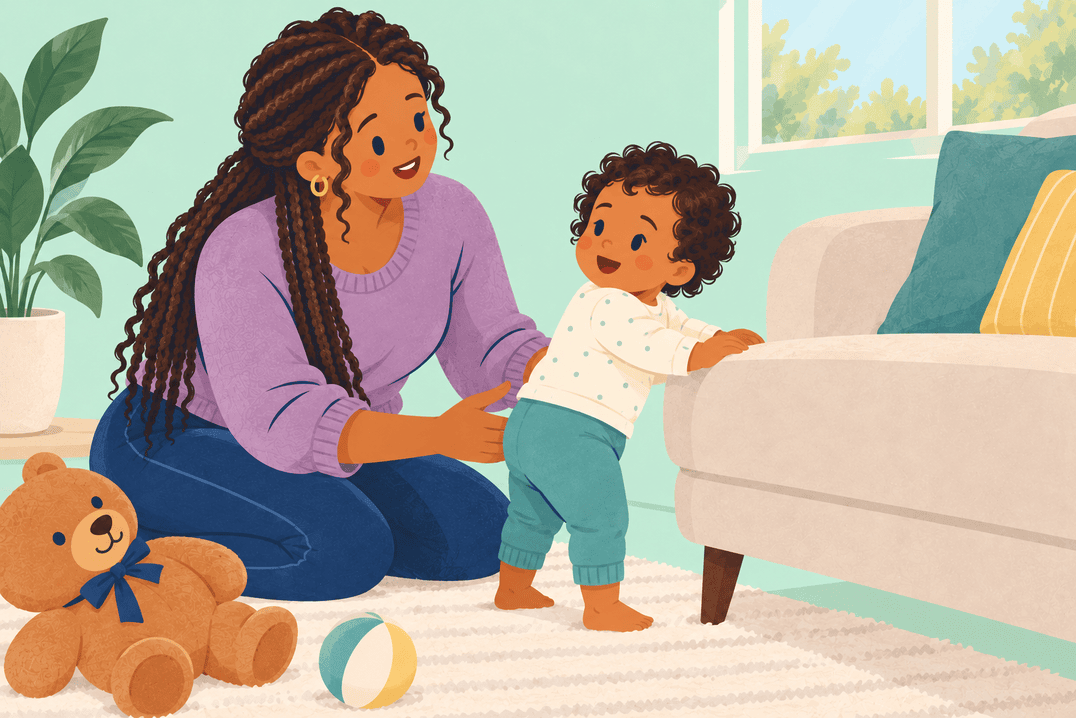
Provide a clear floor area with age appropriate toys and an adult nearby. Let your child practise the positions they can manage, including sitting, reaching, crawling and pulling up at stable furniture. Our first steps guide covers gentle opportunities when they begin letting go.
A stationary activity product also needs correct use and supervision, and should not replace varied floor movement. Follow its developmental and size limits. If a baby falls asleep in play equipment, move them to their safe sleep space on their back.
Share the same plan wherever your child stays
Tell relatives and other caregivers that you do not want a seated wheeled walker used. Check what equipment is available in other care settings rather than assuming everyone uses the same approach.
If you already own a walker, stop using it and arrange safe disposal so it is not passed to another baby. Keep focusing on an environment that supports exploration and timely developmental advice, rather than a device promising to speed up walking.
References
- American Academy of Pediatrics: Why wheeled baby walkers are unsafe (opens in a new tab)
- CDC: Developmental milestones at one year (opens in a new tab)
- East of England Community Health and Care NHS Trust: Learning to walk (opens in a new tab)
- NHS: Helping babies and toddlers stay active (opens in a new tab)
- NHS: Baby and toddler safety (opens in a new tab)
- US Consumer Product Safety Commission: Anchoring furniture and televisions (opens in a new tab)
- American Academy of Pediatrics: Safe sleep recommendations (opens in a new tab)

Lifeing Editorial
Stories for a little more understanding, a little more reassurance, and the everyday moments in between.
Related posts
Babyproofing Before Crawling: A Practical Home Check