
First steps: Helping Your Child Practice Without Pressure
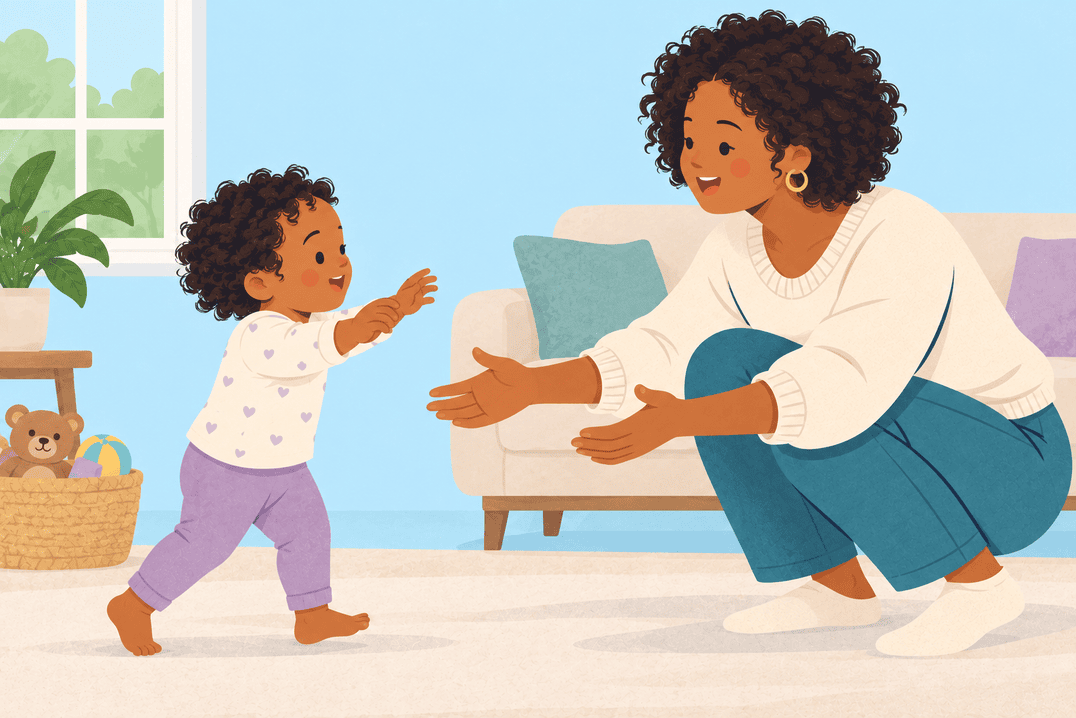
First steps may happen in a brief burst and then disappear from view while your child returns to a familiar way of moving. Learning to walk involves balance, strength and confidence. Offer a safe place to try without making each play session a performance for the adults watching.
Begin with the skills your child already uses
Notice how they pull up, stand with support and move along furniture. Our cruising guide explains this stage. When your child starts letting go, sit nearby and offer a short, inviting distance towards you.
Do not move away just as they reach you or make them continue until they take a certain number of steps. Respond warmly to the attempt and allow a return to sitting or crawling. Ordinary play provides practice without a fixed daily walking target.
Make the practice surface predictable
Use a firm, clear floor rather than a bed or cushion. Move loose rugs, small objects and trailing cords from the route. Keep stairs and other hazards inaccessible, and stay near enough to help when balance changes.
If your child holds your hands for support, keep the support comfortable and low rather than pulling their arms overhead. They should bear weight through their own feet, not hang from your hands. Stop if they seem tired, distressed or uncomfortable.
Let footwear protect the feet
Bare feet can work well on a clean, safe and warm indoor surface. Shoes are useful for protection outside once your child is walking. Choose a comfortable fit with room for the toes and check it regularly as their feet grow.
A special shoe does not replace assessment of a movement concern. Avoid buying rigid corrective footwear unless a clinician has recommended it for your child. If a shoe rubs or changes how they move, stop using it and check the fit.
Expect early wobbling without dismissing pain
New walkers often hold their arms out and place their feet farther apart to help balance. Keep practice close to the floor and offer comfort after a tumble. Do not insist on more walking when your child appears hurt.
A sudden inability to put weight on a leg, severe pain, an obvious change in the leg’s shape or being unwell with a limp needs immediate medical assessment. A new unexplained limp should also be checked. These changes are different from ordinary early wobbling.
Bring up missing skills early
Most children take a few independent steps by fifteen months and walk without holding on by eighteen months. If an expected skill is missing, speak with your clinician rather than waiting for another deadline. The late walking guide covers what to describe and how corrected age may matter after premature birth.
Persistent asymmetry or loss of a skill also needs assessment. Do not use a seated wheeled walker to try to catch up: the walker safety guide explains why it does not teach walking and can cause injury. Comfortable practice and timely support can happen together.
References
- CDC: Developmental milestones at fifteen months (opens in a new tab)
- CDC: Developmental milestones at eighteen months (opens in a new tab)
- East of England Community Health and Care NHS Trust: Learning to walk (opens in a new tab)
- NHS: Children’s feet and choosing first shoes (opens in a new tab)
- NHS: Baby and toddler safety (opens in a new tab)
- American Academy of Pediatrics: Why wheeled baby walkers are unsafe (opens in a new tab)
- CDC: Getting help with developmental concerns (opens in a new tab)
- NHS: Limping and inability to bear weight in children (opens in a new tab)

Lifeing Editorial
Stories for a little more understanding, a little more reassurance, and the everyday moments in between.
Related posts
Food textures for babies: Moving Beyond Smooth Purees