
Food textures for babies: Moving Beyond Smooth Purees
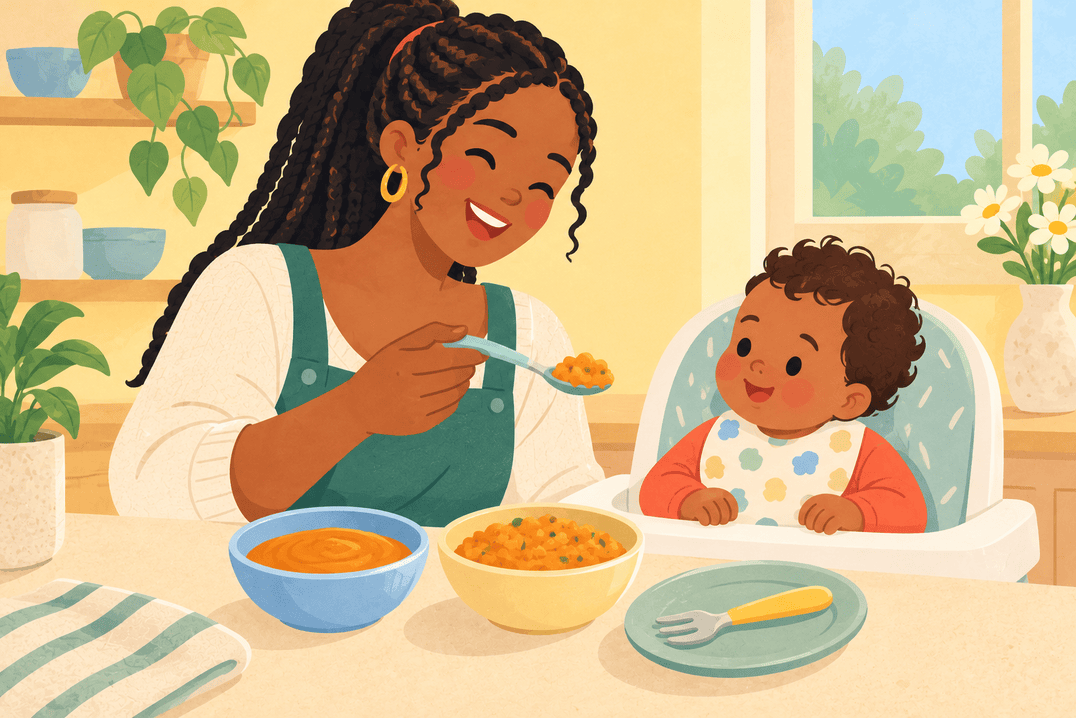
Learning to eat involves more than discovering flavours. Your baby is also learning how different foods feel and move in the mouth. Smooth puree can be a useful starting texture, but it does not need to remain the only texture as their skills develop.
Progress with ability rather than the packet stage
Move towards thicker mashed food, soft lumps and suitable finger foods when your baby can manage them. Some babies begin with soft mashed food or finger foods around six months without needing a separate smooth puree phase. A stage number on a jar cannot assess your child’s swallowing skills.
Try making a familiar food a little less smooth, rather than changing every part of the meal at once. For example, cooked potato can move from a smooth mash to a gently forked texture. Keep it soft and moist enough to manage; progressing texture does not mean offering hard chunks.
Let hands be part of the learning
Touching, squashing and bringing food towards the mouth are useful opportunities to practise. You can offer a spoon and suitable finger food in the same meal. Our feeding approaches guide explains why you can combine methods.
Keep your baby upright and stay attentive throughout. Foods that look soft may still contain a hard skin, seed or bone, so inspect the actual serving. Our finger food preparation guide covers the shape as well as the texture.
Understand gagging without ignoring distress
Gagging can happen while a baby learns to handle food. It is a protective reflex and may involve retching, pushing the tongue forward or bringing food back towards the front of the mouth. Occasional gagging is different from repeated difficulty at most meals.
A baby who cannot breathe, cry or cough effectively may be choking. Get emergency help and begin appropriate infant choking first aid, following the emergency dispatcher’s instructions. Do not sweep your finger blindly inside the mouth. Learn infant first aid before you need it; a short description of gagging cannot replace practical training.
Ask for help when progress is difficult
Seek assessment for repeated coughing with food or drinks, breathing changes during feeds, a wet or gurgly voice after eating, persistent distress or poor weight gain. A baby who continues to reject all textures beyond puree may need support rather than more pressure.
Describe which foods cause trouble and what happens before, during and after swallowing. Avoid treating recurrent coughing as something to practise through. If your baby already has a swallowing plan, follow its texture instructions until the team reviews them. You can keep meals calm while still taking a persistent problem seriously.
References
- CDC: Tastes and textures (opens in a new tab)
- NHS Best Start in Life: Feeding at seven to nine months (opens in a new tab)
- NHS Best Start in Life: Choking and gagging on food (opens in a new tab)
- NHS: How to stop a child from choking (opens in a new tab)
- ASHA: Feeding and swallowing disorders in children (opens in a new tab)
- NHS Best Start in Life: Preparing food safely (opens in a new tab)

Lifeing Editorial
Stories for a little more understanding, a little more reassurance, and the everyday moments in between.
Related posts

Baby gas: Comfort Measures and Feeding Questions