
Finger foods: Preparing Shapes and Textures for Safer Eating
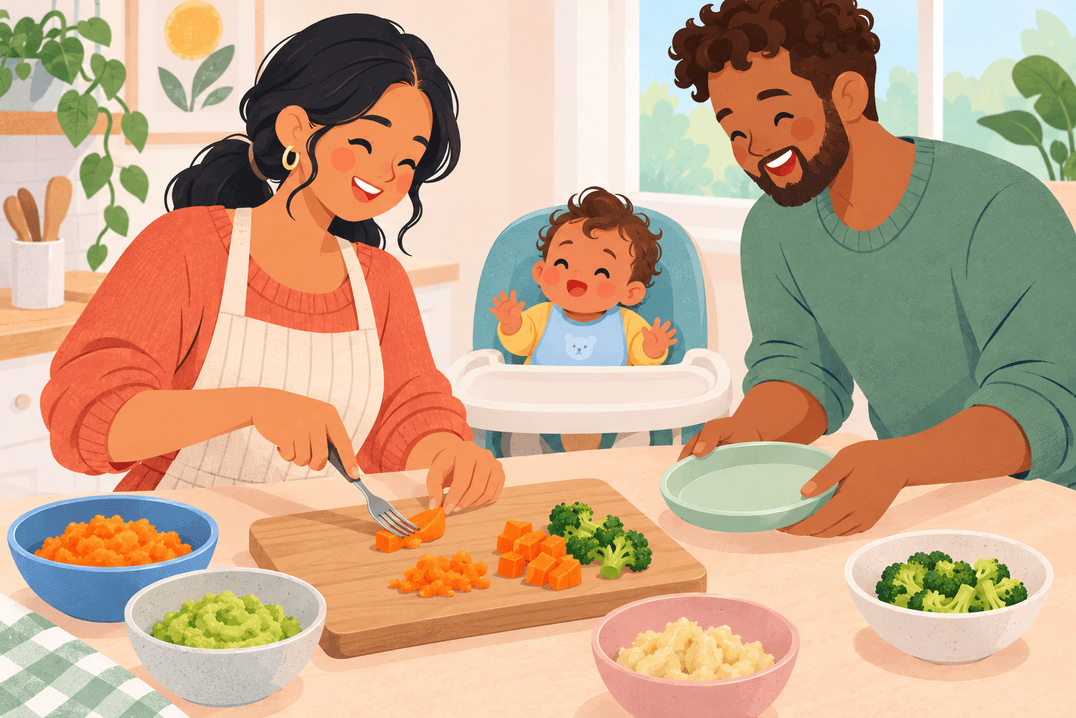
Finger foods let babies practise picking up food and bringing it to the mouth. The preparation matters as much as the ingredient. A carrot can be soft enough for a beginner after cooking, while a hard raw piece is a choking hazard.
Start with a stable seated position
Offer finger foods when your baby is developmentally ready for solids, usually around six months, and can grasp food and bring it to their mouth. Seat them upright in a suitable highchair, use the harness and stay with them. Eating while crawling, walking or travelling in a moving car makes supervision and a safe position harder.
Put a small amount within reach and allow time. Do not push pieces into your baby’s mouth or encourage them to eat quickly. You can combine this practice with spoon feeding as described in our feeding approaches guide.
Check softness before serving
Early options include soft cooked vegetable fingers, ripe fruit prepared without hard skin or stones, and suitable pieces of thoroughly cooked egg. A food should squash easily rather than remain hard and springy. Cook firm foods such as apple or carrot until soft.
For a beginner using the whole hand, soft narrow pieces long enough to hold with some sticking out can be easier to manage. As grasping and eating skills develop, smaller soft pieces become useful. There is no single cutting size that makes every food safe. Our texture guide explains how to progress while watching your baby’s abilities.
Change round, hard and sticky foods
Never offer whole grapes or cherry tomatoes to a baby. Remove stones and cut small round fruits into narrow quarters, with further preparation if needed for your baby’s skills. Avoid round coin shapes that can block the airway.
Remove bones from fish and meat, grate cheese or offer suitable thin strips rather than firm cubes, and soften and mash beans. Whole nuts, popcorn, hard sweets and hard raw vegetable pieces are unsuitable. Smooth nut butter needs thinning into food or spreading very thinly, not serving as a sticky spoonful.
Keep variety and safety together
A tray need not be limited to fruit. Think about suitable protein and iron sources as well as vegetables and starches. Check each serving even if your baby ate the ingredient safely before; cooking and cutting can differ.
No preparation removes every choking risk. If your baby cannot breathe, cry or cough effectively, call emergency services and use infant choking first aid, following dispatcher instructions. Do not perform a blind finger sweep. Arrange infant first aid training and make sure other caregivers use the same food preparation and supervision habits.
References
- NHS Best Start in Life: Preparing food safely (opens in a new tab)
- CDC: Choking hazards (opens in a new tab)
- NHS: How to stop a child from choking (opens in a new tab)
- American Academy of Pediatrics: Baby led weaning and safety (opens in a new tab)
- NHS Best Start in Life: Feeding from around six months (opens in a new tab)

Lifeing Editorial
Stories for a little more understanding, a little more reassurance, and the everyday moments in between.
Related posts

First Aid Preparation for Parents: Skills to Learn Before an Emergency