
Baby led feeding versus purees: Choosing an Approach That Fits Your Child

You do not have to choose a feeding identity before your baby has tasted a meal. Some families begin with purees, some offer soft finger foods, and many use both. What matters is whether the food suits your baby’s abilities, provides needed nutrients and is offered responsively.
Understand what each approach involves
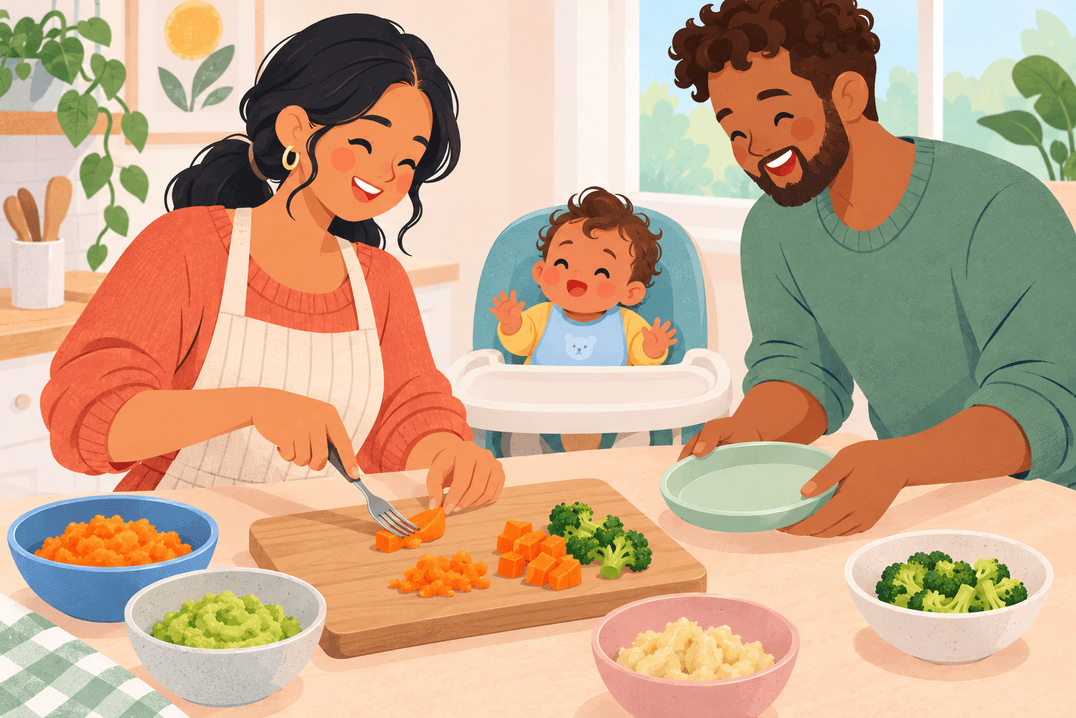
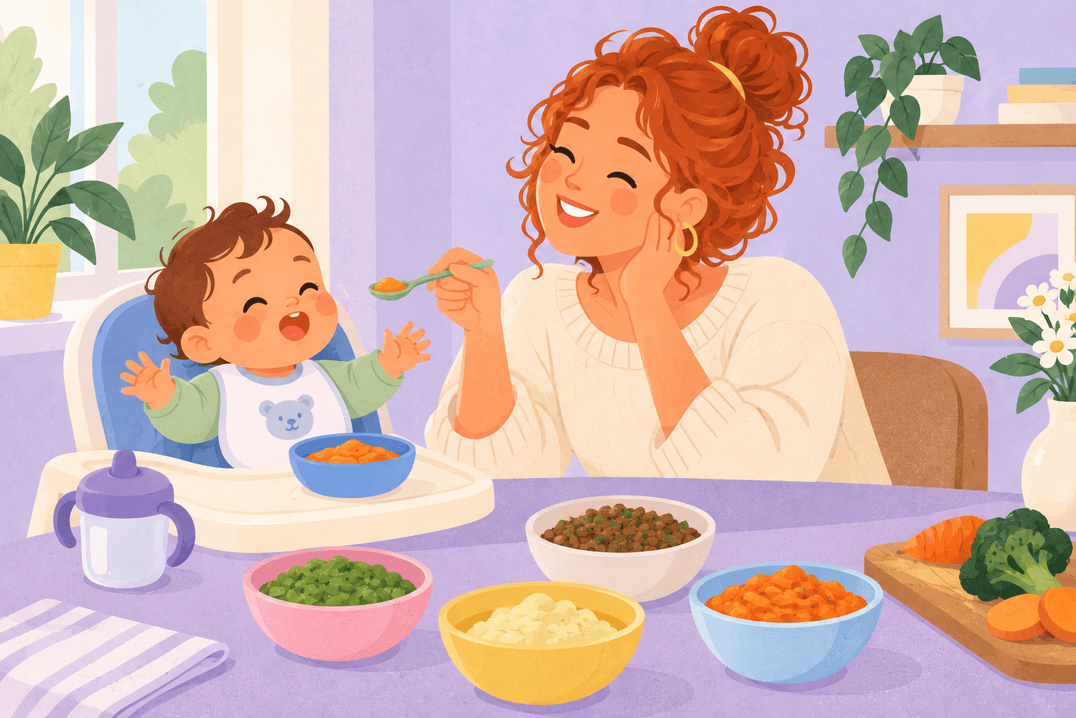
Baby led feeding usually means offering suitable food for your baby to pick up and bring to their own mouth. Spoon feeding means you offer mashed or pureed food, while watching for interest, pauses and fullness. A combined approach might include a spoon of lentils and a soft vegetable finger at the same meal.
Using a spoon does not prevent a baby from learning independent eating. Equally, picking up food does not guarantee an adequate intake. The label tells you less than watching what your baby can manage and what is actually being offered.
Match the approach to readiness
Most babies start solids around six months, when they have the necessary head control, supported sitting and ability to handle food in the mouth. For finger foods, they also need to grasp food and bring it to their mouth. Prematurity, developmental differences or an existing feeding condition may change the plan.
Ask your clinician or feeding therapist for advice if your baby struggles to sit safely or swallow. Repeated coughing, pain, exhausting meals or poor growth should not be dismissed as a normal stage of learning a particular method.
Plan nutrition whichever method you use
A tray of fruit and vegetables alone will not cover the full range of needs as meals develop. Include suitable sources of iron and energy, and continue breast milk or infant formula. Our first food ideas can help you vary the menu without making every meal complicated.
A spoon can be useful for foods that are difficult to hold, including fortified infant cereal or mashed beans. Our iron guide offers options for different family diets. There is no need to reject a nourishing food simply because it does not fit the rules of a feeding trend.
Apply the same safety habits every time
Sit your baby upright, secure them appropriately in the highchair and stay beside them throughout eating. Softness, shape and preparation matter with either method. Our finger food guide explains hazards such as hard pieces, round foods and thick nut butter.
Let your baby set the pace. Offer a spoon when they show interest and stop when they turn away or close their mouth. Do not put finger food into their mouth for them or pressure them to clear the tray. Neither method removes choking risk, and strong promises about preventing later picky eating or obesity go beyond what the evidence can establish.
References
- American Academy of Pediatrics: Baby led weaning and safety (opens in a new tab)
- NHS Best Start in Life: Feeding from around six months (opens in a new tab)
- British Dietetic Association: Complementary feeding statement (opens in a new tab)
- CDC: Choking hazards (opens in a new tab)
- ASHA: Feeding and swallowing disorders in children (opens in a new tab)

Lifeing Editorial
Stories for a little more understanding, a little more reassurance, and the everyday moments in between.
Related posts
Baby meal schedules: Balancing Solids With Milk Feeds