
Baby meal schedules: Balancing Solids With Milk Feeds
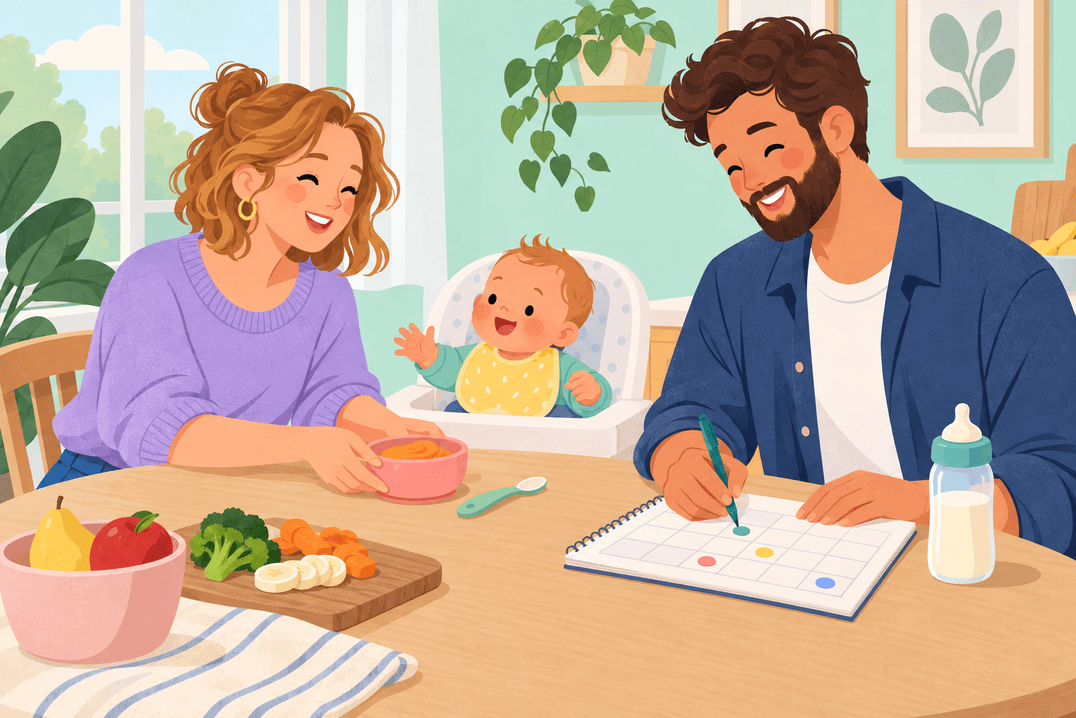
A meal schedule is most useful when it helps you find calm opportunities to offer food. It becomes less useful when the clock or an empty bowl matters more than your baby’s cues. Solids develop alongside milk feeding, with amounts and frequency increasing gradually.
Begin with one manageable opportunity
Around six months, when your baby is ready, start with a small food offer at a time you can supervise without rushing. They may taste very little at first. Choose an alert moment rather than the end of a tiring day or a point when they are desperately hungry.
There is no universal rule that milk must always come before or after solids. Some babies are more comfortable after a little milk; others enjoy food before their usual feed. Keep needed milk available and adjust the order to comfort, appetite and any clinical plan.
Add meals as eating becomes established
In NHS guidance, babies gradually move towards three meals during seven to nine months. By ten to twelve months, three meals alongside milk feeds is the usual pattern. These stages describe a progression, not a requirement to eat an adult sized breakfast, lunch and dinner immediately after starting.
An early routine might have one food opportunity in the middle of the day. Later, breakfast and an evening meal can join it as your baby becomes more confident. Our first food guide helps you vary those meals without creating a separate elaborate menu.
Protect the milk your baby still needs
Breast milk or suitable infant formula remains the main milk drink before 12 months. As food intake grows, milk intake may reduce naturally. Do not remove feeds abruptly to force hunger or compare your baby with another child’s exact bottle totals.
If you use formula and are unsure about intake, our amounts guide explains why growth, urine output and feeding behaviour matter together. An individual plan takes priority for prematurity, faltering growth or a medical feeding condition.
Offer and stop responsively
Watch for interest in the food and allow pauses. Turning away, closing the mouth or losing interest can mean it is time to stop. An occasional smaller meal does not need to be compensated for by pressure at the next one.
Offer small sips of water with meals from around six months, alongside milk feeding. NHS guidance for babies under 12 months suggests extra milk if hungry between meals rather than adding snacks. Your clinician may recommend a different pattern for an individual nutritional need.
If feeding repeatedly causes coughing or distress, meals are exhausting, or your baby is not growing as expected, request a review. Changing a timetable alone will not resolve a swallowing or nutritional problem.
References
- NHS Best Start in Life: Feeding from around six months (opens in a new tab)
- NHS Best Start in Life: Feeding at seven to nine months (opens in a new tab)
- NHS Best Start in Life: Feeding at ten to twelve months (opens in a new tab)
- American Academy of Pediatrics: Starting solid foods (opens in a new tab)
- British Dietetic Association: Complementary feeding statement (opens in a new tab)
- ASHA: Feeding and swallowing disorders in children (opens in a new tab)

Lifeing Editorial
Stories for a little more understanding, a little more reassurance, and the everyday moments in between.
Related posts

Baby measuring large: How Your Care Team Reviews the Findings