
First foods: Building Variety With Simple Meals
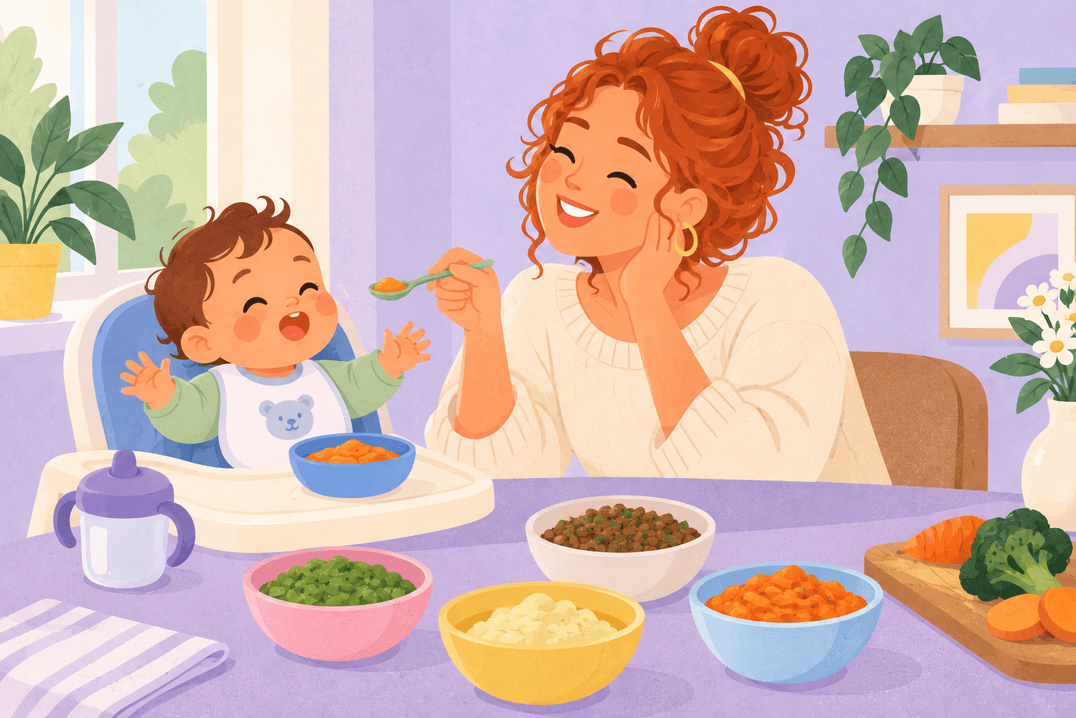
Choosing the first meal does not require a special recipe or an expensive collection of jars. Once your baby is ready for solids around six months, the useful question is how to build variety over time. A first taste is an introduction, not a test of whether your baby likes a food forever.
Begin with something you can prepare simply
Soft cooked broccoli, mashed potato, ripe banana or infant cereal can all be starting points. There is no compulsory order that every family must follow. Fruit does not need to be banned until every vegetable has been accepted.
Check the readiness signs for solids before choosing a menu. Prepare a small amount at a texture your baby can manage, without added salt or sugar. Let them explore it while you stay close, rather than trying to finish a full bowl.
Broaden the menu beyond fruit and vegetables
Include protein foods such as thoroughly cooked egg, soft meat, fish with all bones removed, tofu or well cooked mashed lentils. Plain full fat pasteurised yogurt can also be introduced from around six months. Cow’s milk can be used in cooking at this age, but it does not replace breast milk or infant formula as the main milk drink before 12 months.
If you use infant cereal, choose varieties fortified with iron and rotate grains such as oats, barley and multigrain rather than relying only on rice cereal. Our iron food guide explains why those choices deserve a place alongside the colourful vegetables.
Make unfamiliar tastes part of ordinary meals
Offer vegetables with different flavours as well as sweeter foods. A puzzled expression or a rejected spoonful does not establish a lasting dislike. You can offer that food again another day without pressure or disguising every flavour with fruit.
A simple planning note can help: which food groups have you offered recently, and which would be easy to add next? The aim is a widening menu, not a competition to reach a certain number of foods by a deadline.
Introduce allergens deliberately
Common allergenic foods can join the menu from around six months. Introduce them individually in small amounts so you can recognise a reaction. If tolerated, continue offering them as part of the usual diet. Ask for advice before introduction if your baby has eczema or a known food allergy.
Use a suitable preparation, such as smooth peanut butter thinned into food, never whole nuts or a thick spoonful. Stop the suspected food and seek advice after a reaction; breathing difficulty or swelling of the tongue or throat needs emergency help. As variety grows, also progress the textures you offer rather than keeping every meal completely smooth.
References
- NHS Best Start in Life: Feeding from around six months (opens in a new tab)
- CDC: When, what and how to introduce solid foods (opens in a new tab)
- American Academy of Pediatrics: Starting solid foods (opens in a new tab)
- NHS: Food allergies in babies and young children (opens in a new tab)
- NHS Best Start in Life: Preparing food safely (opens in a new tab)

Lifeing Editorial
Stories for a little more understanding, a little more reassurance, and the everyday moments in between.
Related posts
First period after miscarriage: What Changes to Discuss