
Starting Solid Foods: Readiness Signs, First Meals, and New Textures
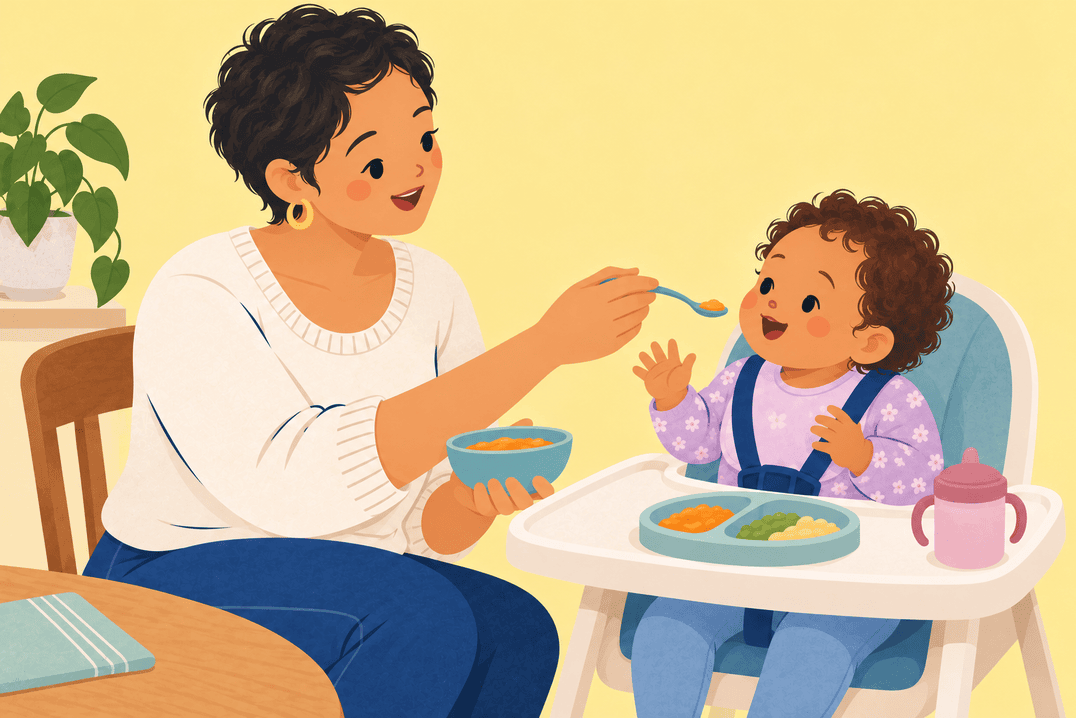
Starting solids is a new skill for your baby and a new routine for you. The first meals can be small, slow and messy. Readiness matters more than the size of a first portion, and you do not need an elaborate menu to begin.
Look for readiness signs together
Most babies are ready around six months. Look for the ability to stay upright in a sitting position with steady head control, coordinate eyes and hands to bring food to the mouth, and swallow rather than repeatedly push food out. Consider these signs together, not as isolated achievements.
Chewing fists, waking more at night or wanting additional milk does not by itself mean a baby needs solids. Starting food is not a reliable way to make night waking stop. If your baby was premature or has a developmental or medical feeding concern, ask for individual advice about timing and support.
Use age as a guide, not a complete assessment
General guidance recommends starting around six months and not before four months. Earlier introduction within that period needs a discussion with a healthcare professional about readiness and your baby’s circumstances. Do not begin simply because a packet says it is suitable from a younger age.
If your baby is reaching six months but cannot yet manage the necessary position or swallowing, request advice rather than forcing food or postponing the question indefinitely. The plan should support both safe eating and nutrition.
Keep milk feeds alongside the new experience
Breast milk or suitable infant formula remains the main milk drink during the first year. Begin with small offers of food and build up gradually. Our meal routine guide explains how these opportunities can develop around milk feeds without an abrupt switch.
Choose a calm time when your baby is alert. Offer food when they show interest, allow pauses and stop if they close their mouth or turn away. Food on the bib or tray is expected during learning; it is not a reason to insist on another spoonful.
Prepare the food and eating space
Seat your baby upright in a suitable highchair and supervise throughout eating. Use soft textures and shapes appropriate to their skills. Whole nuts, uncut grapes, hard raw vegetable pieces and thick spoonfuls of nut butter are choking hazards.
Explore our first food ideas for variety, including iron sources, and our texture guide for progression beyond smooth puree. Arrange infant first aid training so you and other caregivers know what to do if choking occurs.
Plan allergens and individual questions
Introduce common allergenic foods individually in small amounts from around six months and continue them regularly if tolerated. Ask for advice first if your baby has eczema or an existing food allergy. Do not give honey before 12 months.
A suspected reaction needs assessment before offering that food again; breathing difficulty or tongue or throat swelling needs emergency help. Keep any clinical feeding or allergy plan available for everyone who feeds your baby, alongside the practical routine you are beginning together.
References
- NHS: Your baby’s first solid foods (opens in a new tab)
- CDC: When, what and how to introduce solid foods (opens in a new tab)
- American Academy of Pediatrics: Starting solid foods (opens in a new tab)
- NHS: Food allergies in babies and young children (opens in a new tab)
- CDC: Choking hazards (opens in a new tab)
- British Dietetic Association: Complementary feeding statement (opens in a new tab)

Lifeing Editorial
Stories for a little more understanding, a little more reassurance, and the everyday moments in between.
Related posts
Teething or Something Else? Understanding Symptoms and Comforting Your Baby