
Teething or Something Else? Understanding Symptoms and Comforting Your Baby
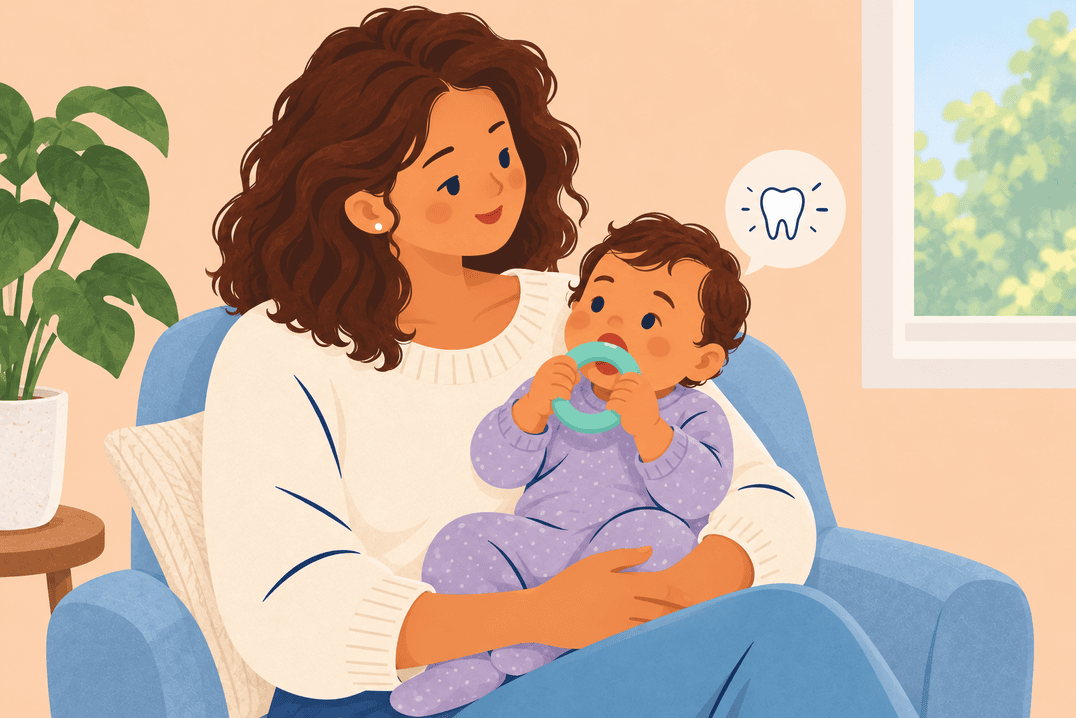
Drooling, chewing and a sore gum can fit teething, but they do not explain every unsettled day. Babies can develop an infection at the same time as a tooth is coming through. The useful question is whether your baby’s symptoms stay mild and local or suggest an illness that needs assessment.
You do not have to identify a tooth before asking for help with a baby who seems unwell.
Signs that may fit teething
The gum where a tooth is emerging may look red and feel tender. Your baby may chew more, drool or be a little fussier for a few days. Some teeth appear with very little discomfort. A flushed cheek or disrupted sleep can occur, but neither confirms teething by itself.
Mouthing toys and hands is also part of normal development. Weeks of chewing do not reliably predict the day a tooth will appear. First tooth timing explains why the order and age vary.
Notice feeding and wet diapers as well as the mouth. Persistent distress, repeated vomiting or a marked change in alertness deserves a broader assessment.
Try simple comfort first
Gently massage the sore gum with a clean finger if your baby tolerates it. Offer a suitable solid teething ring while supervising. Follow the product instructions for cooling it in the refrigerator. Do not freeze it, because a very hard frozen surface can hurt the gums.
Check the teether for damage and keep it clean as directed. Never attach it around your baby’s neck. Avoid amber necklaces and other teething jewelry because of choking and strangulation risks. They are not a necessary part of teething care.
Comfort, cuddles and a change of activity may help during a fussy period. Gently blot saliva and change damp clothing if needed. There is no need to keep rubbing the skin until it is completely dry.
Be cautious with pain products
Ask a pharmacist or clinician about an appropriate oral pain medicine for your baby’s age, weight and medical history. Follow the specific product instructions and keep a record of doses. Do not automatically alternate medicines or use an adult product in a guessed amount.
Avoid benzocaine products and oral viscous lidocaine for teething. Do not use homeopathic teething tablets or powders as a safer substitute. General mouth pain gels are not appropriate baby teething treatments; advice and licensing vary, so discuss any proposed product with a pharmacist before use.
Do not give ibuprofen to a dehydrated child. For chickenpox, use it only if a doctor has specifically advised it. Pain medicine should not be used to postpone assessment of a young baby’s fever.
Fever needs its own explanation
A temperature of 38°C or above is a fever. A slightly raised temperature below that may occur around teething, but true fever should not be dismissed as a tooth coming through. Measure the temperature with an appropriate digital thermometer and consider the baby’s condition.
Get urgent medical advice for a baby under three months with 38°C or above, or a baby aged three to six months with 39°C or above. Seek advice sooner at any age if your baby seems unwell, feeds poorly or has other concerning symptoms. These numbers are not reassurance thresholds for a sick baby.
The fever guide explains assessment and warning signs. Difficulty breathing, floppiness, a rash that does not fade with pressure or difficulty waking needs emergency help.
Diarrhea is not explained by teething
There is no evidence that teething causes diarrhea. A sudden change to frequent watery stools needs attention to feeding, fluid loss and possible illness, even if a tooth is visible. Do not assume swallowed saliva makes dehydration impossible.
Continue appropriate milk feeds and seek advice if intake or wet diapers falls. Blood in diarrhea, repeated vomiting or worsening tiredness needs urgent assessment. See diarrhea in babies for feeding guidance and when to get help.
Do not give medicine to stop diarrhea or start removing foods merely because the symptoms arrived with a new tooth. Describe both changes to the clinician so that they can assess them together.
Care for the tooth once it appears
Start brushing with a small baby toothbrush and a tiny smear of fluoride toothpaste as soon as the first tooth emerges. Build a gentle twice daily routine and arrange a dental visit. Ask for a demonstration if positioning or choosing toothpaste feels difficult.
A baby who continues to struggle needs another look, even after an earlier reassuring visit. Tell the care team what has changed and which comfort measures or medicines you have tried.
References
- NHS: Baby teething symptoms (opens in a new tab)
- NHS: Tips for helping your teething baby (opens in a new tab)
- FDA: Safely soothing teething pain in infants and children (opens in a new tab)
- NHS: Fever in children (opens in a new tab)
- NHS: Diarrhoea and vomiting (opens in a new tab)
- NHS: When to get urgent medical help for babies and children under five (opens in a new tab)
- American Academy of Pediatrics: Facts about your baby’s first tooth (opens in a new tab)

Lifeing Editorial
Stories for a little more understanding, a little more reassurance, and the everyday moments in between.
Related posts


Toddler Tantrums: Helping Your Child Through Big Feelings