
First Tooth Timing: Understanding Variation and When to Ask

A first tooth often appears around six months, but that is an average rather than a deadline. Some babies have teeth much earlier, while others reach their first birthday without one. Comparing your baby with a sibling or a tooth chart cannot by itself tell you whether anything is wrong.
Routine dental care provides a better place to discuss timing, mouth health and any concern about development.
Expect a broad pattern rather than an exact calendar
The front teeth commonly appear before the teeth farther back, and lower front teeth often arrive before their upper partners. Most children have their full set of baby teeth by about two to three years. Individual order and timing can vary.
Recognize a typical tooth order
The two central front teeth commonly lead the way, with the lower pair often appearing before the upper pair. The lateral incisors are the front teeth beside them. First molars, used for chewing farther back, commonly follow. The pointed canines often come next, with second molars completing the set later.
This means the mouth does not necessarily fill in as a neat row from the middle backward. A molar may appear while there is still a space where a canine will emerge. Both the sequence and spacing can look uneven during development.
There are twenty teeth in a complete primary set. Use that broad pattern to recognize what you are seeing, not to predict an exact month for each tooth. If a tooth seems unusual, eruption looks very different from the expected pattern or you are worried about a gap, ask the dentist to examine it rather than trying to decide from a chart.
A chart is useful for understanding which teeth are which. It should not become a monthly test your child must pass. Keep a simple note of when teeth appear if you would like to discuss the pattern with a dentist.
Chewing hands and drooling can start before there is a tooth close to the surface. These behaviors are part of exploring the world as well as possible teething signs. The guide to teething and discomfort explains why behavior alone cannot predict eruption.
Arrange dental care before there is a problem
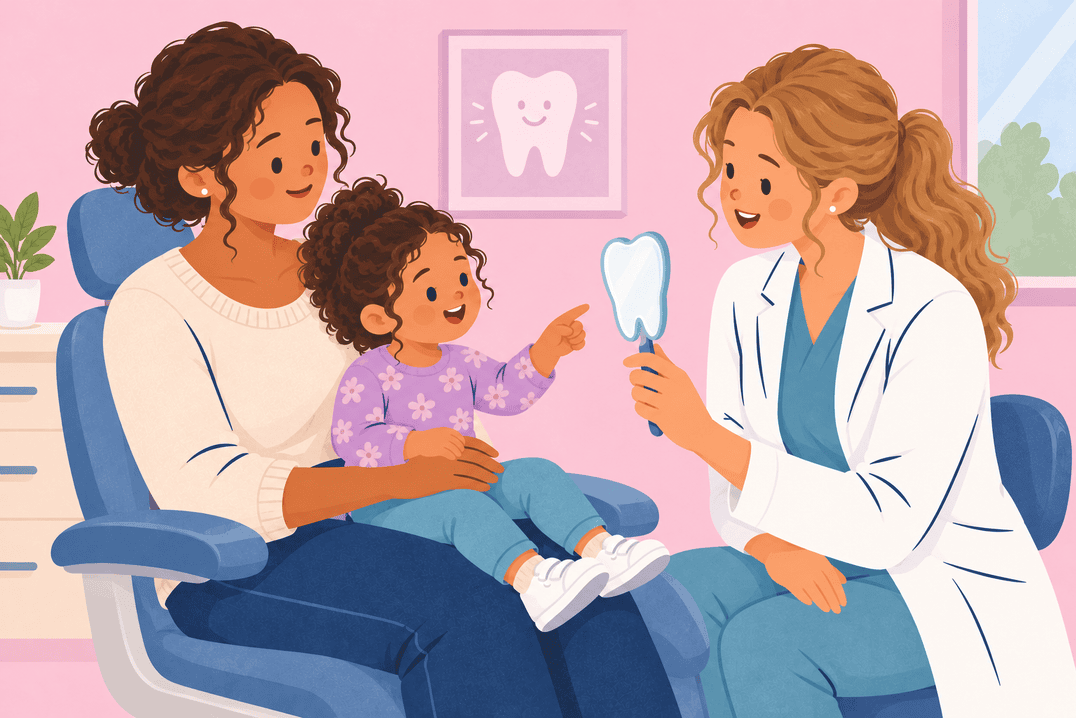
Book the first dental visit when the first tooth appears and by the first birthday. This gives the dentist a chance to assess the mouth, discuss development and show you how to care for teeth. A baby does not need a full row of teeth or a toothache to benefit from a visit.
If there are no teeth by that visit, mention it directly. The dentist can look at the gums and the wider history and decide whether observation or further assessment is appropriate. Do not wait indefinitely for a tooth before making contact.
Bring any concerns about feeding, growth or general development to your usual child health clinician as well. A delayed tooth alone does not tell you the cause of a broader concern.
Ask sooner when something is bothering your baby
Persistent mouth pain, swelling, injury or difficulty feeding warrants advice rather than waiting for the routine appointment. A tooth present at birth can also be discussed with the newborn care team, particularly if it appears loose or feeding is difficult. Do not try to loosen, pull or cut anything yourself.
Fever, marked lethargy, vomiting or diarrhea should not be attributed to a late or emerging tooth. These symptoms need their own assessment. For changes in bowel output, baby poop changes can help you describe what you are seeing without diagnosing it yourself.
Start a small daily brushing routine
Once a tooth comes through, start a daily toothbrushing routine and brush twice daily with a baby toothbrush and a tiny smear of fluoride toothpaste. Brush before bed and at another convenient time. The adult should put the toothpaste on the brush and help with cleaning rather than letting the child suck it from the tube.
Ask the dentist which toothpaste to use and how to position your baby comfortably. You can demonstrate what you have been trying and ask for a practical adjustment. Keep the routine gentle even when it takes several attempts to establish.
Avoid dipping pacifiers in anything sweet. Frequent sugary drinks and snacks expose new teeth to repeated sugar contact. Dental prevention starts with the first tooth, not only when a child can brush independently.
Let timing guide questions, not pressure
There is no need to buy products promising to make teeth emerge faster. Use simple comfort for sore gums and seek advice when pain or feeding difficulties persist. New teeth also do not make every food safe: gagging versus choking explains why preparation and supervision still matter as eating skills develop.
References
- NHS: Baby teething symptoms (opens in a new tab)
- American Academy of Pediatrics: Facts about your baby’s first tooth (opens in a new tab)
- American Academy of Pediatric Dentistry: Parent questions (opens in a new tab)
- NHS: Looking after your baby’s teeth (opens in a new tab)
- NHS: Tips for helping your teething baby (opens in a new tab)
- American Academy of Pediatric Dentistry: Perinatal and infant oral health care (opens in a new tab)

Lifeing Editorial
Stories for a little more understanding, a little more reassurance, and the everyday moments in between.
Related posts

First trimester overview: Symptoms, Appointments, and Early Development