
Brushing Baby Teeth: Toothpaste, Fluoride and a Daily Routine
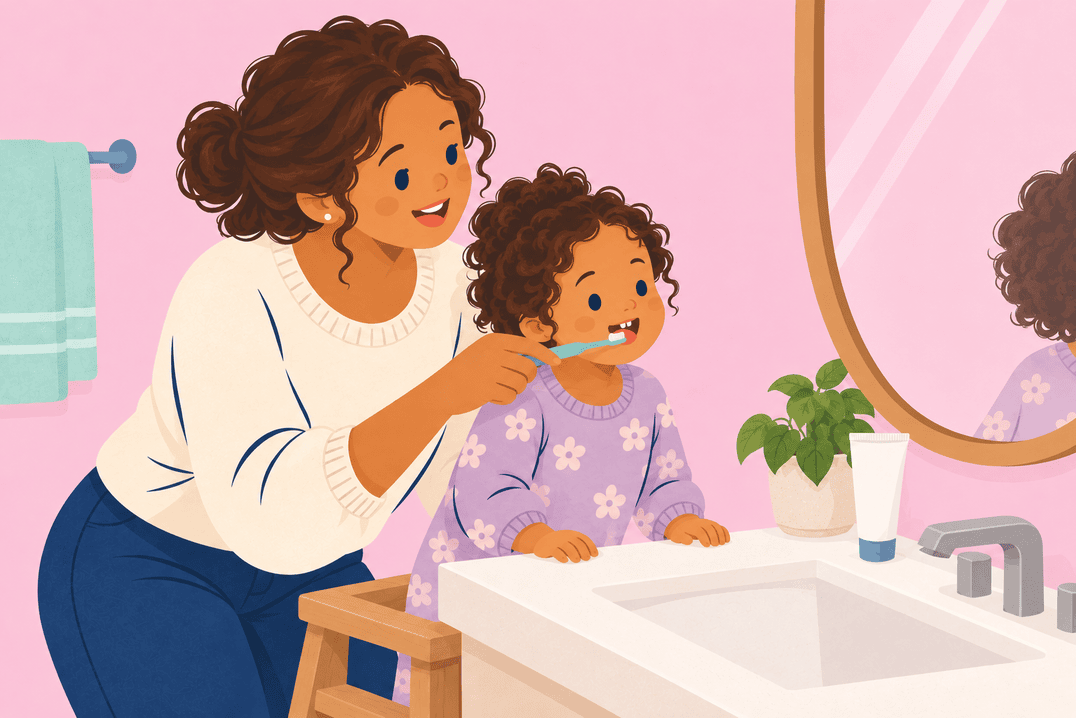
The first tooth is the signal to start brushing. You do not need to wait for a full row of teeth, solid meals or a child who can spit on request. Keep the routine small and repeatable: a suitable brush, the right amount of fluoride toothpaste and an adult doing the cleaning.
Choose a brush you can control comfortably
Use a small, soft toothbrush made for a young child. Find a supported position where you can see the teeth and your child feels secure. Some parents find it easier to sit their child on their lap, facing away, with the head supported against their body.
Keep the brush under adult control. Do not let a child walk or run around with it in their mouth. Let them explore holding a spare brush while you clean, but treat their practice as an addition to the adult’s job rather than a replacement.
Use the right toothpaste amount for age
For a child under three, use a tiny smear, about the size of a grain of rice. From age three to six, use a pea sized amount. The adult should apply it, supervise brushing and store the tube out of reach afterward.
The small amount matters because young children may swallow some toothpaste. It is not a reason to omit fluoride toothpaste or cover the whole brush head. As children become able, encourage them to spit out the excess instead of swallowing it. Do not ask them to rinse afterward, because rinsing washes away fluoride left on the teeth.
Read fluoride concentration separately from the amount
The label’s fluoride concentration and the amount on the brush are two different instructions. In UK guidance, toothpaste for children under three contains at least 1,000 parts per million fluoride, written as ppm. For ages three to six, products containing 1,000 to 1,500 ppm are used. A dentist may advise a family toothpaste with 1,350 to 1,500 ppm for a younger child, particularly when decay risk is higher.
Check local dental guidance and your child’s individual advice rather than selecting only by the age picture on a tube. Bring the product to the appointment if the label is unclear. Ask both which concentration to use and how much to put on the brush.
Do not start fluoride drops, tablets or prescription strength toothpaste on your own. These require an assessment of your child’s needs and fluoride exposure. Regular toothpaste, professionally applied fluoride varnish and supplements are different products with different purposes.
Brush twice each day
Brush last thing before bed and at another regular time. Clean the outer, inner and chewing surfaces with gentle movements, reaching the gum edge without scrubbing hard. Aim for thorough cleaning as the number of teeth increases; a two minute routine is useful for children with more teeth, while the first few need careful attention to every surface.
An adult should help until at least age seven, and longer if the child’s coordination or needs make independent cleaning difficult. Being enthusiastic about holding a brush does not mean a toddler can reliably clean every tooth.
If resistance makes the routine difficult, the toothbrushing refusal guide suggests adjustments to timing, taste and positioning. Sudden refusal associated with pain or swelling needs dental advice rather than simply more persistence.
Pair brushing with sensible feeding habits
Avoid sweetening a pacifier or adding sugar to a bottle. Frequent contact with sugary drinks can undermine an otherwise consistent brushing routine. Our guide to bottles and tooth decay explains changing those exposures without removing needed nutrition.
Brushing is one part of prevention, alongside dental assessment. Arrange a first dental visit when the first tooth appears and by the first birthday. Ask the dentist to watch your technique, check your toothpaste and explain any adjustments for your child. A practical demonstration is often easier to use at home than a new set of instructions alone.
References
- NHS: Looking after your baby’s teeth (opens in a new tab)
- NHS: Taking care of children’s teeth (opens in a new tab)
- UK oral health toolkit: Oral hygiene (opens in a new tab)
- UK oral health toolkit: Fluoride (opens in a new tab)
- American Academy of Pediatrics: Facts about your baby’s first tooth (opens in a new tab)
- American Academy of Pediatric Dentistry: Parent questions (opens in a new tab)

Lifeing Editorial
Stories for a little more understanding, a little more reassurance, and the everyday moments in between.
Related posts

Burn Prevention at Home: Hot Drinks, Bath Water and Kitchen Risks