
Burn Prevention at Home: Hot Drinks, Bath Water and Kitchen Risks
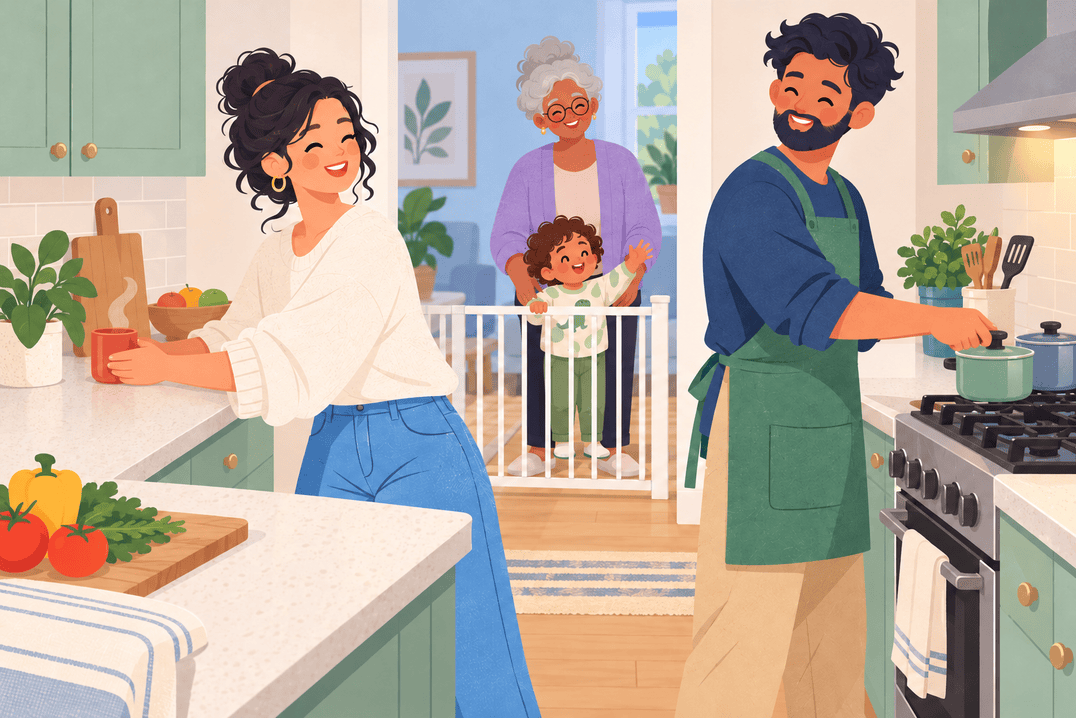
A hot drink, pan handle or cooling hair straightener can become reachable sooner than expected. Babies and toddlers can sustain serious burns from everyday objects. Prevention works best when the setup protects them even before they understand a warning.
Review both the place an item is used and where it is left afterward. Something switched off can still be hot enough to injure.
Give hot drinks a safe place
Keep mugs away from table edges and low surfaces. Put the drink down out of reach before picking up your child, and avoid passing it over them. A drink does not become safe simply because it has been standing for a few minutes.
Watch for tablecloths, trays and anything a toddler can pull. Explain the same arrangement to visitors. The home safety review helps identify how climbing changes what counts as out of reach.
Separate cooking from the child’s play area
Use the back cooking rings where possible and turn pan handles away from the edge. Keep kettle cords and appliance leads inaccessible. Hot oven doors and hobs remain hazards during cooling, so maintain the boundary after food is served.
A suitable child safety gate can help keep a toddler out of the working area. Arrange safe supervision rather than carrying a baby while handling hot pans or draining boiling water. Keep matches and lighters locked away.
Check bath water every time
Run cold water first, add hot water and mix thoroughly before your child enters. Check with your wrist or elbow that the bath feels comfortably warm, not hot. Stay close so the child cannot turn on a hot tap or climb into a bath before it is ready.
A qualified plumber can advise on a suitable temperature limiting device, including a thermostatic mixing valve. Follow local plumbing guidance rather than changing the hot water storage temperature blindly. The water safety guide explains why temperature controls and bath supports still require direct adult supervision.
Store cooling tools securely
Keep irons, hair tools and their cords away from children during use and cooling. Use an appropriate heat resistant storage arrangement as instructed. Guard accessible fires and heaters and keep the baby’s sleep space away from a radiator or other direct heat source.
Do not put a hot water bottle in a baby’s sleep space. Review these habits in bedrooms and relatives’ homes as well as the kitchen.
Act promptly after a heat burn or scald
Move the child away from the heat safely. Cool the affected skin under cool running water for twenty minutes as soon as possible. Keep the rest of the child warm; do not immerse their whole body in cold water. Remove nearby clothing and jewelry only if they are not stuck to the skin.
Do not apply ice, butter, toothpaste, creams or oils. After cooling, cover the injury loosely with a clean nonfluffy covering or lay cling film over it without wrapping it around a limb. Do not put plastic over the face or burst blisters.
Get medical advice for a baby or child with a burn. Call emergency services for a large or deep burn, breathing difficulty or serious illness; electrical and chemical burns also need emergency assessment and may require different first aid. Follow the emergency team’s instructions. Burns on the face, genitals or bottom need emergency care. Call while cooling when necessary rather than delaying urgent help until cooling is finished.
References
- Child Accident Prevention Trust: Preventing burns and scalds (opens in a new tab)
- NHS: Baby and toddler safety (opens in a new tab)
- NHS: Burns and scalds (opens in a new tab)
- British Red Cross: Burns in babies and children (opens in a new tab)
- NHS: What to do after a child has an accident (opens in a new tab)

Lifeing Editorial
Stories for a little more understanding, a little more reassurance, and the everyday moments in between.
Related posts
Burping after bottle feeds: Finding What Helps Your Baby