
Babyproofing Before Crawling: A Practical Home Check
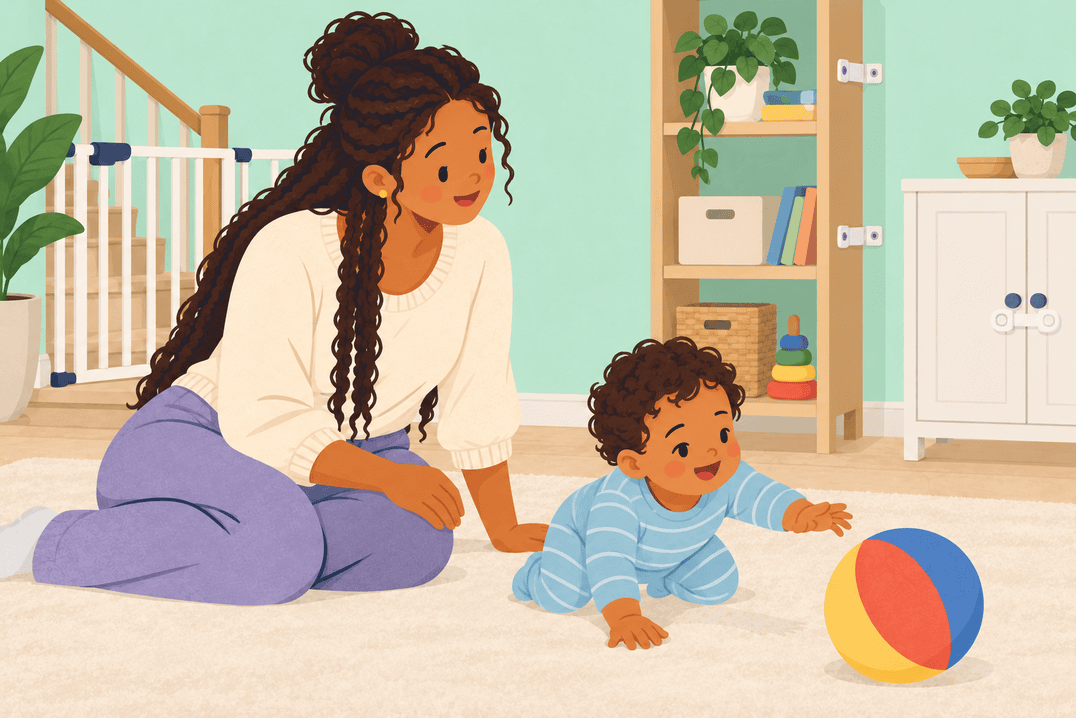
Begin making the home safer before your baby is confidently crawling. Rolling, shuffling and reaching can already bring an unexpected object within range. The aim is to remove serious hazards and create space for supervised exploration, then keep reviewing it as your child changes.
Looking from floor level helps, but also imagine the next stage: pulling on a tablecloth, opening a cupboard or using a drawer as a step.
Clear small objects and loose cords
Check under furniture and around bags, shoes and older children’s play areas. Coins, small toy parts, magnets and batteries can become accessible after an ordinary family activity. Put toys with small parts in a separate place that the baby cannot enter.
Inspect battery compartments as well as loose batteries. Our button battery guide explains why suspected swallowing needs immediate action. Keep plastic bags and loose cords inaccessible. Cordless window coverings avoid the entanglement hazard of accessible blind cords; existing corded systems need appropriate safety measures.
Secure what a child can pull on
Anchor furniture and televisions using suitable hardware and the manufacturer’s instructions. A heavy cabinet can still tip when a child climbs or pulls on it. Move tempting items away from furniture tops so reaching for a remote control does not invite climbing.
The furniture guide covers the checks in more detail. Review windows too: keep climbable furniture away and use appropriate restrictions while preserving emergency escape. An insect screen does not provide a fall barrier.
Block access to hazardous areas
Fit suitable child safety gates where needed and close them after every use. The stair gate guide explains why location and installation matter. A pet gate or an improvised stack of objects is not a substitute for equipment designed for children.
Keep the route through the home clear enough for an adult carrying the baby. Electrical protection must suit your country’s socket design and local safety guidance. Avoid loose protective pieces that create another choking hazard, and keep damaged leads or appliances out of use.
Reconsider everyday storage
Medicines, supplements, nicotine products and cleaning supplies belong out of sight and reach, with suitable locked storage. Close packaging fully after use. A safety cap does not make a container impossible for a child to open.
Ask visitors to put bags and medicines somewhere inaccessible. Review low drawers and the space under sinks, not just the cupboard you think of as the medicine cabinet. Keep products in their original containers so adults can identify them correctly.
Include water and heat
Empty baths, buckets and small paddling pools after use and prevent unsupervised bathroom access. A child does not need deep water to be in danger. Keep hot drinks, appliance cords and cooling hair tools away from every reachable surface.
Safety equipment supports supervision; it does not replace it. Repeat the check when furniture moves, visitors arrive or your baby learns a new movement. Show other caregivers which barriers must stay closed so a safer setup remains useful during daily life.
References
- CPSC: Childproofing your home (opens in a new tab)
- NHS: Baby and toddler safety (opens in a new tab)
- CPSC: Anchoring furniture and televisions (opens in a new tab)
- Child Accident Prevention Trust: Button battery safety (opens in a new tab)
- National Capital Poison Center: Storing medicine safely (opens in a new tab)
- American Academy of Pediatrics: Infant water safety (opens in a new tab)

Lifeing Editorial
Stories for a little more understanding, a little more reassurance, and the everyday moments in between.
Related posts


Back labor: Describing Pain and Asking for Support