
Furniture Tip Over Prevention: Securing Heavy Items Before Climbing
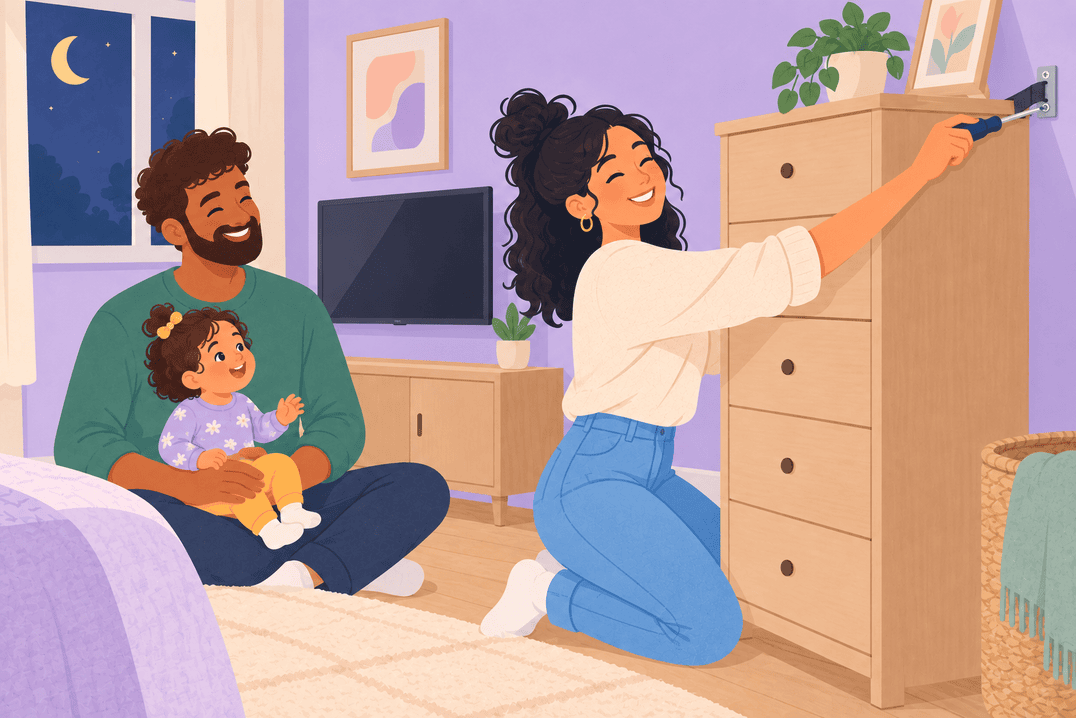
A child can pull on furniture while learning to stand, climb an open drawer or reach for something on a television stand. Furniture that feels heavy to an adult can still tip. Secure it before climbing begins, rather than waiting to see whether your child is interested.
Anchoring is a practical part of preparing a room for exploration. It works alongside supervision and removing temptations to climb.
Walk through every room your child enters
Look at dressers, bookcases, shelving, cabinets and television furniture. Include bedrooms used for naps and spaces where visitors put the child down to play. Do not limit the check to furniture sold for a nursery.
Open drawers can provide steps. A toy or remote control on top can encourage reaching. Store heavier contents lower down where appropriate, but do not treat that change as a substitute for securing the furniture.
The home review helps you consider other hazards in the same route, including cords and windows.
Match the anchoring to the item and wall
Use the restraint or anchoring system specified by the manufacturer and follow its instructions. The fixing needs to suit both the furniture and the wall construction. If you are unsure what the wall can support, get help from a competent installer rather than guessing.
Install supplied restraints when assembling furniture. If the item has no kit or the parts are missing, ask the manufacturer about an appropriate option. Keep children away while tools, screws and unfinished furniture are accessible.
Secure the television separately
A stable stand does not automatically secure the television sitting on it. Use furniture designed to support the TV and anchor or mount the screen as instructed. A television placed on an ordinary dresser can invite a child to climb the drawers.
Route cables so they do not become reachable pull points or loops. Remove toys and other attractive objects from high surfaces. Do not rely on telling a toddler that the furniture is dangerous; their impulse to explore can exceed their ability to remember a rule.
Recheck after moving or rearranging
An anchor disconnected during decorating must be correctly reattached before the room is used again. Check that all parts remain intact and follow the manufacturer’s inspection advice. Review recall notices for furniture and anchoring products as well as toys.
If you rent, discuss the required work with the landlord or property manager and keep the child away from an unsecured hazard while arranging a solution. A gate elsewhere does not make a frequently accessed unanchored dresser safe.
Keep exploration possible
The cruising guide describes supervised movement along appropriate stable supports. Choose a space where the baby can practise without using a lightweight or unsecured object for balance.
Where access needs to be blocked, use suitable child safety gates and keep them closed. Explain the anchoring plan to relatives and caregivers, including in homes you visit. A room can look tidy and still contain a tipping hazard, so make the check about how items are secured rather than how orderly they appear.
References

Lifeing Editorial
Stories for a little more understanding, a little more reassurance, and the everyday moments in between.
Related posts

Gagging versus choking: Learning the Difference Before Starting Solids