
Water Safety for Babies: Staying Close During Every Bath
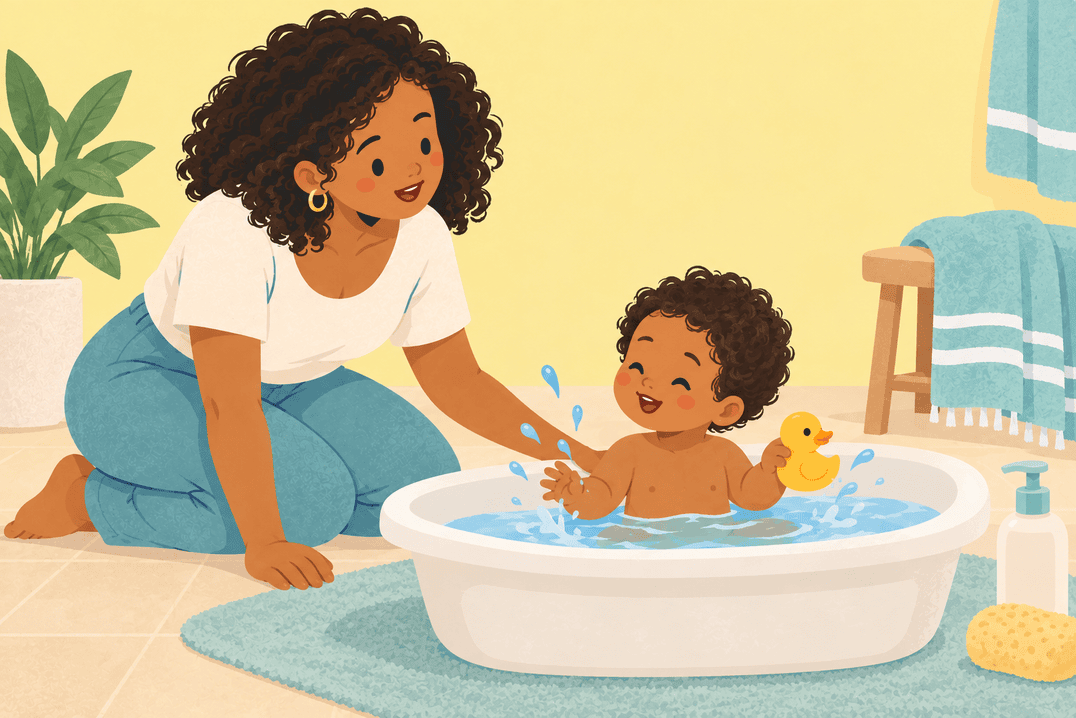
A baby can drown in shallow water, and it may happen without a loud struggle. Bath safety depends on a nearby attentive adult throughout, not on the amount of water or the equipment in the tub.
Keep a hand on your baby while bathing them. If you need to leave, take the baby out and with you. An older child cannot take over that responsibility.
Prepare so you can stay beside the bath
Put towels, a clean diaper and the supplies you need within reach before starting. Choose a stable setup and a time when you can focus. If bending, lifting or your recovery makes the position difficult, arrange another adult’s help before the bath.
Silence avoidable distractions. If a phone rings or someone knocks, the bath can stop; the baby cannot be left while you answer. The newborn bathing guide covers the washing routine and a secure hold.
Check the water before the baby goes in
Fill and mix the bath before placing your baby in it. Add cold water first, then hot, and check with your wrist or elbow that it feels comfortably warm rather than hot. Keep the child away from taps and from the bath while it is being prepared.
Our burn prevention guide covers scald risks and hot water controls. A comfortable temperature does not reduce the need for continuous supervision.
Treat seats and supports as aids
A bath seat, ring or supportive infant tub does not prevent drowning. A baby can slip or a device can move. Keep supporting your baby and watching closely rather than using equipment as a reason to reach into another room.
Do not rely on a sibling, a monitor or being able to hear splashing. If two adults are helping, make the handover explicit so each knows who is holding and watching the baby at that moment.
Remove water when the activity ends
Empty the bath promptly after taking your child out. Prevent unsupervised bathroom access and keep toilet lids secured as part of a wider safety plan. Do not leave buckets or other open water containers where a baby can reach them.
Review the same hazards when visiting another home. A cleaning bucket, cooler or small paddling pool can be overlooked because it does not look like a swimming area. Empty and store small pools after use; larger pools need appropriate barriers and the protection described in our pool safety guide.
Prepare for an emergency before one happens
Take practical infant and child first aid training, including CPR. Keep the local emergency number available to every caregiver. If a baby is found in difficulty in water, remove them if you can do so safely and call emergency services.
If they are unresponsive and not breathing normally, start infant CPR, including rescue breaths, immediately and follow the dispatcher’s instructions. A baby who has had breathing difficulty from being submerged needs emergency medical assessment even if they appear to recover. Do not spend time trying to drain water from the lungs. Preventing access and staying close remain the most important parts of the everyday plan.
References
- American Academy of Pediatrics: Infant water safety (opens in a new tab)
- NHS: Baby and toddler safety (opens in a new tab)
- CDC: Preventing drowning (opens in a new tab)
- British Red Cross: Drowning first aid (opens in a new tab)
- NHS: Resuscitation for babies and children (opens in a new tab)
- Australian and New Zealand Committee on Resuscitation: Drowning response (opens in a new tab)

Lifeing Editorial
Stories for a little more understanding, a little more reassurance, and the everyday moments in between.
Related posts
Water breaking: What to Note and Who to Call