
Pool Safety for Toddlers: Planning Several Layers of Protection
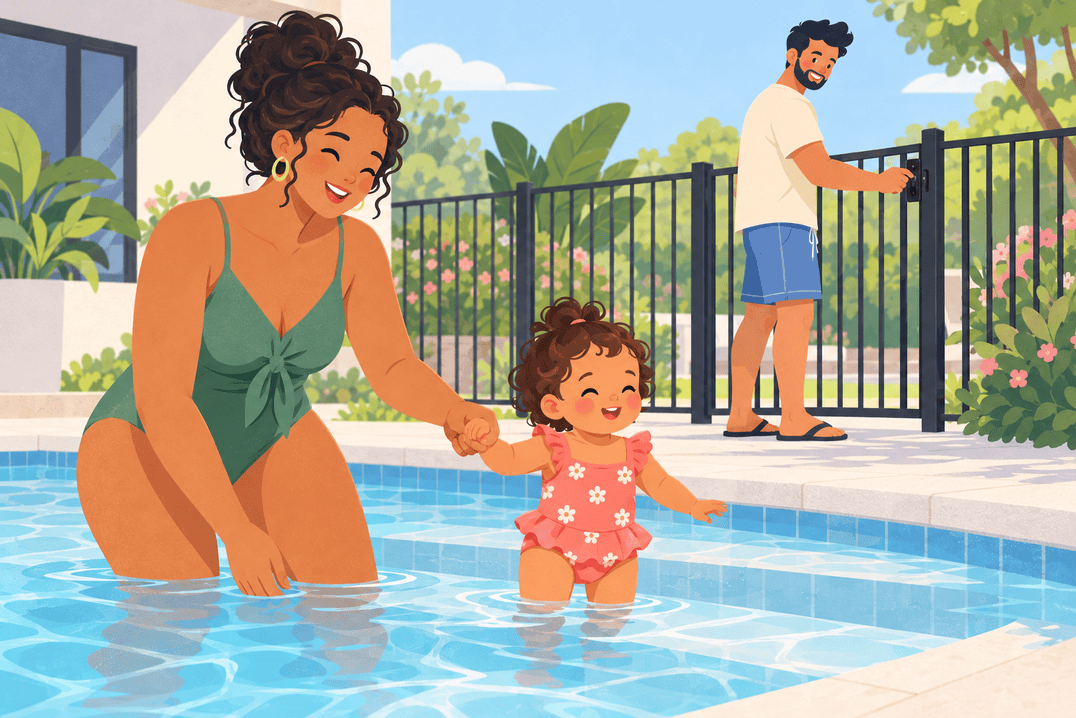
Pool safety begins before anyone changes into swimwear. A toddler may reach water while adults are preparing food, talking or assuming another person is watching. Plan both for supervised swimming and for preventing access at every other time.
Several protections work together. Swimming lessons, a fence or a lifeguard cannot replace the other parts of the plan.
Separate the pool from the home and play space
Use a barrier that surrounds the pool on all four sides and separates it from the house and yard. US pediatric and public health guidance recommends a fence at least four feet high, with a gate that closes and latches by itself. Check the specific building and pool requirements where you live; local rules may require additional features.
Keep the gate secured and test its operation regularly. Remove toys from the pool area after use so they do not attract a child. An ordinary household stair gate is not a substitute for a compliant pool barrier. Alarms can add protection but do not replace the fence or adult supervision.
Name the adult who is watching
When your toddler is in or near the water, stay close enough to reach them immediately. Get in the water with a young child during swimming. The supervising adult needs to be attentive and able to help, without phone use, alcohol or another task competing for attention.
At gatherings, explicitly pass the responsibility to another capable adult before taking a break. Do not assume a group is supervising collectively. If you need to leave and no adult has taken over, take the child with you, even when a lifeguard is present.
Understand lessons and flotation
Swimming lessons can help develop skills, but a child who has attended lessons still needs close supervision. No lesson makes a toddler safe to enter water alone. Ask the pediatrician about suitable instruction for your child’s development and health needs.
Use a properly fitted approved life jacket for the activity when needed. Children should wear one around natural water and while boating. Inflatable arm bands, rings and pool toys are not substitutes. A life jacket also does not transfer supervision away from the adult.
Check temporary pools and unfamiliar places
Large inflatable or portable pools can need the same access protection as permanent pools. Empty smaller paddling pools after use and store them so they cannot collect water. Do not leave a ladder or other route that gives a child unsupervised access.
Before a visit or holiday, ask how the pool is separated from living and sleeping areas. Check doors and barriers when you arrive. The home safety guide helps organize the wider review, and baby water safety covers baths and containers indoors.
Know the response plan
If a child is missing, check the pool immediately. Keep rescue equipment and a way to call for help available, and learn child CPR and safe rescue skills. Do not enter water in a way that puts another person at risk.
For a child in distress, call emergency services and follow the dispatcher’s instructions. Once safely out of the water, an unresponsive child who is not breathing normally needs CPR, including rescue breaths, immediately. A child who has had breathing difficulty from submersion needs emergency assessment even if they appear to recover. Keep practicing prevention rather than relying on being able to notice and rescue in time.
References
- American Academy of Pediatrics: Drowning prevention for toddlers (opens in a new tab)
- CDC: Preventing drowning (opens in a new tab)
- CDC: Swimming safety (opens in a new tab)
- British Red Cross: Drowning first aid (opens in a new tab)
- NHS: Resuscitation for babies and children (opens in a new tab)
- Australian and New Zealand Committee on Resuscitation: Drowning response (opens in a new tab)
- CPSC: Childproofing your home (opens in a new tab)

Lifeing Editorial
Stories for a little more understanding, a little more reassurance, and the everyday moments in between.
Related posts
Poop Fear During Potty Training: Helping Your Child Feel Secure