
Poop Fear During Potty Training: Helping Your Child Feel Secure
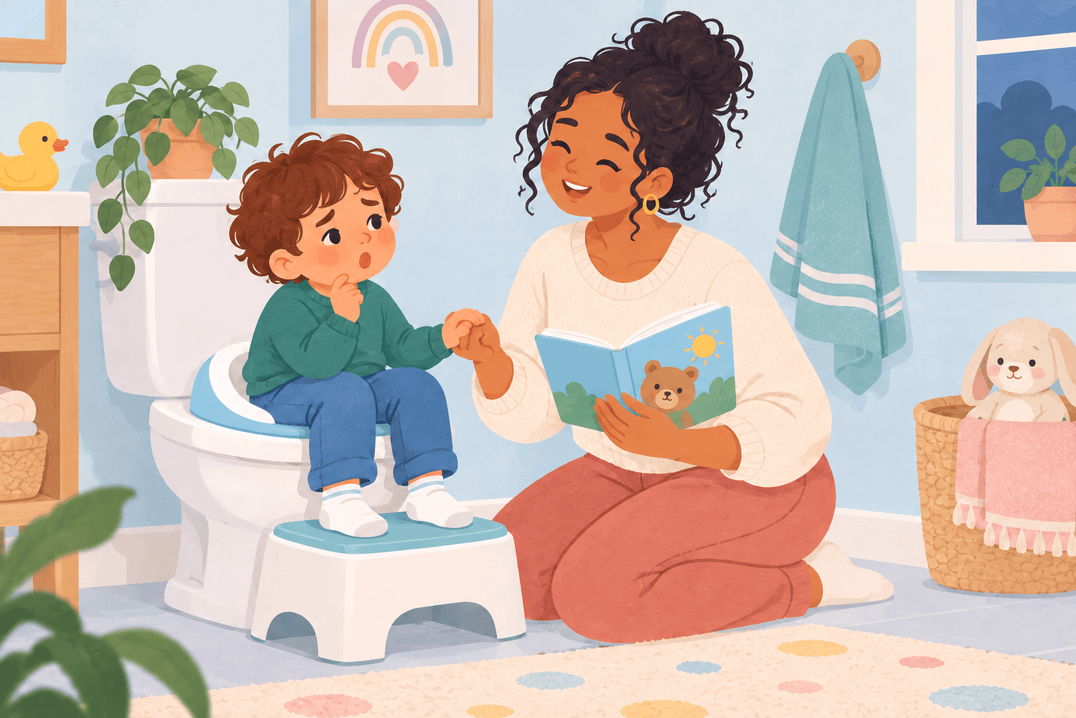
A child may pee in the potty happily and still ask for a diaper to poop. That difference can be frustrating, but forcing the next step can make the situation harder. The first priorities are comfortable bowel movements and understanding what feels frightening.
Pooping fear can follow a painful stool, an unsettling toilet experience or difficulty feeling secure on a seat. It is not proof that your child is being stubborn or trying to control the family.
Make sure pooping is not painful
Ask your clinician about hard stools, pain, blood, holding behavior or repeated soiling. A child may pass small amounts while retaining stool, so occasional pooping does not rule out constipation. Treatment may need to continue after the first comfortable bowel movement.
The young child constipation guide explains why pressure, extra fiber or a prize may not resolve a painful cycle. Keep using prescribed treatment as directed and ask when it should be reviewed.
Do not remove the only way they will poop
If your child will only poop in a diaper, allow that while you seek help and work on gradual change. Refusing the diaper can lead to more holding. A temporary way to pass a comfortable stool is preferable to a confrontation that makes the child avoid pooping altogether.
This does not mean abandoning toilet learning indefinitely. Agree with your health visitor or continence professional on the next small step and a review point. A plan for poop fear can differ from the usual daytime underwear routine.
Identify what the child is avoiding
Watch whether the difficulty begins at the bathroom doorway, on the seat or when the flush starts. Ask a simple question or notice where your child looks and points. They may be afraid of falling, dislike the sound or remember discomfort they cannot explain clearly.
The seat guide covers stable seating and supported feet. Let your child move away before flushing if noise is the problem. Avoid frightening descriptions of germs or calling their poop disgusting.
Practise comfort separately from producing a stool
A first step might be a very brief sit while clothed, with no request to poop. Another child may already sit comfortably but need help approaching the bathroom when wearing their diaper. Choose an achievable step based on where the difficulty starts.
Notice participation and stop before practice becomes a struggle. Do not hold the child in place, ask them to strain or extend the task until something happens. A book or calm conversation can help make the moment familiar without turning it into a performance.
Keep the plan predictable across caregivers
Explain the agreed step to nursery staff or relatives, including what to do when your child asks for a diaper. Adults should not surprise the child by removing an agreed support or demanding a larger step after they have cooperated.
Our potty refusal guide covers broader concerns about sitting and practice. Seek further advice if fear persists, stools are being held or the plan is not manageable. Gradual progress should still include active support and treatment of discomfort, rather than simply waiting for the problem to disappear.
References

Lifeing Editorial
Stories for a little more understanding, a little more reassurance, and the everyday moments in between.
Related posts
Popular baby names: Reading the Latest Official Rankings in Context