
Potty or Toilet Seat: Choosing a Comfortable Setup
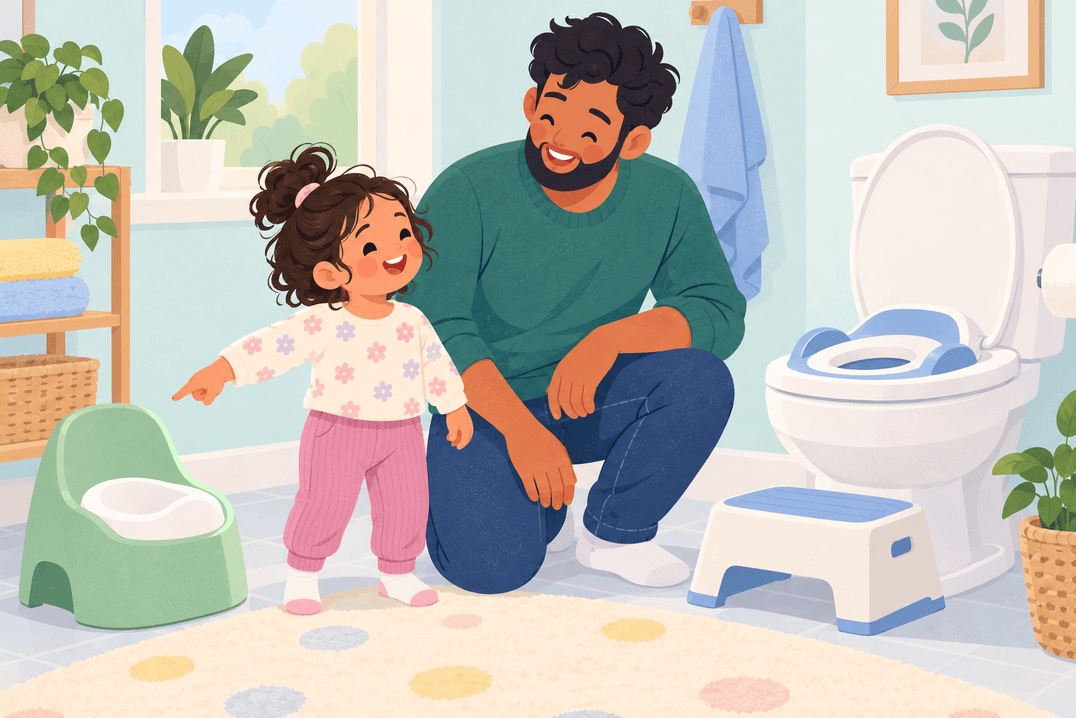
A floor potty and a child seat on the toilet can both support toilet learning. The useful choice is the one your child can reach and sit on securely with the help they need. Cost, bright colors and extra features are less important than fit and a routine adults can manage.
There is no need to buy several products before trying a simple setup. Check how your child actually sits rather than relying only on a suggested age printed on the packaging.
What a floor potty offers
A potty brings the seat closer to the floor. It may feel less daunting than a large toilet and can be easier for a small child to approach. Check that it stays stable on the surface and allows a comfortable seated position.
Keep the potty in a predictable accessible place where an adult can help. Avoid a position that creates a trip hazard or turns toileting into a public performance. If other children use the room, give your toddler enough privacy to feel comfortable while maintaining supervision.
An adult will need to empty the contents into the toilet and clean the potty after use. Think about that practical step when choosing where it will live.
What a toilet seat needs alongside it
A correctly fitted child seat can make the toilet opening feel secure and avoid a later change from potty to toilet. It still needs stable access and foot support. Check that the seat does not slide and that the step will not move under your child’s weight.
While seated, feet should rest firmly on a suitable support rather than dangle. A position with knees above the hips can help comfortable bowel emptying. Check the posture with your child sitting, not just standing on the step.
Follow the equipment instructions and help with climbing on and off. Rails or more specialized seating may be appropriate for some children, but a professional assessment is useful if balance, movement or positioning is difficult.
Consider the room as well as the seat
A loud flush, echoing room or an uncomfortable smell may be part of the difficulty. Show your child what will happen and allow them to move away before flushing if the sound bothers them. Keep the space calm and predictable.
Do not assume refusal means your child needs a more exciting potty. Observe which part is upsetting. The potty refusal guide helps separate equipment concerns from pain, fear or an unfamiliar routine.
Keep practice brief and assisted
A secure seat should support relaxation. It is not somewhere a child must stay until they produce a pee or poop. Offer help with clothing and use a short familiar sequence, then assist with wiping and handwashing.
Our starting routine explains how seating fits into the day. Children can continue to need adult help even after they often reach the toilet in time.
Reassess when comfort changes
Growth, a different bathroom or a new toilet can change the fit. Recheck stability and foot support when using another setting. Ask staff or relatives to show you how the child uses their equipment.
Painful stools need assessment and treatment; changing seats alone may not solve them. If preparation is the main uncertainty, the readiness guide explains how to build skills without waiting for complete independence.
References

Lifeing Editorial
Stories for a little more understanding, a little more reassurance, and the everyday moments in between.
Related posts

Potty Training Accidents: Calm Cleanup and Signs to Check