
Potty Training Accidents: Calm Cleanup and Signs to Check
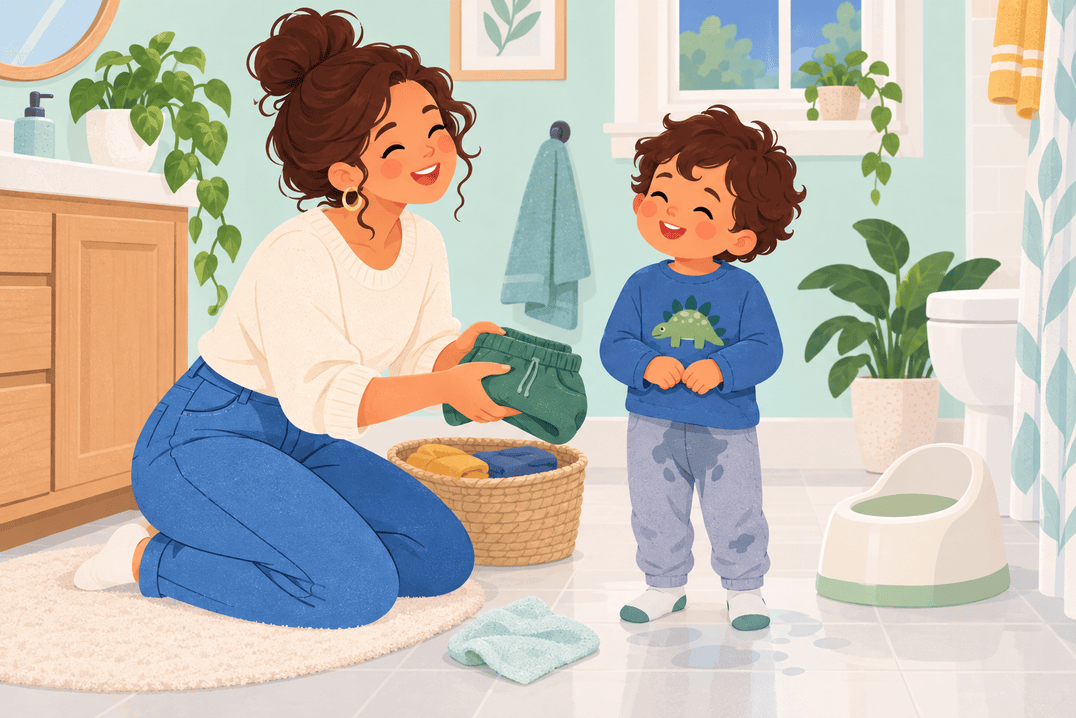
Wet clothing during toilet learning is information, not a reason to blame a child. A toddler may notice the urge late, struggle with clothing or become absorbed in play. Help them get clean and comfortable, then consider whether the next opportunity can be easier to manage.
Some accidents are part of practice. New symptoms or a major change after a period of reliable dryness deserve a closer look rather than an assumption that your child is being difficult.
Keep the response short and neutral
Say what happened without criticism: “Your trousers are wet. Let’s change them.” Offer practical help and allow a small part in cleanup if your child wants to participate. Do not make cleaning a punishment or require an apology for an accident.
Keep spare clothing accessible and protect privacy in shared settings. Adults can discuss patterns away from other children. The useful question is what support is needed next, not whether the child has disappointed anyone.
Check the route to the potty
Was the toilet nearby? Could your child manage the fastenings? Did an adult recognize a gesture or respond when asked? A child may need reminders at familiar points and help getting there promptly even when they have had several dry days.
Use the daytime routine guide to review opportunities without interrupting play every few minutes. Offer normal drinks; reducing fluids to hide the problem is not a solution.
Consider constipation when there is soiling
Small loose smears can sometimes leak around retained hard stool. Pain, very hard or large poops, holding behavior or reduced appetite are reasons to speak with a clinician. A child can pass some stool and still be constipated.
Do not assume leakage is deliberate or automatically treat it as diarrhea. Our young child constipation guide explains why a treatment plan may be needed. Rewards and extra sitting do not clear a painful stool build up.
Seek prompt help for possible urine infection
Pain or burning when peeing, new urgency, fever, blood in urine or a child who seems unwell can indicate a urine infection. Seek urgent medical advice for suspected infection in a young child. Testing and treatment are decisions for the clinician, not something to delay while trying a different potty routine.
If your child is difficult to wake or seriously unwell, seek emergency care. An isolated accident does not diagnose infection, but associated symptoms change the next step.
Notice unusual thirst and increased urine
Markedly more peeing together with unusual thirst, tiredness or weight loss needs urgent medical assessment because diabetes is one possible cause. Do not wait for routine toilet training advice or reduce drinks.
If these symptoms come with rapidly worsening illness, vomiting, abdominal pain, unusual sleepiness or fast deep breathing, seek emergency help. These can be signs of a serious complication requiring immediate treatment.
Adjust practice without shame
When illness has been excluded or treated, compare notes with caregivers and agree on one practical change. If the child is becoming frightened or refusing, see responding to potty refusal and ask your health visitor for support.
Daytime skills and nighttime dryness are different. An accident during sleep does not erase the learning your child has done while awake.
References
- NHS Best Start in Life: Potty training your child (opens in a new tab)
- ERIC: Potty training (opens in a new tab)
- ERIC: Potty training problems (opens in a new tab)
- NHS: Constipation in children (opens in a new tab)
- NHS: Urinary tract infections (opens in a new tab)
- NHS: Symptoms of type 1 diabetes (opens in a new tab)

Lifeing Editorial
Stories for a little more understanding, a little more reassurance, and the everyday moments in between.
Related posts
Potty Training at Nursery: Agreeing on a Practical Care Plan