
Refusing the Potty: Reducing Pressure and Finding the Difficulty

A toddler who backs away from the potty may be saying that something about the task is difficult. They might expect a painful poop, feel insecure on the seat or not understand what is being asked. Repeating the request more firmly can miss the reason for the refusal.
Begin by reducing the pressure around the moment. Your child should not be held on a potty or required to stay until they produce something.
Check whether toileting hurts
Ask about pain in simple language and watch what happens around bowel movements. Hard stools, straining, holding on or repeated soiling can suggest constipation. Speak with a clinician and get the problem treated before pushing ahead with removing diapers.
The constipation guide explains why reassurance alone may not break the cycle of pain and holding. Do not give another child’s medicine or assume more fruit will resolve established constipation.
Pain when peeing, fever, blood in urine or new urinary urgency also needs prompt medical advice. Suspected urine infection in a young child should be assessed urgently rather than managed as potty resistance.
Identify the part that feels difficult
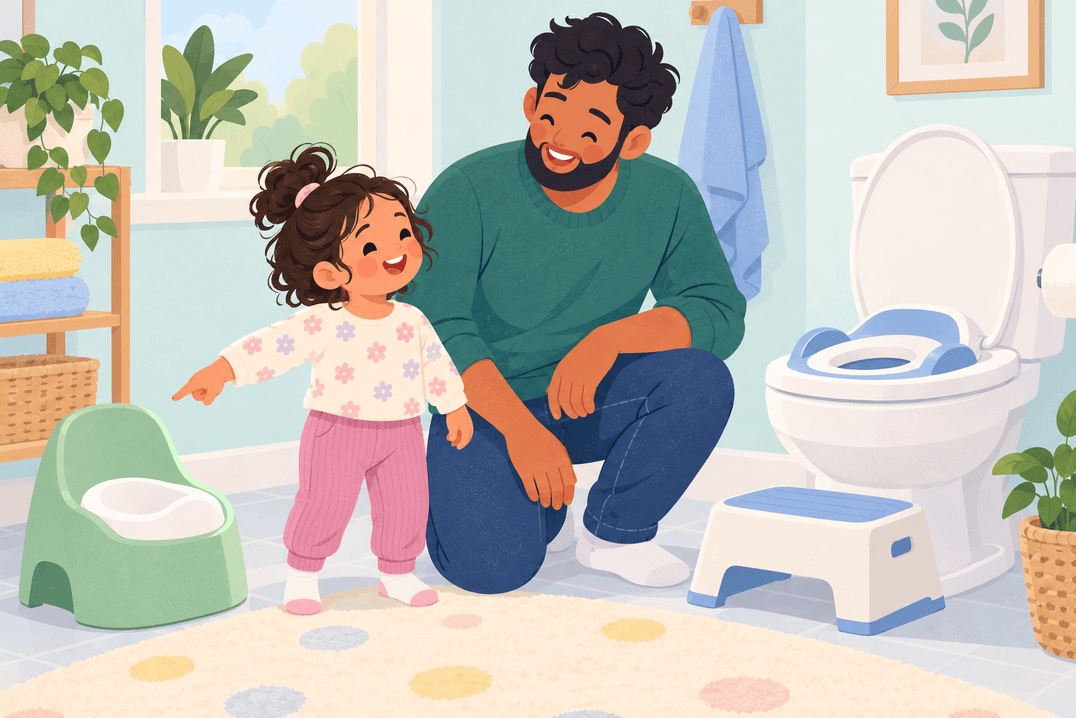
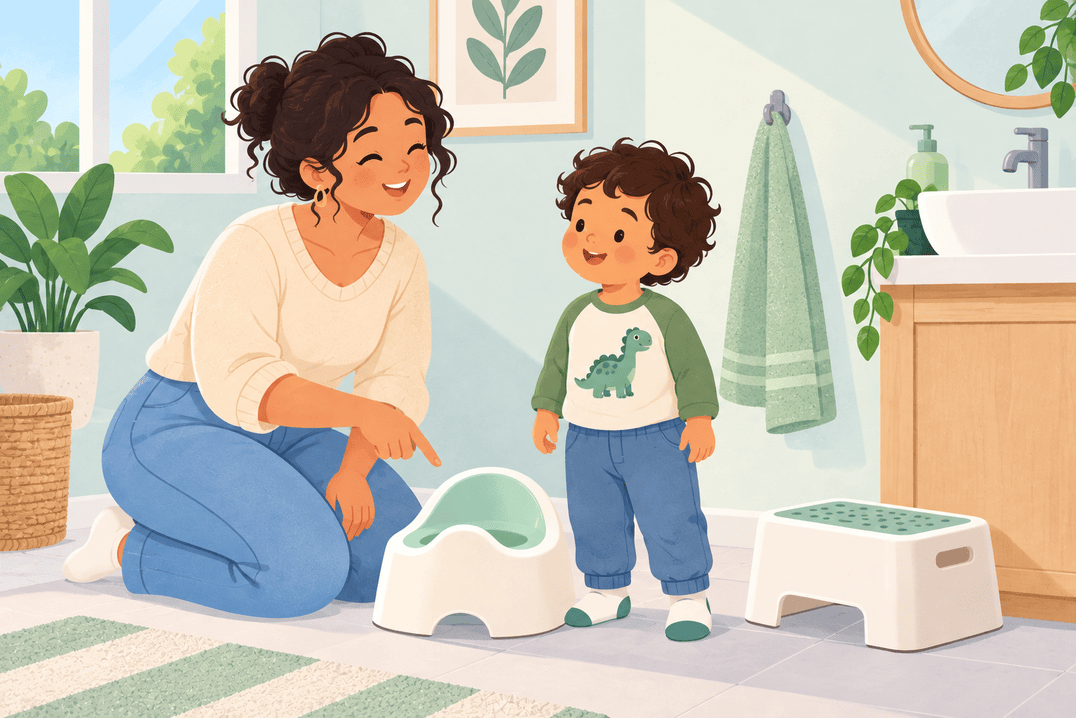
Notice whether your child avoids entering the bathroom, undressing, sitting or the sound of flushing. These are different problems and may need different adjustments. A child who happily approaches a floor potty but fears the large toilet has given you useful information.
Check stability and foot support. Our potty and toilet seat guide explains how to assess the position. Let your child move away before a loud flush if needed, and consider advice about sensory or positioning needs when ordinary adjustments do not help.
Return to a manageable practice step
If your child is distressed or unwell, pause that attempt. Familiarity can continue through a book, a toy demonstration or neutral conversation during changing, without demanding a result. When your child is comfortable, try a brief supported sit at a calm time.
Recognize participation rather than only pee or poop. Keep the request clear and short, and stop before practice becomes a prolonged struggle. This is a step back in the task, not a declaration that your child cannot learn.
Make the next attempt easier to understand
Choose a familiar time and help with clothing. A simple explanation such as “We will try the potty, wash hands, then read” can make the sequence clearer. Do not promise a reward for staying there indefinitely or increase demands after your child has agreed to a small step.
The starting routine offers a plan for regular opportunities once comfort and health needs have been addressed. Caregivers should share what works so the child does not face conflicting instructions.
Ask for a plan when refusal continues
Get help from a health visitor, clinician or children’s continence service when distress persists, stools are being held or the family cannot find a manageable approach. Ask which step to practise, how to maintain comfortable bowel movements and when to review progress.
Some children need additional communication, sensory or physical support. Do not wait for a birthday deadline or rely on pressure to create readiness. A useful plan makes toileting safer and more understandable while preserving your child’s dignity.
References
- NHS Best Start in Life: Potty training your child (opens in a new tab)
- ERIC: Potty training (opens in a new tab)
- ERIC: Potty training problems (opens in a new tab)
- ERIC: Toilet readiness assessment (opens in a new tab)
- NHS: Constipation in children (opens in a new tab)
- NHS: Urinary tract infections (opens in a new tab)

Lifeing Editorial
Stories for a little more understanding, a little more reassurance, and the everyday moments in between.
Related posts
Remaining frozen embryos: Planning a Conversation About Future Decisions