
Starting Potty Training: A Simple Daytime Routine
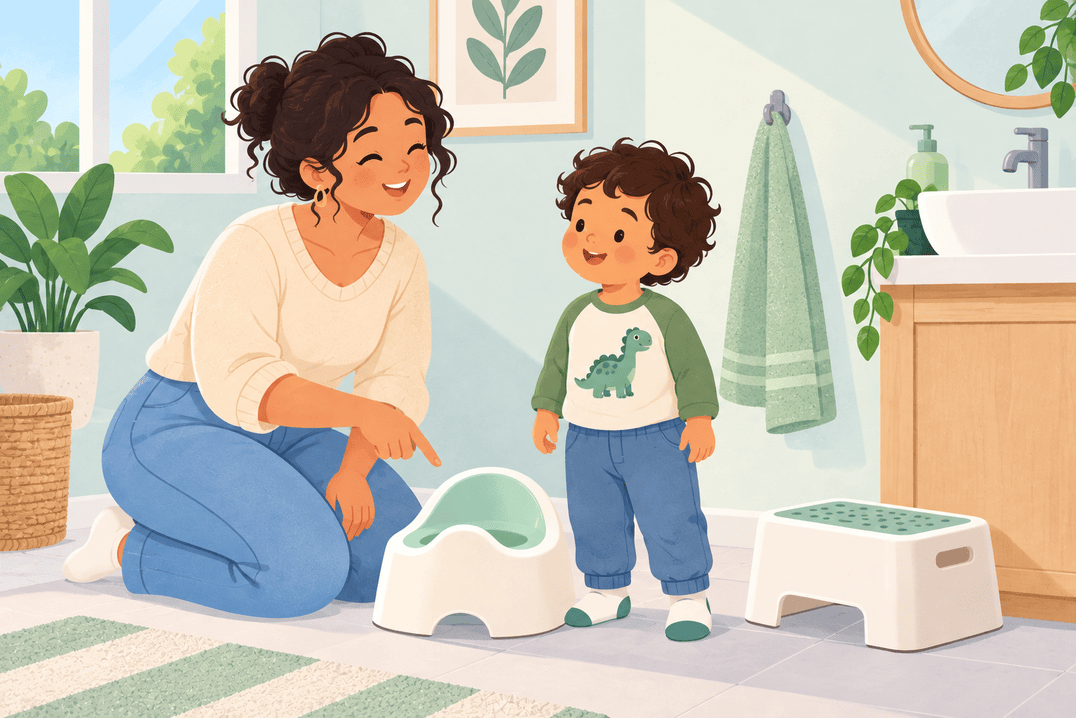
Once your child has had some preparation and painful stools have been addressed, a simple daytime routine can turn potty practice into part of ordinary life. You do not need a guarantee of success within a weekend. You need a workable setup, repeated opportunities and adults who can help calmly.
If you are unsure where to begin, first read about building potty skills. Preparation and assistance can begin before a child independently asks to use the toilet.
Explain the change in a few words
Tell your child that they will practise peeing and pooping in the potty or toilet during the day. Show where it is and how you will help. A familiar book or demonstration with a toy can make the plan easier to understand.
Choose a reasonably settled period and explain the same plan to other caregivers. The message should be about learning, not proving that your child is now a big person or pleasing an adult.
Prepare the space and clothing
Use a stable potty or a secure child seat with suitable foot support. Keep it accessible and allow enough time for clothing. Simple trousers or leggings are usually easier to manage than several fastenings when the need is urgent.
Have spare clothes, cleaning supplies and a place for wet items ready. Keep cleaning products out of reach. The seat comparison guide helps you check fit and access without assuming a more elaborate product will work better.
Make daytime practice clear
For a usual daytime training plan, move from diapers to underwear while your child is awake so they can experience the difference between wet and dry. Continue sleep diapers initially. Children with specific health, mobility or developmental needs may need an adapted plan agreed with their care team.
Keep offering normal drinks across the day. Restricting fluids to reduce laundry does not teach bladder awareness, and forcing extra drinks to create more practice is unnecessary. Keep the focus on a manageable routine.
Offer opportunities at familiar points
Try when your child wakes, after a meal or before leaving home. Also respond when they gesture, pause, fidget or tell you they need to go. Do not depend on a verbal request every time.
Help them sit securely and allow a brief relaxed attempt. A short book may help, but do not hold them on the seat or require a result before they can get up. If nothing happens, return to the day and try at another useful time.
Recognize participation and handle cleanup calmly
Notice telling you, approaching the potty or helping with clothing. Dryness is not the only sign of learning. Help with wiping and handwashing; independence develops through supported practice rather than being expected immediately.
When an accident happens, change and clean your child without blame. Our accident guide distinguishes ordinary practice from symptoms that need medical advice.
Review the plan when it becomes difficult
If your child is distressed or repeatedly refuses, check pain, constipation, seat comfort and what they understand. Do not respond by making every attempt longer or more frequent. Ask a health visitor or clinician for help when you are worried, and address illness or painful toileting promptly.
Progress may be uneven. Keep the useful parts of the routine, adjust what is not working and give caregivers the same update.
References

Lifeing Editorial
Stories for a little more understanding, a little more reassurance, and the everyday moments in between.
Related posts
Sterilizing bottles: Following a Complete Cleaning Routine