
Sterilizing bottles: Following a Complete Cleaning Routine

A bottle can look rinsed and still contain milk residue and germs. Cleaning removes residue; sanitizing or sterilizing is an additional step to reduce germs. The sequence matters, because putting an unwashed bottle into a sterilizer does not replace cleaning it first.
Follow the guidance for your baby and location
UK NHS guidance recommends cleaning and sterilizing feeding equipment until at least 12 months of age. United States CDC guidance emphasizes daily sanitizing for babies under two months, babies born prematurely and babies with weakened immunity. Older healthy babies may not need daily sanitizing under CDC guidance if equipment is carefully cleaned after every use.
These recommendations differ. Follow a consistent local plan, your equipment instructions and any stricter advice from your baby’s team. Hospital instructions may be different from home guidance. The same attention applies whether the bottle contains formula or expressed milk.
Take the bottle apart and wash it
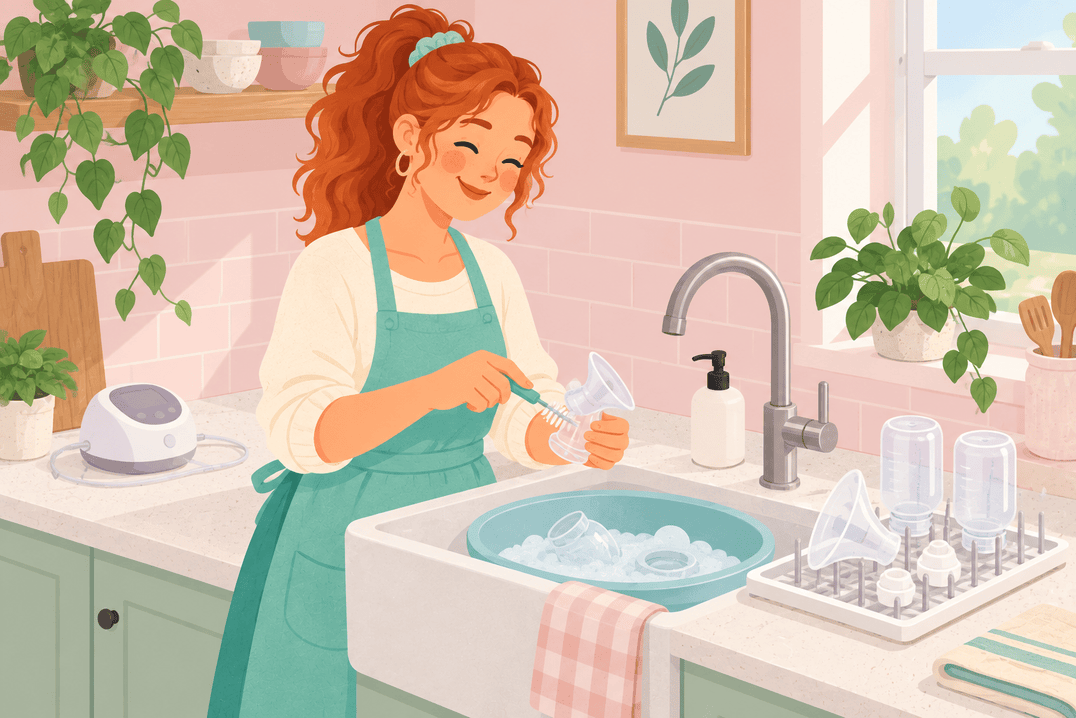
Wash your hands, clean the work area and separate the bottle, teat, ring, cap and any valves. Wash after every feed. Under the CDC hand washing method, use a clean basin reserved for feeding items rather than placing parts directly in the sink. Scrub with hot soapy water and a dedicated clean brush, then rinse thoroughly.
Rinse the basin and brush after use and let them dry. Wash them regularly, and after every use for babies under two months, born prematurely or with weakened immunity. Our pump cleaning guide explains similar care for milk collection equipment.
Choose one suitable sanitizing method
Use a steam system only as its manufacturer directs, including safe cooling and opening. A microwave steam sterilizer is designed for that purpose; this does not make microwaving a bottle of milk safe.
For boiling, check that every part tolerates heat and remains submerged. NHS guidance specifies at least ten minutes, while the CDC sanitizing method specifies five minutes. Follow your local method rather than treating those instructions as interchangeable. Keep hot pans and steam away from children.
For cold water sterilizing, follow the approved product’s dilution, soaking time and solution replacement instructions. Do not improvise concentrations or mix cleaning chemicals. A dishwasher cleans compatible parts; CDC accepts a hot wash with heated drying or a sanitizing setting for its sanitizing step, while NHS guidance retains a separate sterilizing routine.
Protect equipment until the next feed
For dry storage, allow parts to air dry completely on a clean surface without rubbing them with a used towel, then assemble with clean hands and store protected from dust. If keeping equipment in a sterilizer or solution, follow that system’s storage instructions.
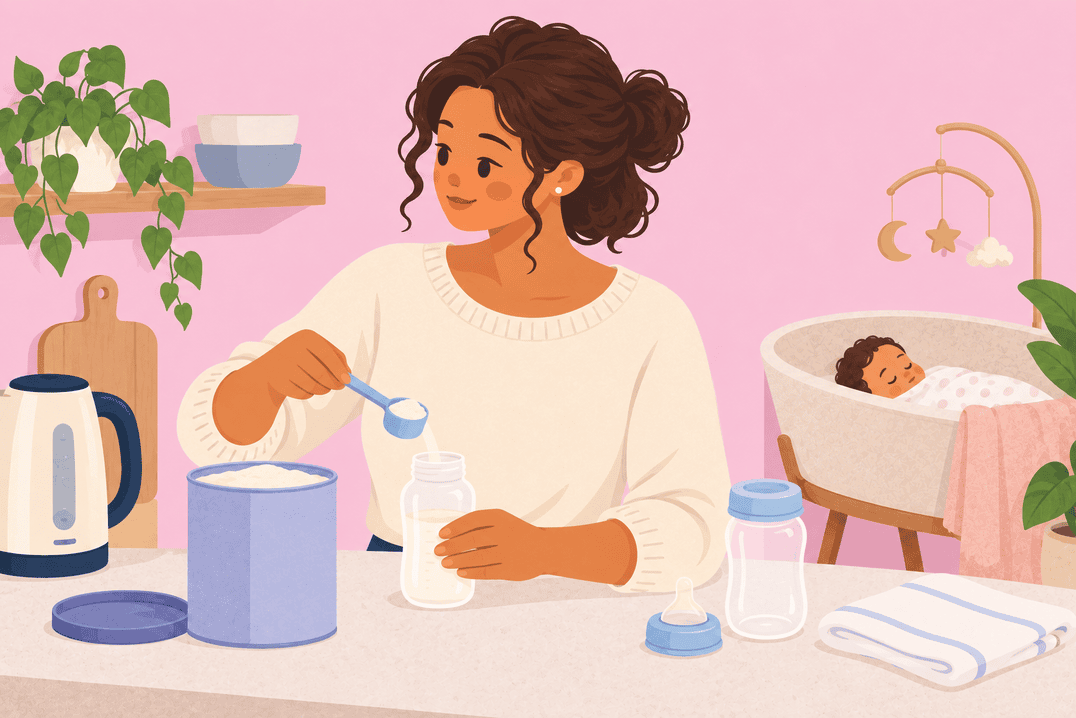
Replace damaged teats and bottle parts. Clean equipment is one part of safe feeding: accurate mixing and storage still matter. Our formula preparation guide brings those steps together.
References

Lifeing Editorial
Stories for a little more understanding, a little more reassurance, and the everyday moments in between.
Related posts
Steroids before preterm birth: Understanding the Treatment Discussion