
Preparing infant formula: Following Safe Mixing Steps
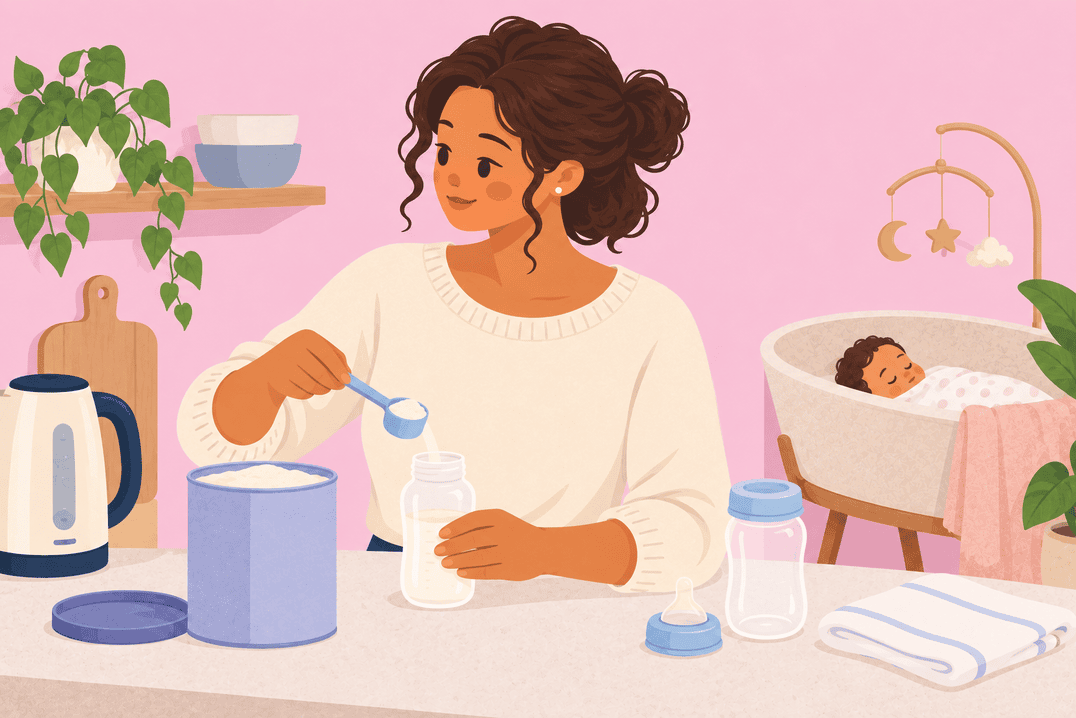
Preparing powdered infant formula safely means getting both the proportions and the handling right. Powder is not sterile, even in a sealed container. Your baby’s age, health, the product and local water guidance all affect the instructions you should follow.
Check the product and your local plan
Use an in date infant formula suitable for your baby. Follow the exact powder to water ratio on its label and your health service’s preparation advice. Our formula choice guide explains why specialist products need an individual plan.
In the UK, the NHS method for standard powdered formula uses freshly boiled drinking water that is still at least 70°C when it meets the powder. United States CDC guidance uses extra hot water precautions particularly for babies under two months, babies born prematurely and babies with weakened immunity. Ask your care team to resolve any conflict between a specialist product label and general advice.
Prepare clean equipment and measure carefully
Wash your hands and clean the preparation surface. Use feeding equipment that has been washed and sanitized or sterilized according to your local guidance. Keep powder and the scoop dry.
For the NHS method, boil at least one litre of fresh tap water and leave it in the kettle for no more than 30 minutes so it remains at least 70°C. Measure the required water into the bottle first, then add the exact number of level scoops using the scoop supplied with that formula. Do not swap scoops between products.
Secure the teat, ring and cap and mix as instructed. Never add extra powder to make a feed more filling, dilute it with extra water or add cereal or sugar. These changes can make the feed unsafe or nutritionally unsuitable.
Cool before offering the feed
Water hot enough for preparation is too hot for a baby to drink. Cool the capped bottle under cold running water, keeping water away from the teat and out of the bottle. Test a few drops on your wrist; it should feel warm or cool, never hot. Do not use a microwave.
Make feeds individually when needed where possible. If safe preparation is difficult, ask whether a suitable ready to feed formula would help. Water containing harmful chemicals is not made safe simply by boiling; follow local public health advice during water problems.
Keep the timing clear
CDC guidance limits prepared formula at room temperature to two hours after preparation and one hour after feeding starts, whichever comes first. Discard what remains when the feed is finished. If preparing for later, cool and refrigerate promptly and use within 24 hours under that guidance; do not leave it out for two hours before refrigerating.
Store the container as carefully as the feed
Keep unopened formula in a cool dry place and check the use by date. Once powder is opened, keep the lid closed, keep the scoop dry and follow the label’s opening limit. Write the opening date on the container. Do not keep powder in the fridge or use it after its deadline.
Mark the preparation time on milk stored for later and keep it cold in a suitable refrigerator. A bottle that has been used for feeding has a different deadline from an untouched prepared bottle. Refrigerating it after the feed does not make the leftovers suitable for another feed. For a journey, our outings guide explains transport limits and alternatives.
Follow any stricter product or clinical instructions. Our formula amounts guide explains how feeding cues and growth checks help determine intake without altering the recipe.
References
- NHS: Making up baby formula (opens in a new tab)
- CDC: Infant formula preparation and storage (opens in a new tab)
- FDA: Safe handling of infant formula (opens in a new tab)
- American Academy of Pediatrics: Preparing formula with water (opens in a new tab)
- CDC: Cleaning, sanitizing and storing infant feeding items (opens in a new tab)

Lifeing Editorial
Stories for a little more understanding, a little more reassurance, and the everyday moments in between.
Related posts


Pretend play: Joining Your Child’s Imagination