
Formula preparation on outings: Planning Feeds Away From Home

A trip with a formula fed baby is easier when the feeding plan includes preparation, cooling, clean equipment and possible delays. Decide how you will make each feed before leaving. A bottle kept warm in a bag is not a safe substitute for a clear preparation or refrigeration plan.
Choose the method that fits the trip
An appropriate ready to feed formula can be useful when safe mixing facilities are unavailable. It needs no added water, but you still need suitable clean feeding equipment and a plan for any unused milk after opening. Our formula format guide explains those differences.
If your baby uses a prescribed specialist formula, confirm that any alternative is suitable before the trip. Babies who are very young, premature or have weakened immunity may need extra precautions. Do not improvise a replacement or dilute feeds if the outing takes longer than expected.
Pack for fresh preparation
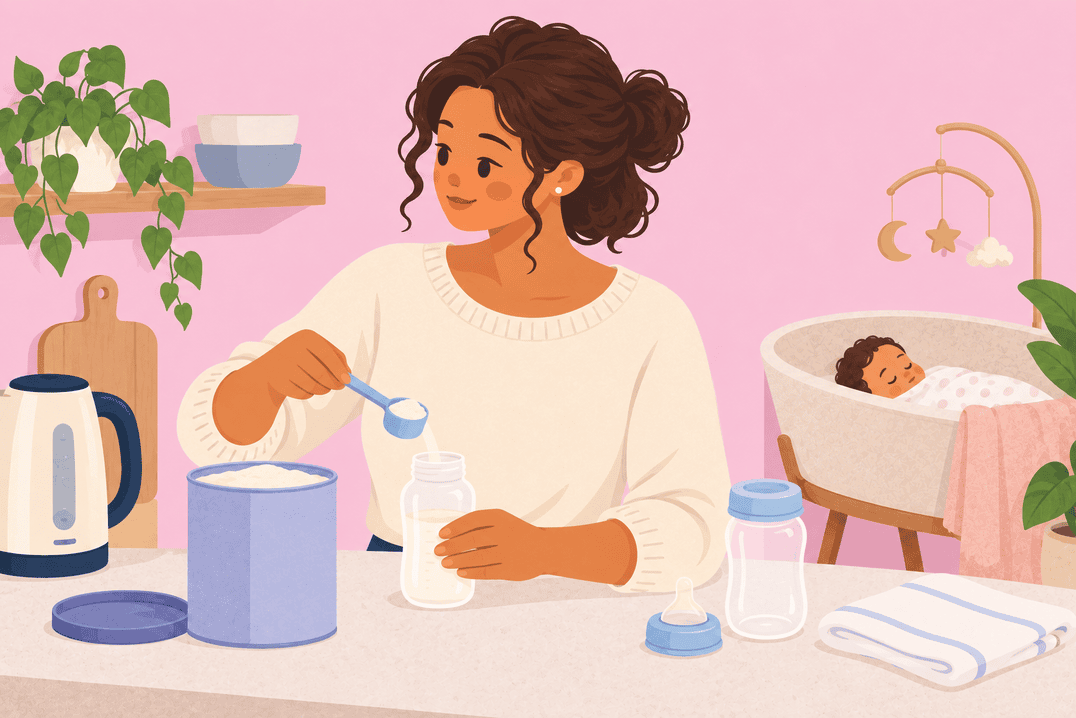
For the UK NHS method, take measured powder in a clean dry container, a clean vacuum flask of freshly boiled water and an empty sterilized bottle with its cap and ring. Keep the flask closed and ensure the water is still at least 70°C when it meets standard formula powder. Do not assume that lukewarm flask water is sufficient.
Measure the correct water volume into the bottle before adding the powder. Cool the capped prepared bottle under cold running water and check it is not hot before feeding. Our preparation guide explains the method and how guidance differs by country. Keep hot water and preparation equipment away from your baby and other children.
Know the limits of carrying a prepared feed
The NHS prefers fresh preparation or a suitable ready to feed product. If neither is possible for an occasional outing, its advice allows a feed prepared safely at home, cooled and refrigerated until cold, then taken out just before departure in a cool bag with an ice pack and used within four hours.
That is a specific formula transport limit, not the longer cooler limit sometimes quoted for expressed breast milk. It does not restart the original preparation clock. For a feed that has remained at room temperature, the limit is two hours from preparation. Follow stricter product or clinical instructions.
Once feeding begins, CDC guidance allows no more than one hour, and the earliest applicable deadline still applies. Discard leftovers when the feed is finished. Never return used milk to a storage container or save it for the journey home.
Plan equipment and a backup
Take enough clean equipment for the feeds you expect, with a way to separate used bottles. A quick rinse does not replace proper washing and sterilizing. Include extra suitable supplies for delays and check whether your destination has the facilities you need.
If the safe storage history is uncertain, do not rely on smell or reheating to make a decision. Use a safely prepared replacement and ask your health team for a more workable travel plan if this happens often.
References
- NHS: Common questions about formula milk (opens in a new tab)
- NHS: Making up baby formula (opens in a new tab)
- CDC: Infant formula preparation and storage (opens in a new tab)
- FDA: Safe handling of infant formula (opens in a new tab)
- NHS Best Start in Life: Sterilising feeding equipment (opens in a new tab)

Lifeing Editorial
Stories for a little more understanding, a little more reassurance, and the everyday moments in between.
Related posts

Four month old baby: Movement Practice and Changing Sleep