
Potty Training at Nursery: Agreeing on a Practical Care Plan

Toilet learning is easier to support when home and nursery understand the same plan. A child who uses the potty at home may still need extra help in a busy room, with unfamiliar toilets or a different adult. Start the conversation before changing the daytime routine if possible.
The useful agreement describes what your child needs, who will help and how you will share changes. It does not depend on identical schedules in both places.
Explain the current skills and support
Tell staff how your child indicates a need, whether through words, signs, gestures or a familiar pattern. Describe how much help they need with clothing, sitting, wiping and washing. A child who sometimes reaches the potty independently may still need reminders and hands on assistance.
Share any medical plan for constipation or a bladder condition. Ask how medication instructions are recorded and followed if treatment is needed during the nursery day. Do not leave staff to infer a dose from an informal comment at pickup.
Look at the actual bathroom setup
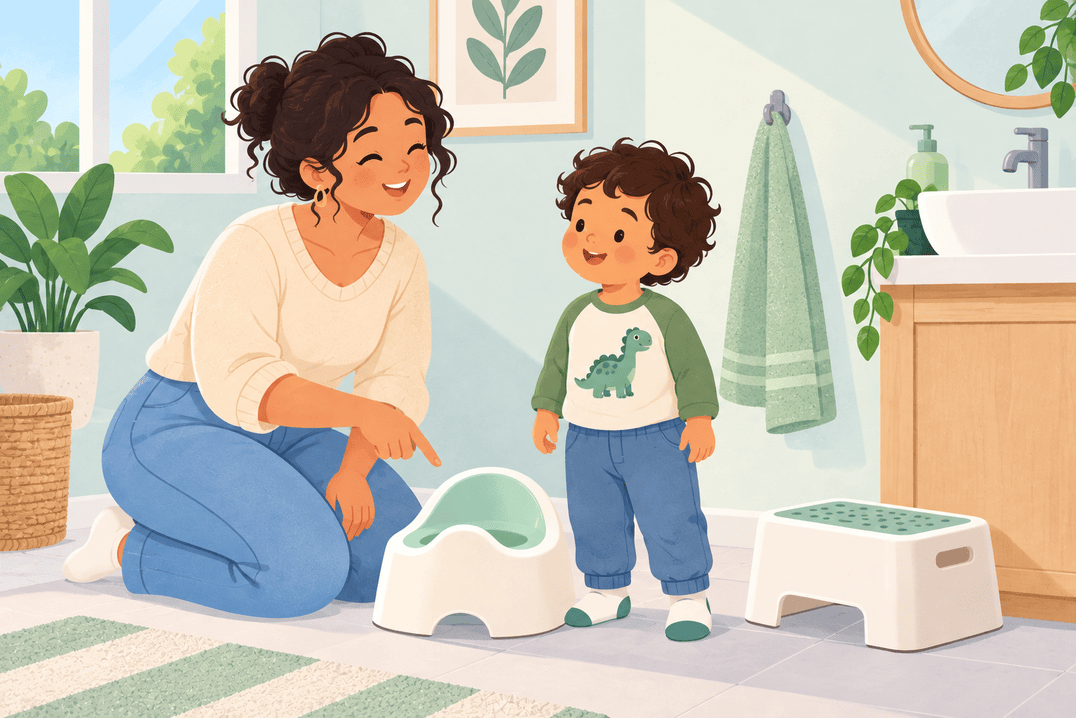
Ask which toilet or potty your child will use and how an adult will help them reach it. Check that the seat and foot support are suitable and that the route is manageable. An accessible toilet matters more than expecting a toddler to hold on until a group bathroom break.
Find out whether the sound of flushing or hand dryers is upsetting. Staff may be able to introduce the space calmly or use a quieter routine. If extra equipment or communication support is needed, agree who will arrange it.
Match the main daytime approach
If your child is practising in underwear at home, discuss how nursery can support the same approach. Send easy clothing and enough spares. Explain when sleep diapers are still being used and any specific exception in an individual care plan.
The starting routine guide can help you describe regular opportunities without requiring a verbal request each time. A shared routine should remain flexible enough to respond to the child’s body signals and comfort.
Make accidents a care task
Agree that the child will be helped to clean and change promptly and privately, without blame or comparison with other children. Wet items can go home in a suitable closed bag kept away from children’s reach. Handwashing with soap and water belongs in the routine for both the child and the adult helping.
Our accident guide explains symptoms that deserve attention. Ask staff to report painful peeing, holding, hard stools or repeated soiling, rather than only the number of dry hours.
Use a short handover and review the plan
Useful notes might record a comfortable poop, a missed cue or a toilet the child avoided. Include what worked. A simple exchange is usually more helpful than a long scorecard that makes every visit feel judged.
If progress differs sharply between settings, compare the equipment, access, instructions and level of support before blaming the child or an adult. The stalled progress guide helps prepare a discussion with your health visitor. Where needs are ongoing, ask for a written individual care plan and an agreed review date so support continues across staff changes.
References
- NHS Best Start in Life: Potty training your child (opens in a new tab)
- ERIC and Bladder and Bowel UK: Continence support in education settings (opens in a new tab)
- ERIC: Potty training (opens in a new tab)
- CDC: Hand hygiene in schools and early care settings (opens in a new tab)
- ERIC: Toilet readiness assessment (opens in a new tab)

Lifeing Editorial
Stories for a little more understanding, a little more reassurance, and the everyday moments in between.
Related posts

Potty Training on Outings and Travel: Planning for Practice