
Potty Training on Outings and Travel: Planning for Practice
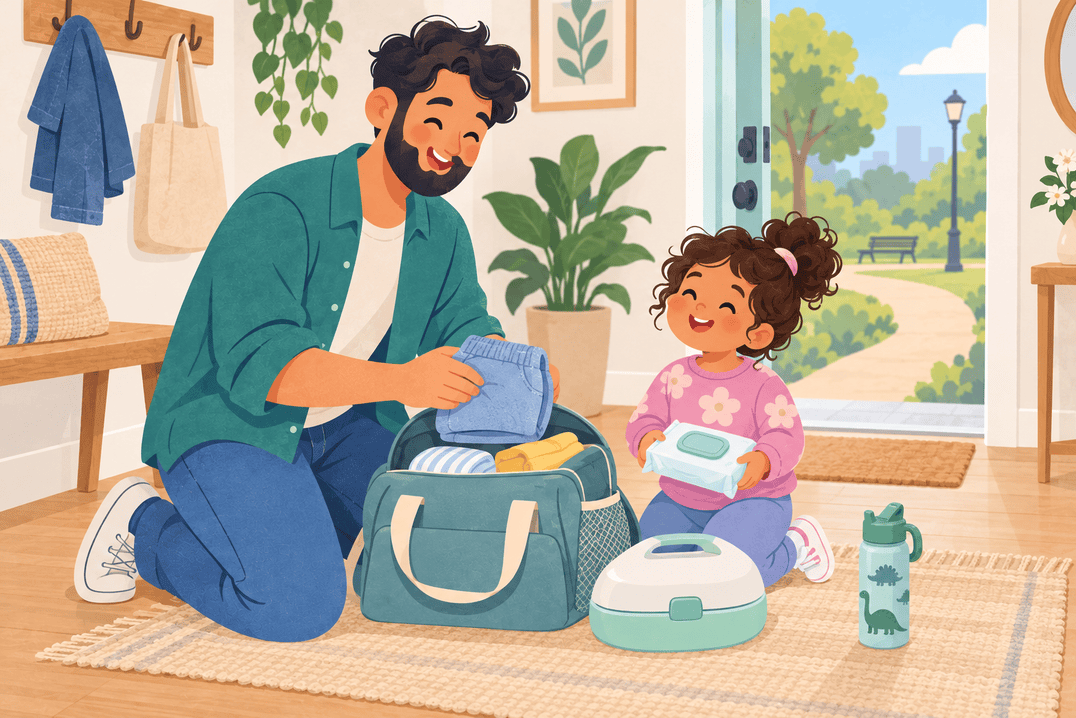
Leaving home during potty training can make a familiar routine feel less predictable. Toilets may be farther away, a public bathroom may sound different and your child may be busy noticing everything around them. Planning for those practical differences helps you respond without making dryness the condition for a successful outing.
Begin with a manageable trip when you can. A short visit to a familiar place gives you useful information about what to pack and how much help your child needs.
Find the toilets before they are urgent
Check where you can stop and how easy the bathroom is to reach. On arrival, show your toddler where the toilet is and who will help. Allow time for clothing and a supported position rather than assuming a quick visit is always possible.
A portable potty or familiar child seat may help, but use it on a stable surface in a safe appropriate place. Keep your child supervised and protect privacy. Do not use a potty while a vehicle is moving or let a rushed stop put the child close to traffic.
Pack for cleanup as well as success
Bring spare underwear, easy clothing, wipes or other usual cleanup supplies and a suitable bag for wet items. Keep bags and cleaning products out of reach. Think about a change for the adult too if that would make the trip easier.
Help your child wash hands with soap and water after toileting, and wash your own after helping. Wiping a surface or cleaning a bottom does not replace handwashing. Plan where proper washing will be available rather than relying only on the contents of a travel bag.
Keep drinks and toilet opportunities ordinary
Offer usual drinks and respond to thirst. Cutting fluids to avoid stops can make the day uncomfortable and does not teach toilet skills. Build opportunities into departure, arrival and sensible breaks, and respond when your child indicates a need.
Try to keep the main daytime approach recognizable. The starting routine guide explains the usual move to underwear. If an individual health need or unavoidable access problem requires a temporary adaptation, plan it clearly and return to practice when feasible. Do not present one difficult journey as proof that all learning has been lost.
Help with an unfamiliar bathroom
An automatic flush or loud dryer can startle a child. Explain what you can, stay nearby and allow them to move away before flushing when possible. A familiar short phrase or book may help with sitting, but do not force a frightened child to stay until they produce something.
If the child repeatedly holds stools or avoids all toilets away from home, ask for help. Pain and constipation need their own assessment, not a larger travel reward.
Plan longer journeys and overnight stays
For a longer trip, allow realistic toilet breaks and keep supplies accessible rather than packed at the bottom of luggage. Explain the plan to another adult traveling with you. Take prescribed medicines according to the treatment and storage instructions; do not stop a constipation plan simply because the routine is changing.
At the destination, show the child the bathroom and check the seat and foot support. Keep familiar words and a few usual routine points. Sleep diapers can remain part of the plan even when daytime practice is going well. Our nursery coordination guide offers a useful model for sharing support needs with relatives or other caregivers.
If you are just about to begin intensive daytime practice, consider whether a major journey is the most workable starting point. Gentle preparation can continue while you choose a better supported period. An established learner may simply need more assistance in the new setting.
Protect the car seat setup
Always use the appropriate restraint and keep your child correctly secured while traveling. Stop safely before helping with toileting or changing. Do not loosen the harness or remove the child while the vehicle is moving.
Follow the car seat manufacturer’s instructions for cleaning and accessories. Do not put towels, pads or liners under or behind the child unless the manufacturer specifically permits that product for that seat. Protecting upholstery is never a reason to alter the restraint’s fit.
Respond to accidents without ending the learning
Clean and change your child calmly, then continue or shorten the outing according to what is manageable. Review the practical difficulty afterward: access, clothing, timing or fear. The accident guide explains when pain, illness or unusual thirst changes the next step from routine adjustment to medical advice.
References
- NHS Best Start in Life: Potty training your child (opens in a new tab)
- ERIC: Potty training (opens in a new tab)
- ERIC: Toilet anxiety in children (opens in a new tab)
- CDC: Hand hygiene in schools and early care settings (opens in a new tab)
- American Academy of Pediatrics: Car seats for families (opens in a new tab)
- NHS: Constipation in children (opens in a new tab)

Lifeing Editorial
Stories for a little more understanding, a little more reassurance, and the everyday moments in between.
Related posts

Potty Training Readiness: Building Skills Before Choosing a Date